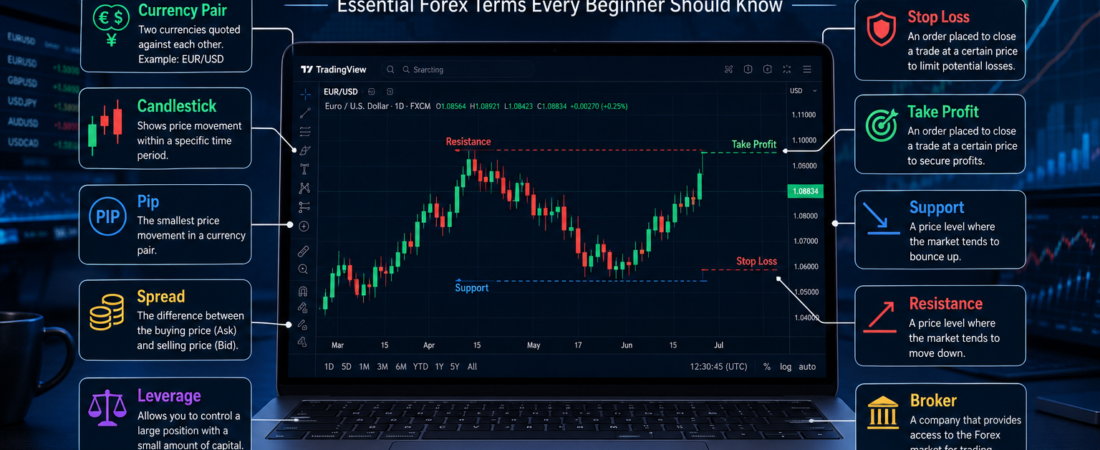
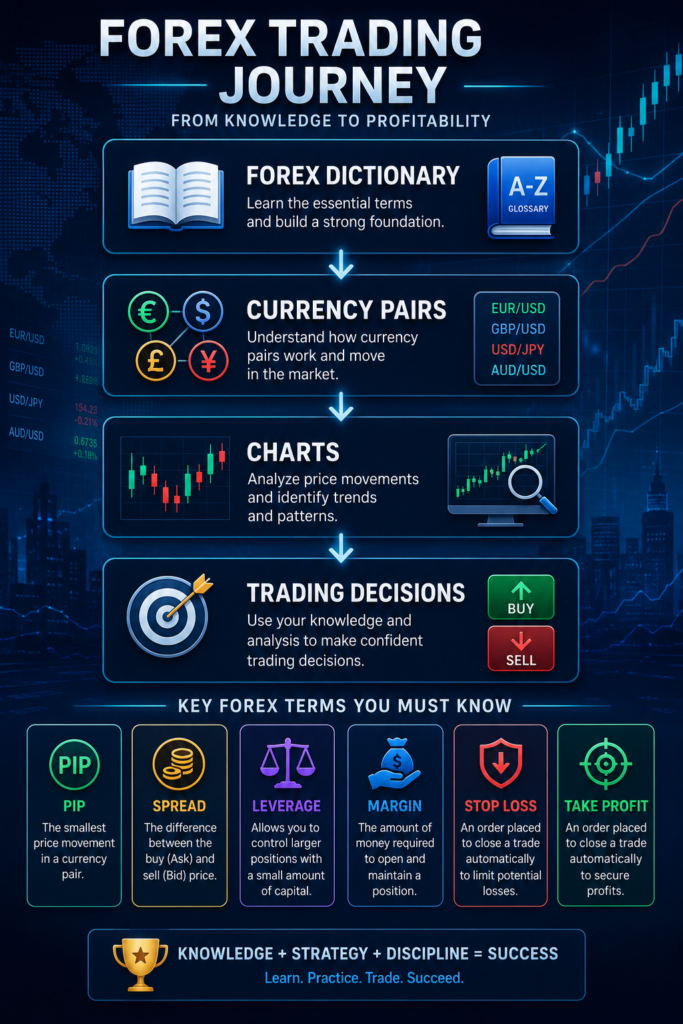
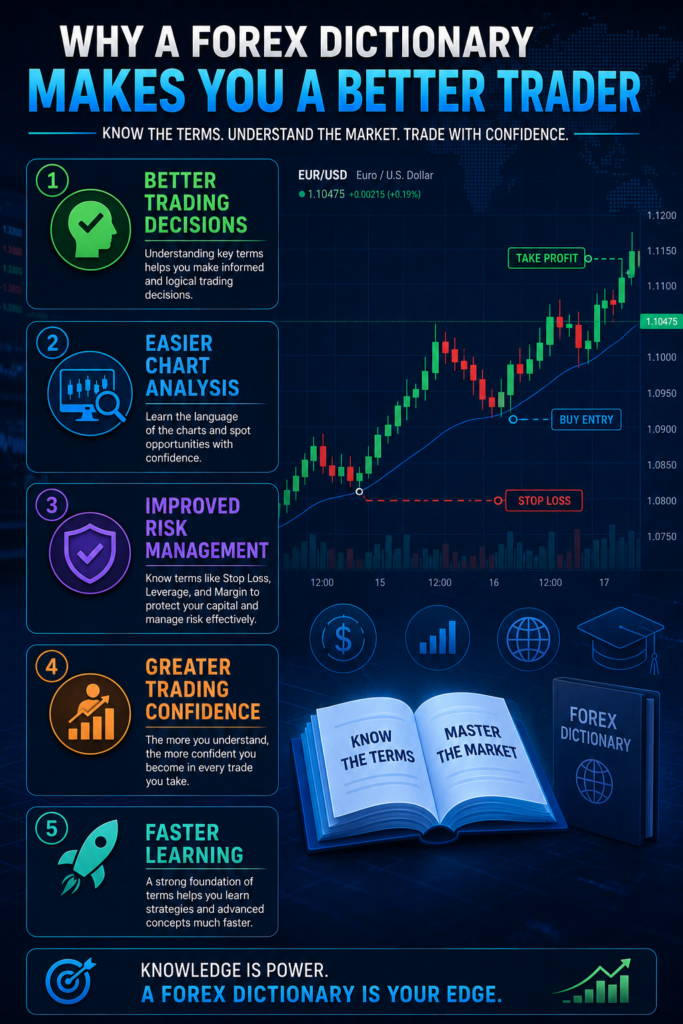
The Forex market has its own unique language. If you’re just starting your trading journey, you’ve probably come across terms like pip, spread, leverage, margin, lot size, or stop loss and wondered what they mean. Learning these terms is one of the first and most important steps toward becoming a confident Forex trader. Learn more about Forex trading terms at BabyPips.
Watch the Video Version
Prefer watching instead of reading? Watch the complete tutorial below, then continue reading for more detailed explanations and additional tips.
Think of Forex terminology as learning the vocabulary of a new language. Just as you need to understand words before speaking a language fluently, you need to understand Forex terms before you can analyze charts, place trades, or manage risk effectively. Without this knowledge, reading educational materials, using trading platforms, or following market news can quickly become confusing. What is Forex Trading?
The good news is that you don’t have to memorize hundreds of complex definitions overnight. By learning one term at a time and seeing how each concept fits into real trading situations, you’ll gradually build a strong foundation that makes Forex trading much easier to understand. How to Open Your First Forex Trading Account
This complete A–Z Forex Trading Glossary is designed specifically for beginners. Every term is explained in clear, simple language without unnecessary technical jargon. Whether you’re opening your first demo account, learning technical analysis, or preparing to trade live, this glossary will serve as a practical reference whenever you encounter an unfamiliar Forex term.
Throughout this guide, you’ll discover the meaning of essential trading concepts, understand how they’re used in real market conditions, and learn why they matter to your success as a trader. From Ask Price to Yield, this glossary covers the most important Forex terms every beginner should know. Explore additional Forex definitions on Investopedia.
Instead of searching the internet every time you come across a new trading word, you can bookmark this page and return to it whenever you need a quick explanation. As you continue learning and reading other Forex guides on BuildSmartAfri, you’ll find many of these terms linked back to this glossary, making it an essential resource throughout your trading journey.
By the end of this guide, you’ll have a much stronger understanding of the language of Forex trading, allowing you to follow tutorials, analyze the market with greater confidence, and make more informed trading decisions.
What Is a Forex Trading Glossary?
A Forex Trading Glossary is a collection of important words, phrases, and definitions used in the foreign exchange market. It acts as a reference guide that helps traders understand the language of Forex, making it easier to learn trading concepts, follow market analysis, and use trading platforms with confidence.
Every industry has its own terminology, and Forex trading is no different. Professional traders, brokers, financial news websites, and educational resources frequently use specialized terms such as pip, spread, margin, leverage, lot size, and liquidity. If you don’t understand these terms, even the simplest trading lesson can become difficult to follow.
A Forex glossary simplifies these concepts by explaining each term in plain, beginner-friendly language. Instead of overwhelming you with technical definitions, it provides clear explanations, practical examples, and the context you need to understand how each term is used in real trading situations.
For example, if you read a market analysis that says:
“EUR/USD broke above resistance with a bullish breakout, while traders moved their stop loss to break-even.”
A beginner who understands the terms resistance, bullish breakout, stop loss, and break-even can immediately understand what happened in the market. Without that knowledge, the analysis may seem confusing or intimidating.
A Forex trading glossary is more than just a dictionary—it is a learning tool. As you progress from beginner to intermediate trader, you’ll frequently return to it to refresh your understanding of trading concepts and discover new terminology. Over time, these terms will become familiar, allowing you to focus more on analyzing the market and making informed trading decisions.
Whether you’re watching educational videos, reading Forex articles, following economic news, or using platforms like MetaTrader or TradingView, having a solid understanding of Forex terminology will make your learning journey smoother and more enjoyable.
By using this A–Z Forex Trading Glossary as a reference, you’ll develop the confidence to understand trading discussions, interpret market analysis, and continue building your Forex knowledge one term at a time.
Tip for Beginners: Don’t try to memorize every term in one sitting. Learn a few new terms each day, review them regularly, and apply them while practicing on a demo account. Consistent learning is far more effective than trying to learn everything at once.
Why Learning Forex Terms Is Important
Understanding Forex terminology is one of the most valuable investments you can make as a beginner trader. Before you learn advanced trading, strategies or analyze price charts, you need to understand the language used in the Forex market. Every trade you place, every chart you study, and every market update you read will contain terms that are essential to making informed trading decisions.
Imagine trying to play a sport without knowing the rules or using a computer without understanding basic commands. You might eventually figure things out through trial and error, but the learning process would be much slower and more frustrating. The same applies to Forex trading. Knowing the meaning of common Forex terms helps you learn faster, avoid costly mistakes, and build confidence as you gain experience.
Here are some of the key reasons why learning Forex terminology is so important.
1. It Helps You Understand Trading Education
Most Forex books, online courses, YouTube tutorials, and educational websites use trading terms without explaining them every time. If you don’t know what words like leverage, spread, or margin mean, you’ll struggle to follow the lessons and may misunderstand important concepts.
Building a strong vocabulary allows you to absorb new information more easily and get the most value from educational resources.
2. It Makes Market Analysis Easier
Professional traders and financial analysts regularly discuss market movements using technical and economic terms. You might read statements such as:
The EUR/USD pair found support before breaking above resistance.
The U.S. dollar strengthened after higher-than-expected inflation data.
The market remains bullish following a strong breakout.
If you understand these terms, you’ll be able to interpret market analysis with greater confidence and make better trading decisions.
3. It Helps You Use Trading Platforms Correctly
Trading platforms such as MetaTrader 4 (MT4), MetaTrader 5 (MT5), and TradingView display many trading-related terms and tools. You’ll encounter features like:
Bid Price
Ask Price
Lot Size
Stop Loss
Take Profit
Margin Level
Equity
Balance
Understanding what these terms mean helps you place trades accurately and avoid unnecessary errors.
4. It Improves Your Risk Management
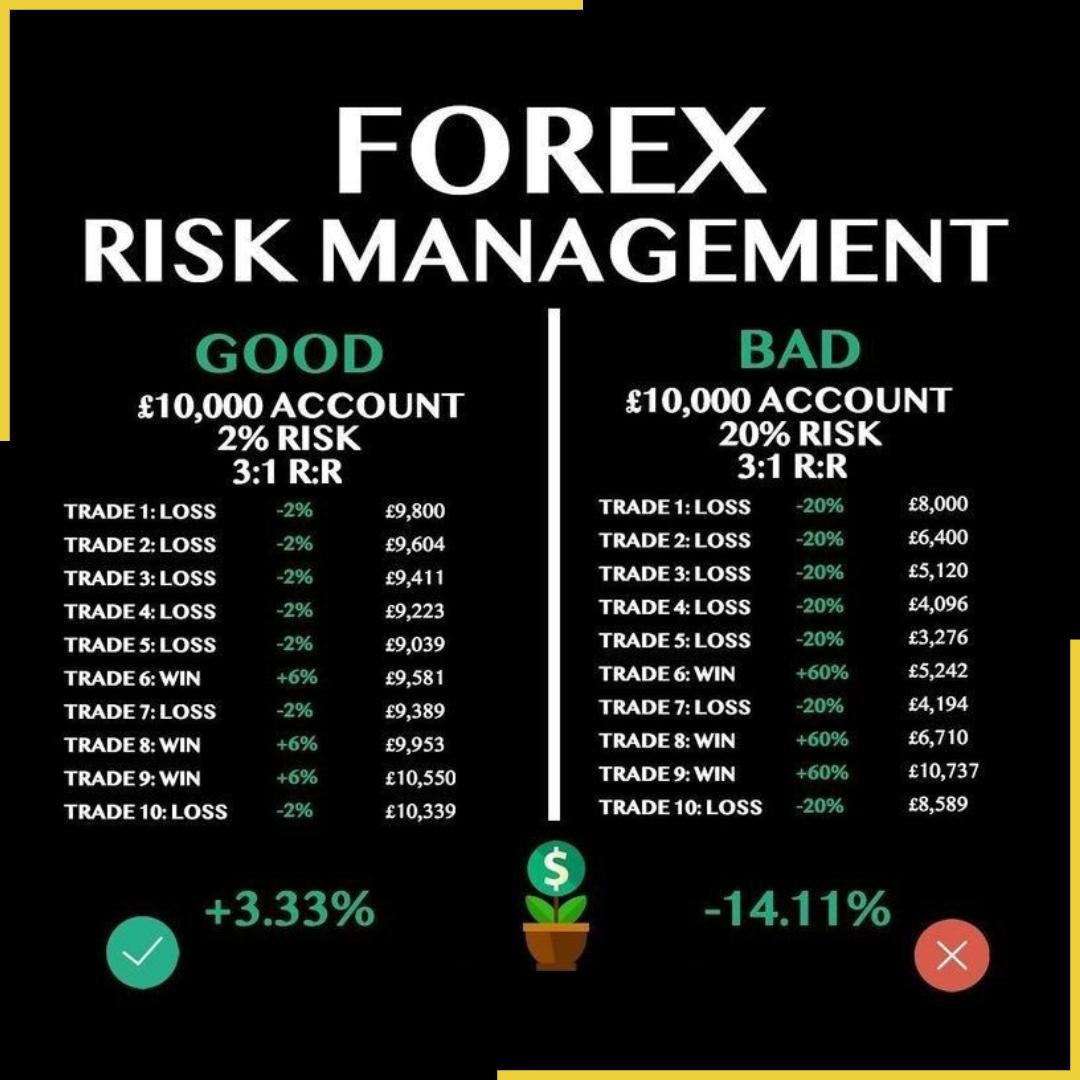
Successful Forex trading isn’t just about finding profitable trade opportunities—it’s also about protecting your trading capital. Knowing terms such as risk-to-reward ratio, position size, drawdown, and margin call will help you manage risk more effectively and reduce the chances of making emotional decisions.
A trader who understands risk management terminology is generally better prepared to protect their account during periods of market volatility.
5. It Builds Confidence
Many beginners feel overwhelmed because they constantly encounter unfamiliar words. As your Forex vocabulary grows, you’ll begin to understand articles, videos, webinars, and trading discussions more easily. This confidence encourages you to continue learning and practicing without feeling intimidated by technical language.
6. It Helps You Communicate with Other Traders
Whether you’re participating in online forums, joining trading communities, or discussing the market with experienced traders, understanding Forex terminology allows you to follow conversations and ask informed questions. It also makes it easier to share your own market ideas and learn from others.
Start with the Basics
You don’t need to memorize every Forex term in a single day. Focus on learning the most commonly used terms first, then gradually expand your knowledge as you gain trading experience. Over time, these words will become second nature, allowing you to spend less time looking up definitions and more time improving your trading skills.
The A–Z glossary below is designed to help you do exactly that. Use it as a quick reference whenever you come across an unfamiliar Forex term, and revisit it regularly as your knowledge grows.
Beginner Tip: Bookmark this page and return to it whenever you encounter a new Forex term. Even experienced traders occasionally review trading terminology, so don’t hesitate to use this glossary as a learning resource throughout your trading journey.
How to Use This Forex Trading Glossary
This Forex Trading Glossary is designed to be a practical reference that you can use throughout your trading journey. Whether you’re completely new to Forex or already practicing on a demo account, this guide will help you quickly understand unfamiliar trading terms and build a stronger foundation for learning the market.
Unlike a traditional dictionary filled with complex financial jargon, this glossary explains each Forex term in simple, beginner-friendly language. Every definition is written to help you understand not only what a term means but also how it is used in real trading situations.
Browse the Glossary Alphabetically
The glossary is organized from A to Z, making it easy to find specific Forex terms whenever you need them. If you encounter a word like Leverage, Margin, Spread, or Volatility while reading an article or watching a trading video, simply scroll to the corresponding letter to find its definition.
This alphabetical format allows you to use the glossary as a quick reference without having to read the entire article from start to finish.
Learn One Term at a Time
There’s no need to memorize every Forex term in a single sitting. Instead, focus on learning a few important terms each day. Understanding the meaning of a small number of terms and seeing how they apply in real trading is far more effective than trying to remember dozens of definitions at once.
As your knowledge grows, you’ll naturally become familiar with more advanced concepts and technical language.
Practice What You Learn
Reading definitions is only the first step. The best way to remember Forex terminology is to apply it while using a trading platform or practicing on a demo account.
For example:
After learning about Support and Resistance, identify these levels on a price chart.
After reading about Stop Loss, practice setting one on every demo trade.
After learning what a Pip is, calculate how many pips a currency pair moves during the day.
After understanding Risk-to-Reward Ratio, use it when planning your trades.
Applying new knowledge immediately helps reinforce your understanding and makes learning much more effective.
Follow the Internal Links
Throughout this glossary, you’ll find references to other beginner-friendly guides on BuildSmartAfri. These articles explain important Forex concepts in greater detail and provide practical examples that build on the definitions found here.
For example, after reading about:
Candlesticks, you can explore our guide on Candlestick Patterns.
Support and Resistance, you can continue with our dedicated tutorial on Support and Resistance Trading.
Price Action, you can learn more in our Price Action Trading Guide.
Risk Management, you can read our article on Stop Loss and Take Profit.
Using these related guides alongside the glossary will help you develop a deeper understanding of Forex trading step by step.
Bookmark This Page
As you continue learning Forex, you’ll frequently come across terms that are new or unfamiliar. Rather than searching multiple websites for definitions, save this glossary to your browser bookmarks so you can quickly find reliable explanations whenever you need them.
Even experienced traders occasionally revisit trading terminology, especially when exploring new strategies or financial concepts. Think of this glossary as a permanent learning resource that will continue to support you as your trading knowledge grows.
Keep Expanding Your Knowledge
Learning Forex terminology is an ongoing process. The more you read, practice, and analyze the markets, the more familiar these terms will become. Over time, you’ll spend less time looking up definitions and more time focusing on strategy development, risk management, and improving your trading performance.
Remember, every professional Forex trader started as a beginner. Building a strong understanding of Forex vocabulary today will make learning advanced trading concepts much easier in the future.
Pro Tip: Whenever you encounter a new Forex term in a book, video, trading platform, or market analysis, return to this glossary and review its definition. Consistent learning and regular practice are the fastest ways to build confidence and become a more informed trader
Forex Trading Glossary (A–Z)
A
Ask Price
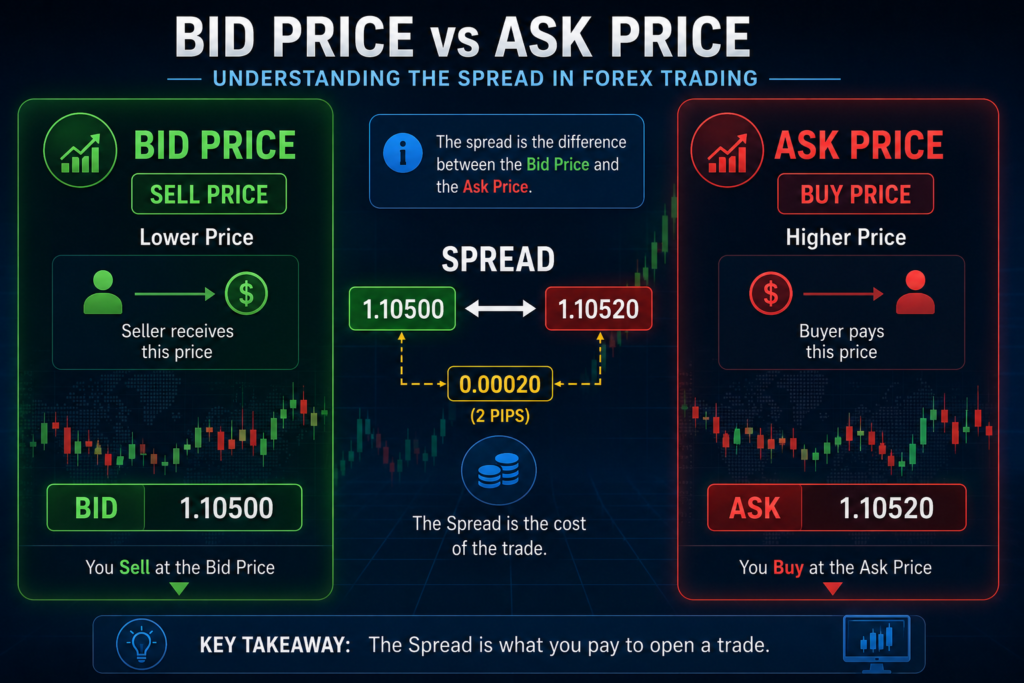
The Ask Price is the lowest price at which a seller is willing to sell a currency pair in the Forex market. It is the price you pay when you want to buy a currency pair.
Every Forex quote consists of two prices:
Bid Price – The price at which you can sell.
Ask Price – The price at which you can buy.
The Ask Price is always slightly higher than the Bid Price. The difference between these two prices is known as the spread, which represents one of the primary ways Forex brokers earn money.
For example, if the EUR/USD currency pair is quoted as:
EUR/USD = 1.1250 / 1.1252
Bid Price: 1.1250
Ask Price: 1.1252
If you decide to buy EUR/USD, your trade will be executed at 1.1252, which is the Ask Price.
Why the Ask Price Matters
Understanding the Ask Price helps traders:
Know the exact price they will pay when opening a buy trade.
Calculate the spread between buying and selling prices.
Better understand trading costs.
Avoid confusion when placing market orders.
Although the Ask Price may seem like a small detail, every successful trader understands how it affects trade entries and overall profitability.
Example: Imagine you’re buying a smartphone from a store. The listed selling price is what you pay to purchase it. In Forex trading, the Ask Price works in a similar way—it’s the price you pay to buy a currency pair.
Appreciation
Appreciation refers to an increase in the value of one currency compared to another currency. When a currency appreciates, it becomes stronger, meaning it can buy more of another currency than before.
Currency appreciation occurs because of factors such as:
Strong economic growth
Rising interest rates
Low inflation
Political stability
Increased demand from investors
For example, if the U.S. economy performs well and investors have confidence in it, demand for the U.S. dollar (USD) may increase. As demand rises, the value of the dollar appreciates against other currencies.
Example
Suppose the exchange rate changes from:
EUR/USD = 1.1200
to
EUR/USD = 1.1000
This means the U.S. dollar has appreciated against the euro because fewer U.S. dollars are now needed to buy one euro.
Understanding currency appreciation helps traders identify long-term trends and understand how economic news influences exchange rates.
Arbitrage
Arbitrage is a trading strategy that involves buying a currency in one market and selling it simultaneously in another market to profit from a small difference in price.
The goal of arbitrage is to take advantage of temporary price differences before the market corrects itself. Because the Forex market is highly efficient, these opportunities usually last only a few seconds and are often exploited by banks, financial institutions, and high-frequency trading systems.
Example
Imagine the EUR/USD exchange rate is:
Broker A: 1.1050
Broker B: 1.1053
A trader could theoretically:
Buy EUR/USD from Broker A at 1.1050.
Immediately sell it to Broker B at 1.1053.
The small price difference creates a potential profit before transaction costs.
Is Arbitrage Common for Beginners?
In today’s Forex market, arbitrage opportunities are rare because prices update almost instantly across brokers worldwide. Most retail traders do not use arbitrage strategies because they require:
Extremely fast trade execution
Advanced trading software
Very low transaction costs
Access to multiple trading platforms
Instead, beginners should focus on learning price action, trend analysis, and risk management before exploring advanced trading techniques like arbitrage.
Beginner Tip: Don’t worry if you never use arbitrage in your early trading journey. Understanding the concept is more important than trying to trade it. Concentrate on building a solid foundation with risk management, chart analysis, and disciplined trading practices.
B
Balance
In Forex trading, your Balance is the amount of money in your trading account before any open trades are taken into account. It only changes when you close a trade and realize either a profit or a loss.
Think of your balance as the “cash” available in your trading account after all completed trades have been settled.
For example, if you deposit $1,000 into your Forex trading account and have not opened any trades, your balance will be $1,000.
If you later close a trade with a $100 profit, your balance becomes $1,100.
If you close another trade with a $50 loss, your balance decreases to $1,050.
Balance vs Equity
Many beginners confuse Balance with Equity, but they are different.
Balance is your account value after all closed trades.
Equity is your account value including the profit or loss from any open trades.
For example:
Balance = $1,000
Open trade profit = $80
Your Equity becomes:
$1,080
Understanding this difference is important because brokers use your Equity—not just your Balance—to calculate your available margin and determine whether your account is at risk of a margin call.
Beginner Tip: Don’t judge your trading performance based only on your Balance. Always monitor your Equity as well, especially when you have open trades.
Balance Sheet
A Balance Sheet is a financial statement that shows a company’s assets, liabilities, and shareholders’ equity at a specific point in time.
Although balance sheets are mainly used in accounting and corporate finance rather than day-to-day Forex trading, they can still influence currency markets.
Investors often analyze the financial health of banks, multinational companies, and governments. Strong financial performance can increase investor confidence and strengthen a country’s currency.
A balance sheet is based on a simple accounting equation:
Assets = Liabilities + Equity
For example, a company may report:
Assets: $10 million
Liabilities: $4 million
Equity: $6 million
This indicates that the company owns more assets than it owes, which generally reflects a healthy financial position.
While retail Forex traders rarely analyze company balance sheets directly, understanding the concept helps when following financial news and economic reports.
Did You Know? Publicly traded companies release balance sheets as part of their quarterly and annual financial reports, and these reports can influence investor sentiment and financial markets.
Base Currency
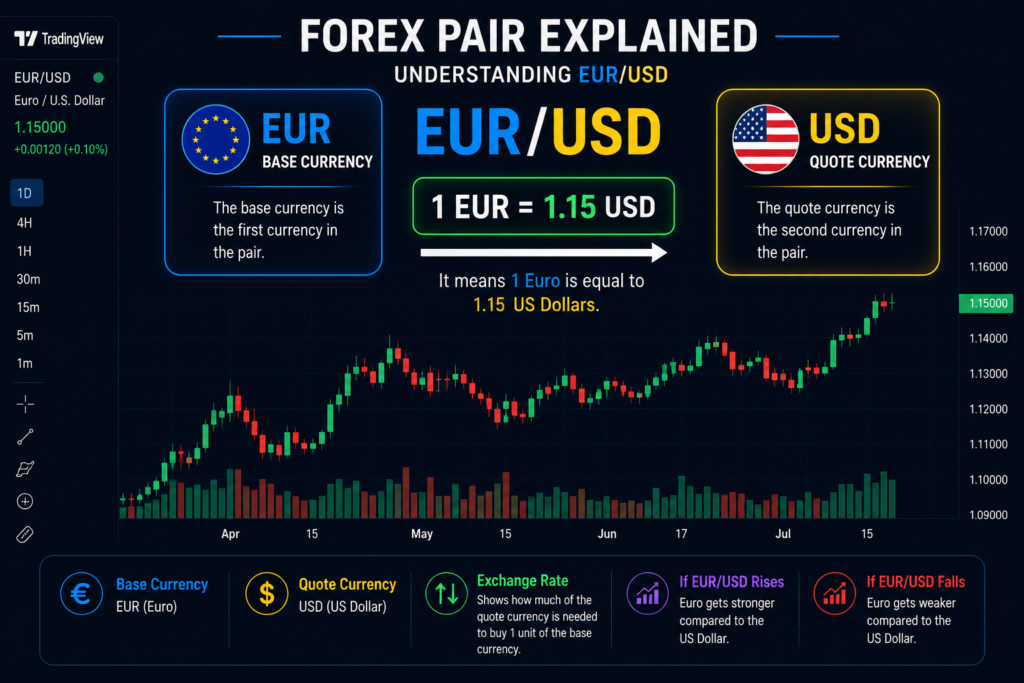
The Base Currency is the first currency listed in a Forex currency pair. It represents the currency you are buying or selling when you place a trade.
Every Forex pair consists of two currencies:
Base Currency / Quote Currency
For example:
EUR/USD
EUR = Base Currency
USD = Quote Currency
If the exchange rate is:
EUR/USD = 1.1500
It means:
1 Euro = 1.15 U.S. Dollars
If you buy EUR/USD, you are buying Euros while simultaneously selling U.S. Dollars.
If you sell EUR/USD, you are selling Euros while buying U.S. Dollars.
Understanding the base currency is essential because it helps you know exactly what you’re trading.
Common Base Currencies
EUR (Euro)
GBP (British Pound)
AUD (Australian Dollar)
NZD (New Zealand Dollar)
USD (U.S. Dollar)
Quick Tip: The first currency in every Forex pair is always the Base Currency, while the second currency is called the Quote Currency.
Bear Market
A Bear Market is a market in which prices are falling over an extended period, reflecting widespread pessimism and strong selling pressure.
In Forex trading, a bear market occurs when traders expect a currency pair to continue declining. During these conditions, sellers (often called bears) dominate the market.
Characteristics of a bear market include:
Lower Highs
Lower Lows
Strong selling momentum
Negative market sentiment
For example, if GBP/USD declines from:
1.3200 → 1.2800 → 1.2500
while consistently forming lower highs and lower lows, the pair is considered to be in a bear market.
Many traders look for selling opportunities during bear markets rather than buying.
Remember: “Bears” believe prices will fall, while “Bulls” believe prices will rise.
Bid Price
The Bid Price is the highest price a buyer is willing to pay for a currency pair. It is the price at which you sell a currency pair.
Whenever you open a sell trade, your order is executed at the Bid Price.
For example:
EUR/USD = 1.1250 / 1.1252
Bid Price = 1.1250
Ask Price = 1.1252
If you decide to sell EUR/USD, your trade opens at 1.1250.
The difference between the Bid Price and the Ask Price is called the Spread.
Why the Bid Price Matters
Understanding the Bid Price helps traders:
Know their selling price.
Calculate spreads.
Understand transaction costs.
Plan trade entries and exits more accurately.
Easy Way to Remember:Bid = Sell, Ask = Buy.
Breakout
A Breakout occurs when the price moves above a resistance level or below a support level with strong momentum.
Breakouts often signal the beginning of a new trend because buyers or sellers have gained enough strength to push the market beyond an important price level. Trading Breakouts and Fakeouts
There are two main types of breakouts:
Bullish Breakout
Price breaks above resistance, suggesting buyers are in control and prices may continue rising.
Bearish Breakout
Price breaks below support, indicating sellers have taken control and prices may continue falling.
Many traders wait for confirmation such as a strong candle close or a successful retest before entering a breakout trade.
Beginner Tip: Not every breakout is genuine. Always wait for confirmation to avoid getting caught in a fakeout, where the price quickly reverses after breaking a key level.
Broker
A Forex Broker is a company or financial institution that provides traders with access to the foreign exchange market. Brokers act as intermediaries, allowing you to buy and sell currency pairs through their trading platforms. Choosing a Forex Broker
Without a broker, individual retail traders cannot directly access the global Forex market. Common Forex Trading Mistakes
Most brokers provide:
Trading platforms (such as MetaTrader 4 or MetaTrader 5)
Real-time price quotes
Leverage
Demo accounts
Market analysis
Educational resources
Customer support
When choosing a broker, beginners should look for:
Strong regulation
Low spreads
Fast trade execution
Reliable customer service
Secure fund protection
Choosing a trustworthy broker is one of the most important decisions you’ll make as a Forex trader.
Bull Market
A Bull Market is a market in which prices are rising over an extended period, driven by strong buying pressure and positive market sentiment.
In Forex trading, a bull market is characterized by:
Higher Highs
Higher Lows
Strong upward momentum
Increased buyer confidence
For example, if EUR/USD rises from:
1.0800 → 1.1000 → 1.1250
while forming higher highs and higher lows, the pair is considered to be in a bull market.
Many traders prefer looking for buy opportunities during a bull market because trading in the direction of the trend generally offers a higher probability of success.
Easy Memory Trick:Bull = Prices Go Up, Bear = Prices Go Down.
C
Candlestick
A candlestick is a price chart that shows the opening, closing, highest, and lowest prices of a currency pair during a specific period. Traders use candlestick patterns to identify market sentiment and potential trading opportunities. Analyze live Forex charts using TradingView. learn more about Candlestick Patterns
Capital
Capital is the money you use to trade in the Forex market. It is also known as your trading funds or account balance.
Central Bank
A central bank manages a country’s monetary policy, controls interest rates, and regulates the money supply. Examples include the Federal Reserve (Fed), European Central Bank (ECB), and Bank of England (BoE). Learn more about U.S. monetary policy from the Federal Reserve.
Chart
A chart is a graphical representation of price movements over time. Common chart types include line charts, bar charts, and candlestick charts. Technical Analysis, Multiple Timeframe Analysis
Commission
Commission is a fee charged by some Forex brokers for executing trades. Some brokers charge commissions while others earn through spreads.
Consolidation
Consolidation occurs when prices move sideways within a narrow range without a clear trend.
Contract Size
Contract size refers to the amount of the base currency represented by one lot. A standard lot equals 100,000 units.
Cross Currency Pair
A currency pair that does not include the U.S. dollar, such as EUR/GBP or GBP/JPY.
Currency Pair
Two currencies traded against each other, such as EUR/USD or GBP/USD.
D
Daily Chart
A chart where each candlestick represents one trading day.
A decrease in the value of a currency compared to another currency.
Drawdown
The decline in your trading account from its highest value to its lowest point during a losing period. Trading Psychology
E
Economic Calendar
A schedule of important economic events and announcements that may affect the Forex market. Follow major economic events with the Investing.com Economic Calendar.
Equity
The current value of your trading account, including profits or losses from open trades.
Entry Price
The price at which a trade is opened.
Exchange Rate
The value of one currency relative to another.
Expert Advisor (EA)
An automated trading program used on platforms like MetaTrader to execute trades based on predefined rules.
F
Fakeout
A false breakout where price briefly moves beyond support or resistance before reversing.
Federal Reserve (Fed)
The central bank of the United States responsible for setting monetary policy and interest rates.
Fibonacci Retracement
A technical analysis tool used to identify potential support and resistance levels.
Floating Profit/Loss
The unrealized profit or loss on an open trade.
G
Gap
A gap occurs when price jumps from one level to another without trading between them.
GDP (Gross Domestic Product)
The total value of goods and services produced within a country. It is a key measure of economic growth.
H
Hawkish
A central bank stance favoring higher interest rates to control inflation.
Hedging
A strategy used to reduce trading risk by opening offsetting positions.
Higher High
A price peak that is above the previous high, indicating an uptrend.
Higher Low
A price low that is above the previous low, confirming bullish market structure.
I
Inflation
A sustained increase in the general price level of goods and services over time.
Indicator
A mathematical tool applied to charts to help identify trends or trading signals.
Interest Rate
The percentage charged for borrowing money or earned from savings, set primarily by central banks.
L
Leverage
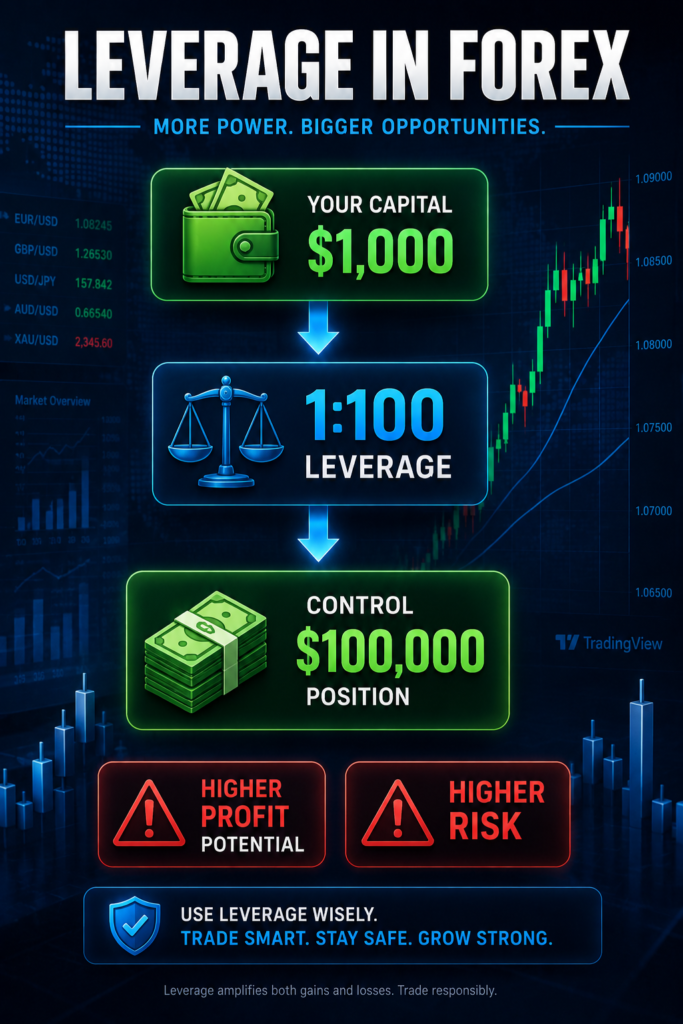
Leverage allows traders to control larger positions with a smaller amount of capital. Forex Trading Risks
Liquidity
The ease with which a currency can be bought or sold without significantly affecting its price.
Lot Size
The standardized trading volume in Forex. Common sizes include Standard, Mini, Micro, and Nano lots.
Long Position
A buy trade expecting prices to rise.
Lower High
A price high lower than the previous high, indicating weakening buying pressure.
Lower Low
A price low lower than the previous low, confirming a downtrend.
A warning from your broker that your account equity is too low to support open trades.
Market Order
An instruction to buy or sell immediately at the current market price.
Moving Average
A technical indicator that smooths price data to identify market trends.
N
Non-Farm Payroll (NFP)
A monthly U.S. employment report that measures job creation outside the farming sector. It is one of the most influential economic reports for Forex traders.
O
Open Position
A trade that is currently active and has not yet been closed.
P
Pip
The smallest standard price movement in most currency pairs, usually 0.0001.
Position Size
The number of lots or units traded in a single position.
Price Action
A trading approach that analyzes price movements without relying heavily on indicators. Price Action Trading
Profit Factor
A performance metric calculated by dividing total profits by total losses.
Q
Quote Currency
The second currency in a Forex pair. It shows how much of that currency is needed to buy one unit of the base currency.
R
Resistance
A price level where selling pressure may prevent prices from rising further. Support and Resistance
The amount of potential profit compared to the amount of risk on a trade.
S
Scalping
A short-term trading strategy that aims to profit from small price movements.
Slippage
The difference between the expected trade price and the actual execution price.
Spread
The difference between the Bid Price and the Ask Price.
Stop Loss
An order that automatically closes a losing trade at a predetermined price. Stop Loss and Take Profit
Support
A price level where buying pressure may prevent prices from falling further.
Swing Trading
A trading style that holds positions for several days or weeks to capture larger market moves.
T
Take Profit
An order that automatically closes a trade when a target profit is reached.
Technical Analysis
The study of historical price charts and indicators to predict future price movements.
Trend
The overall direction of market movement is upward, downward, or sideways. Trend Trading
Trendline
A straight line drawn on a chart to connect highs or lows and identify trend direction.
U
Uptrend
A market condition where prices consistently form higher highs and higher lows.
V
Volatility
The degree of price fluctuation in the market over a given period. Higher volatility often means larger price movements.
W
Whipsaw
A sudden price movement that quickly reverses direction, often causing traders to be stopped out before the original trend resumes.
Y
Yield
In Forex trading and the broader financial markets, Yield refers to the return or income earned from an investment, usually expressed as a percentage over a specific period. Yield is commonly associated with government bonds, savings accounts, and other interest-bearing investments, but it also plays a significant role in the Forex market.
One of the main reasons yield matters to Forex traders is because it influences interest rates, investor confidence, and the flow of money between countries. When a country offers higher bond yields compared to others, investors may move their money into that country’s assets to earn better returns. This increased demand can strengthen the country’s currency.
For example, if U.S. Treasury bond yields rise while yields in another country remain low, international investors may purchase more U.S. government bonds. To do so, they first need to buy U.S. dollars (USD), increasing demand for the currency and potentially causing it to appreciate against other currencies.
Example
Imagine the following government bond yields:
United States: 5%
Eurozone: 2%
Since U.S. bonds offer a higher return, many investors may choose to invest in the United States. As demand for the U.S. dollar increases, the USD may strengthen against currencies such as the euro (EUR), British pound (GBP), or Japanese yen (JPY).
This is one of the reasons Forex traders pay close attention to changes in government bond yields, especially during periods of economic uncertainty or after central bank announcements.
Why Yield Matters in Forex
Understanding yield helps traders:
Understand why currencies strengthen or weaken.
Interpret interest rate decisions by central banks.
Follow movements in government bond markets.
Better understand long-term market trends.
Improve fundamental analysis.
Although beginners don’t need to become experts in bond markets immediately, having a basic understanding of yield will make it easier to understand financial news and the factors that influence currency prices.
Beginner Tip: Rising bond yields often support a country’s currency, while falling yields may reduce investor demand and weaken the currency. Always consider yield alongside other economic indicators rather than relying on it alone.
Final Thoughts
Learning Forex trading isn’t just about finding profitable trade setups—it’s also about understanding the language of the market. Every professional trader once started as a beginner, learning simple terms like pip, spread, lot size, leverage, and stop loss before progressing to more advanced concepts.
This complete A–Z Forex Trading Glossary provides a solid foundation by explaining the most important Forex terms in clear, beginner-friendly language. As you continue your trading journey, you’ll notice these terms appearing in market analysis, educational videos, trading platforms, and economic news. The more familiar you become with them, the easier it will be to understand market movements, develop trading strategies, and manage risk effectively.
Remember that becoming a successful Forex trader is a gradual process. You don’t need to memorize every definition in one day. Instead, focus on learning a few new terms regularly, apply them while practicing on a demo account, and revisit this glossary whenever you encounter unfamiliar terminology.
As BuildSmartAfri continues to publish more educational Forex content, this glossary will serve as a central reference that supports your learning and helps you connect the concepts covered in our beginner guides.
Whether you’re opening your first trading account, learning technical analysis, or preparing for live trading, a strong understanding of Forex terminology will give you greater confidence and help you make more informed trading decisions.
Bookmark this page, return to it often, and continue building your Forex knowledge one step at a time.
Frequently Asked Questions (FAQ)
1. What is a Forex trading glossary?
A Forex trading glossary is a collection of commonly used Forex terms and definitions arranged in an easy-to-understand format. It helps beginners learn the language of Forex trading and understand educational materials, market analysis, and trading platforms.
2. Why should beginners learn Forex terminology?
Learning Forex terminology makes it easier to understand trading strategies, financial news, economic events, and trading platforms. It also helps beginners avoid confusion and make better-informed trading decisions.
3. How many Forex terms should I know before trading?
You don’t need to know every Forex term before you start practicing. Focus on understanding the most important concepts such as currency pairs, pips, spreads, leverage, margin, stop loss, take profit, support, resistance, and risk management. As you gain experience, your vocabulary will naturally expand.
4. Can I trade Forex without understanding these terms?
While it’s technically possible to place trades without knowing all the terminology, doing so greatly increases the risk of making costly mistakes. Understanding Forex terms is essential for reading charts, following market analysis, and managing your trades effectively.
5. How often should I review this glossary?
Review the glossary whenever you encounter an unfamiliar trading term or before studying a new Forex topic. Repetition helps reinforce your understanding, and over time you’ll become comfortable using these terms in everyday trading.
Continue Your Forex Learning Journey
Now that you’re familiar with the essential language of Forex trading, take the next step by exploring these beginner-friendly guides on BuildSmartAfri:
Each guide builds on the concepts introduced in this glossary, helping you develop the knowledge and confidence needed to become a disciplined Forex trader.
Disclaimer
The information provided in this article is for educational purposes only and should not be considered financial or investment advice. Forex trading involves significant risk and may not be suitable for every investor. Currency prices can be highly volatile, and you may lose some or all of your invested capital. Read the CFTC’s educational resources about Forex trading risks.
Always conduct your own research, develop a well-tested trading strategy, and practice on a demo account before trading with real money. If necessary, seek advice from a qualified financial professional before making any investment decisions.