
Introduction:
One of the biggest challenges every investor and trader face is managing losses. Financial markets are unpredictable, and prices can move sharply against your expectations due to economic news, political events, market sentiment, or unexpected global developments. Without proper risk management, even a single bad trade can significantly damage your investment portfolio. One of the most important tools for managing trading risk is understanding how stop-loss orders work in financial markets.
This is where stop-loss orders become incredibly important.
A stop-loss order is one of the simplest yet most effective tools for protecting your money in financial markets. It acts as a safety mechanism by automatically closing a trade when the price reaches a predetermined level. Instead of allowing losses to continue growing indefinitely, a stop-loss helps investors and traders limit their downside and preserve their capital.
Many beginner traders make the mistake of believing that markets will eventually reverse in their favor. As prices move against them, they hold onto losing positions, hoping for a recovery. Unfortunately, markets do not always turn around, and what starts as a small loss can quickly become a devastating one. If you are new to Forex trading, it is important to first understand the basics before learning risk management. You can start with our guide on What is Forex Trading?
Successful traders understand an important principle:
Protecting your capital is more important than chasing profits.
A trader who preserves their capital can continue learning, improving, and taking future opportunities. However, a trader who loses most of their account may struggle to recover and may even leave the market entirely.
Consider this example:
Imagine you have a $1,000 trading account and decide to buy a currency pair without using a stop-loss order. Unexpected economic news causes the market to move sharply against your position, and within a short period, you lose $300.
Your account now stands at only $700.
To recover from this loss, you would need to generate approximately a 43% return just to get back to your original balance.
Now imagine placing a stop-loss that limits your risk to $20.
Even if the trade goes against you, your account remains largely intact, allowing you to continue trading and learning without severe financial damage.
This example illustrates why professional traders place such a strong emphasis on risk management and capital preservation.
A stop-loss order does not guarantee profits or eliminate losses entirely. Instead, it provides a disciplined way to control risk and prevent emotional decision-making. It allows investors and traders to define their maximum acceptable loss before entering a trade and stick to that decision regardless of market emotions.
In this guide, you will learn what stop-loss orders are, how they work, why they are essential for limiting investment losses, and how beginners can use them effectively to protect their capital and become more disciplined traders.
What Is a Stop-Loss Order?
A stop-loss order is an instruction given to your broker or trading platform to automatically close a trade when the market reaches a specific price level. The primary purpose of a stop-loss order is to limit potential losses and protect your investment capital.
Think of a stop-loss order as a safety net for your trades. Just as drivers wear seat belts to protect themselves in case of an accident, traders use stop-loss orders to protect their money when the market moves unexpectedly against them.
Financial markets are highly unpredictable. Even the most experienced traders cannot predict every price movement correctly. Economic announcements, geopolitical events, inflation data, central bank decisions, and unexpected market sentiment can all cause prices to change rapidly.
Because of this uncertainty, losses are an unavoidable part of trading.
The goal of successful trading is not to avoid losses entirely. Instead, the goal is to keep losses small and manageable while allowing profitable trades to grow. A stop-loss order helps traders achieve this balance.
How a Stop-Loss Order Works
Suppose you decide to buy the EUR/USD currency pair at 1.1000 because your analysis suggests that the price will rise.
However, before entering the trade, you also recognize that your analysis may be wrong. To manage this risk, you decide that you are willing to lose no more than 50 pips on the trade.
You therefore place your stop-loss at 1.0950.
The possible outcomes are:
Scenario 1: The market moves higher
The price rises from 1.1000 to 1.1100.
Your trade is profitable, and the stop-loss remains inactive.
Scenario 2: The market moves lower
The price falls from 1.1000 to 1.0950.
Your stop-loss order is triggered automatically, closing the trade and limiting your loss to approximately 50 pips.
Instead of watching the market continue to move against you and potentially losing a much larger amount, your losses are controlled and predetermined.
Why Predetermined Losses Matter
One of the biggest dangers in trading is uncertainty.
Without a stop-loss, traders often have no idea how much they could lose if the market moves against them. This uncertainty can lead to fear, panic, and emotional decision-making. Stop-loss orders work closely with proper trading discipline, which we explain in our guide on Forex Trading Plan for Beginners.
A stop-loss removes much of this uncertainty because it answers an important question before you even enter a trade:
“What is the maximum amount I am willing to lose on this trade?”
Knowing this amount allows traders to approach the market with greater confidence and discipline.
Stop-Loss Orders Encourage Discipline
Many beginner traders struggle with emotions.
When a trade begins to lose money, they often think:
- “Maybe the market will turn around.”
- “I’ll wait a little longer.”
- “I don’t want to accept this loss.”
Unfortunately, these thoughts often lead to even larger losses.
A stop-loss order removes emotional decision-making from the equation. Once the market reaches your predetermined level, the trade closes automatically.
This discipline is one of the reasons why professional traders use stop-loss orders consistently.
Stop-Loss Orders Help Traders Stay in the Game
Successful trading is a long-term activity.
No trader wins every trade.
Even highly experienced traders experience losses regularly.
The difference is that professional traders survive losing periods because they manage risk carefully.
Imagine two traders:
Trader A does not use stop-loss orders and loses 30% of their account on one bad trade.
Trader B uses stop-loss orders and limits their loss to only 2% of their account.
After several trades, Trader B still has enough capital to continue learning and taking advantage of future opportunities, while Trader A may struggle to recover.
This is why many experienced investors and traders say:
“Your first responsibility is not making money. Your first responsibility is protecting your capital.”
A stop-loss order may seem like a simple tool, but it is one of the most powerful risk management techniques available to investors and traders. By controlling losses, reducing emotional decisions, and preserving trading capital, stop-loss orders help traders survive long enough to achieve long-term success in the financial markets.
Common Stop-Loss Mistakes Beginners Make
Although stop-loss orders are powerful risk management tools, many beginners use them incorrectly. In some cases, poor stop-loss practices can be just as damaging as not using stop-losses at all. Many beginners also struggle with emotions when trading, which is covered in our guide on The Psychology of a Successful Trader.
Understanding these common mistakes can help you become a more disciplined and successful trader.
1. Trading Without a Stop-Loss
This is perhaps the most dangerous mistake a trader can make.
Many beginners avoid placing stop-loss orders because they believe the market will eventually reverse in their favor. While this may happen occasionally, markets can also continue moving against a position for a long time.
Without a stop-loss, losses can grow rapidly and become difficult to recover from.
Remember that preserving your capital should always take priority over trying to avoid taking small losses.
2. Moving the Stop-Loss Further Away
Some traders place a stop-loss but move it farther away when the market approaches it.
For example:
- Entry Price: 1.1000
- Original Stop-Loss: 1.0950
As the price falls toward 1.0950, the trader changes the stop-loss to 1.0900 because they hope the market will recover.
Unfortunately, the market may continue falling.
What started as a manageable loss can become a much larger one.
A stop-loss should be based on your trading plan and market analysis—not emotions or hope.
3. Placing Stop-Losses Too Close
Some beginners place stop-losses extremely close to their entry price.
For example, setting a stop-loss only five pips away may cause the trade to close because of normal market fluctuations.
Markets naturally move up and down before establishing a clear direction.
A stop-loss should give the trade enough room to breathe while still protecting your capital.
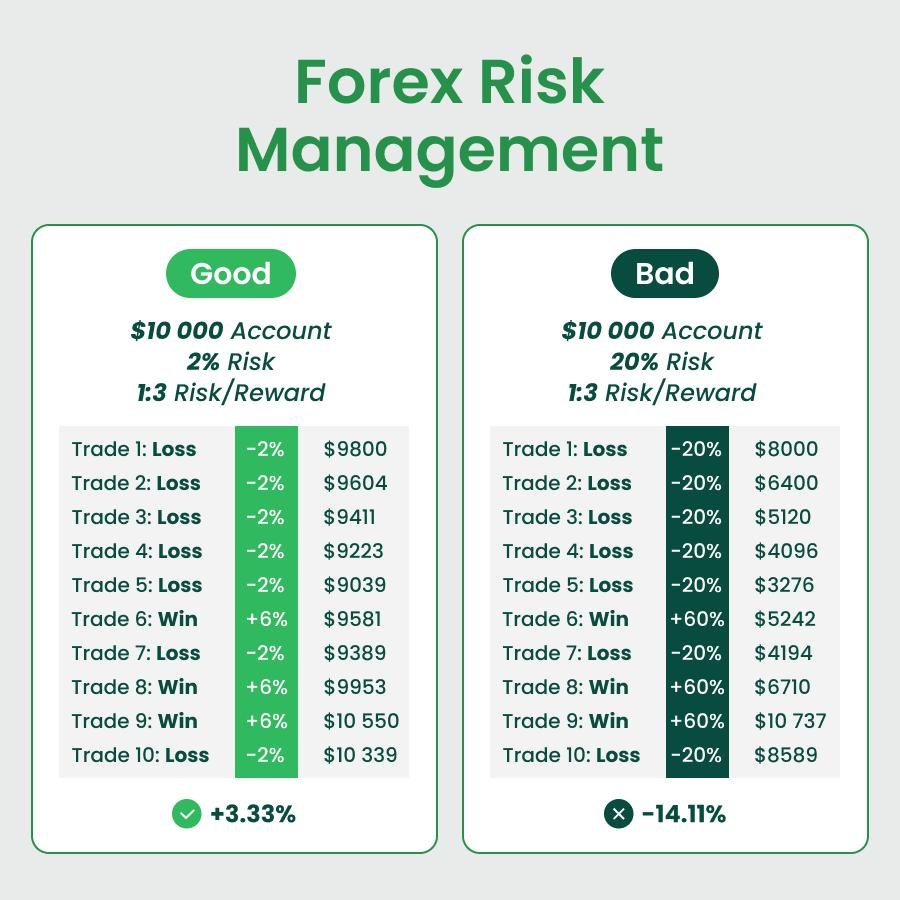
4. Risking Too Much on One Trade
Even with a stop-loss, risking too much money can damage your account.
Suppose you have a $500 account.
If you risk $150 on one trade and the stop-loss is triggered, you lose 30% of your account immediately.
Recovering from such losses can be extremely difficult.
Most experienced traders risk only a small percentage of their accounts on each trade, often between 1% and 2%.
5. Ignoring Market Conditions
Different market environments require different stop-loss placements.
During periods of high volatility, prices can move aggressively in both directions.
Placing stop-losses without considering market conditions can lead to unnecessary losses.
Successful traders consider factors such as:
- Market volatility
- Economic news releases
- Support and resistance levels
- Trading timeframes
- Overall market trends
A stop-loss should be placed strategically rather than randomly.
Best Practices for Using Stop-Loss Orders
To use stop-loss orders effectively, consider the following guidelines:
Always Define Your Risk Before Entering a Trade
Before clicking the buy or sell button, know exactly how much you are willing to lose if the trade fails. Combining stop-loss orders with a proper risk-reward ratio allows traders to evaluate whether a potential trade is worth taking before risking their money. Effective risk control is a key part of trading success. Learn more in our detailed guide on Forex Risk Management for Beginners.
Use Proper Position Sizing
Determine your position size based on your account balance and acceptable risk level.
Follow Your Trading Plan
Your stop-loss should be part of your overall trading plan and should not be changed because of fear or hope.
Accept Small Losses
Losses are a normal part of trading.
Successful traders understand that taking small losses is far better than suffering large, account-damaging losses.
Focus on Long-Term Survival
Trading is a marathon, not a sprint.
Protecting your capital allows you to stay in the market, gain experience, and take advantage of future opportunities.
Practical Examples of Using Stop-Loss Orders
Understanding stop-loss orders becomes much easier when you see how they work in real trading situations.
Example 1: Using a Stop-Loss in Forex Trading
Imagine you have a trading account balance of $1,000.
According to your trading plan, you decide to risk only 2% of your account on a single trade.
To calculate your maximum risk:
$1,000 × 2% = $20
This means you should not lose more than $20 on this trade.
Suppose you decide to buy the EUR/USD currency pair at 1.1000 because your analysis suggests that the price will rise.
You place your stop-loss at 1.0950, which is 50 pips below your entry price.
There are two possible outcomes:
Scenario A: The Market Moves Higher
The price rises to 1.1100.
Your trade becomes profitable, and your stop-loss remains inactive.
Scenario B: The Market Moves Lower
Unexpected economic news causes the price to fall to 1.0950.
Your stop-loss is triggered automatically, and your trade closes.
Your loss is limited to your predetermined risk of approximately $20.
Although losing money is never enjoyable, your account remains largely intact. You still have most of your capital available to continue trading and learning.
Example 2: Trading Without a Stop-Loss
Now imagine taking the same trade without a stop-loss order.
You buy EUR/USD at 1.1000, but unexpected news causes the market to decline rapidly.
The price continues falling:
- 1.0950
- 1.0900
- 1.0850
- 1.0800
Because there is no stop-loss, your losses continue increasing.
What started as a manageable loss may eventually become a devastating one.
A single uncontrolled trade can wipe out weeks or even months of progress.
This example demonstrates why experienced traders focus heavily on controlling losses rather than trying to avoid losses entirely.
The objective is not to be right all the time.
The objective is to protect your capital so you can remain in the market long enough to improve and take advantage of future opportunities.
Frequently Asked Questions (FAQ)
What Is a Stop-Loss Order?
A stop-loss order is an instruction that automatically closes a trade when the market reaches a predetermined price level. Its purpose is to limit potential losses and protect investment capital.
Why Are Stop-Loss Orders Important?
Stop-loss orders are important because they help control risk.
They:
- Protect trading capital
- Prevent small losses from becoming large ones
- Reduce emotional decision-making
- Encourage discipline and consistency
- Help traders survive losing periods
Can I Trade Without a Stop-Loss Order?
Yes, it is possible to trade without a stop-loss order, but doing so significantly increases your risk.
Without a stop-loss, losses can become much larger than expected, especially during highly volatile market conditions.
Most professional traders consider stop-loss orders an essential part of risk management.
Where Should I Place My Stop-Loss?
A stop-loss should never be placed randomly.
Instead, it should be based on:
- Market structure
- Support and resistance levels
- Market volatility
- Your risk tolerance
- Your trading strategy
The goal is to protect your account while giving the trade enough room to move naturally.
Should I Move My Stop-Loss After Entering a Trade?
Generally, traders should avoid moving stop-losses farther away because of fear or hope.
Changing a stop-loss emotionally often increases losses unnecessarily.
However, some traders move stop-losses closer to lock in profits as trades move in their favor.
Any adjustments should be part of a predefined trading plan.
What Percentage of My Account Should I Risk Per Trade?
Many professional traders risk only 1% to 2% of their trading account on each trade.
For example:
Account Balance: $1,000
Risk Per Trade: 2%
Maximum Risk:
$1,000 × 2% = $20
This approach allows traders to survive losing streaks and continue participating in the market.
Do Stop-Loss Orders Guarantee That I Will Never Lose More Than Expected?
Not always.
During periods of extreme volatility or major economic announcements, prices can move very quickly.
In rare situations, trades may be executed at slightly different prices than expected, a phenomenon known as slippage.
However, stop-loss orders still remain one of the most effective tools for limiting risk and protecting investment capital.
Are Stop-Loss Orders Used Only in Forex Trading?
No.
Stop-loss orders can be used in various financial markets, including:
- Stocks
- Forex
- Commodities
- Exchange-traded funds (ETFs)
- Cryptocurrencies
- Indices
Regardless of the market, the purpose remains the same: to control losses and preserve capital.
Key Takeaway
A stop-loss order is more than just a technical trading feature. It is a risk management tool that helps investors and traders define their maximum acceptable loss before entering a trade. By limiting downside risk, reducing emotional decisions, and preserving capital, stop-loss orders play a crucial role in long-term investment and trading success.
✔ Stop-loss orders automatically limit losses.
✔ They help preserve trading capital.
✔ They reduce emotional decision-making.
✔ Most professional traders use stop-losses consistently.
✔ A stop-loss should be part of every trading plan.
Final Thoughts
No trader can predict the market perfectly.
Every investor and trader experiences losses at some point. The key difference between successful traders and unsuccessful ones is not the number of winning trades they make but how effectively they manage risk.
A stop-loss order is one of the simplest yet most powerful tools available for protecting your investment capital. It helps define your maximum acceptable loss, reduces emotional decision-making, and encourages discipline and consistency.
Think of a stop-loss not as something that limits your profits but as something that protects your future opportunities.
A single uncontrolled trade can severely damage an account, but a well-placed stop-loss can keep losses small and manageable.
Many professional traders follow one important principle:
Take care of your losses, and your profits will take care of themselves.
By learning how to use stop-loss orders correctly and making them a regular part of your trading plan, you can improve your risk management skills, preserve your capital, and build the discipline needed for long-term success in the financial markets.
Continue Your Forex Learning Journey
Forex Trading Plan for Beginners
Risk Management in Forex Trading
The Beginner’s Guide to Protecting Your Capital
The Psychology of a Successful Trader Top 20 Forex Terms Every Beginner Should Know
Remember: Successful trading is not about avoiding losses completely; it’s about managing risk wisely and staying in the game long enough to achieve long-term success.
Disclaimer
The information provided in this article is for educational and informational purposes only and should not be considered financial or investment advice. Forex trading and other financial market investments involve substantial risk and may not be suitable for every investor.
Past performance does not guarantee future results, and there is always the possibility of losing part or all of your invested capital.
Before making any investment decisions, conduct your own research, assess your financial situation and risk tolerance, and consider seeking advice from a qualified financial professional. Always trade responsibly and never invest money that you cannot afford to lose.