
Introduction:
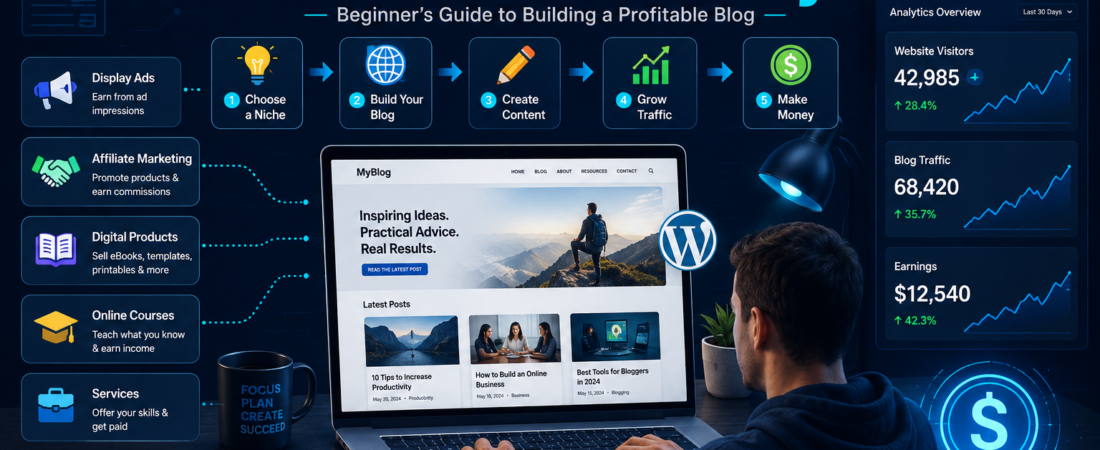
How to Start a Blog That Makes Money: Beginner’s Guide. Blogging has become one of the most popular ways to share knowledge, build an online audience, and create opportunities to earn money on the internet. Whether you are passionate about technology, education, finance, travel, food, online business, or another topic, a blog gives you a platform to publish useful information that people can discover through search engines and social media. Blogging is just one of many ways to build a digital business. If you’re completely new to the concept, read our guide on What Is an Online Business? to understand how online businesses work.
However, starting a profitable blog is not simply about creating a website and publishing a few articles. Successful blogging requires choosing the right niche, understanding what your audience is searching for, creating valuable content consistently, and building traffic over time. Once your blog begins attracting readers, you can explore different ways to generate income.
Bloggers can make money through methods such as display advertising, affiliate marketing, sponsored content, digital products, online courses, and services. The amount you earn will depend on factors such as your traffic, niche, audience, content quality, and monetization strategy.
In this beginner-friendly guide, you’ll learn how to start a blog that makes money, from choosing a profitable niche and setting up your website to creating useful content, attracting visitors, and eventually monetizing your blog.
Choose a Profitable Blog Niche
Choosing the right niche is one of the most important steps when starting a blog that you want to monetize. A blog niche is the main topic or subject your blog focuses on. Instead of writing about everything, choosing a specific niche helps you attract readers who are interested in similar topics. You can also use Google Trends to explore what people are searching for and compare interest in different topics before choosing your blog niche.
A good niche should combine three things: your knowledge or interests, audience demand, and monetization opportunities. You don’t necessarily need to be an expert when you start, but you should be willing to continuously research and learn about the topic.
Some popular blogging niches include:
- Technology and AI
- Personal finance
- Online business
- Education
- Health and fitness
- Food and recipes
- Travel
- Digital marketing
- Career development
- Lifestyle
Before choosing your niche, research what people are searching for online. Look at common questions, problems, and topics within the niche. Your goal should be to create content that provides useful answers and helps readers solve real problems.
You should also consider how the niche could eventually generate income. For example, some niches provide opportunities for affiliate marketing, advertising, sponsored content, digital products, or services.
Don’t choose a niche only because you believe it will make money. Choose something you can consistently create valuable content about. A focused niche, useful content, and a clear understanding of your audience can provide a strong foundation for building a profitable blog.
Create Your Blog
Once you have chosen your niche, the next step is to create your blog. You don’t need advanced technical skills to get started because modern website platforms make it relatively easy for beginners to build and manage a blog. You don’t necessarily need a large budget to launch your website. Our guide on how to start an online business with little money explains how beginners can get started while keeping costs low.
Start by choosing a domain name, which is the web address people will use to find your blog. Your domain should be short, memorable, easy to spell, and preferably related to your niche or brand. Beginners can use WordPress to create and manage a blog, publish articles, customize their website, and add additional functionality through plugins. Bloggers who want to understand how their content can appear in Google Search can use Google Search Central for official SEO and website-discovery guidance.
Next, choose a reliable web hosting provider. Web hosting stores your website files and makes your blog accessible on the internet. When starting, you can choose an affordable hosting plan and upgrade later as your traffic grows.
After setting up your domain and hosting, install a content management system such as WordPress. It allows you to create articles, upload images, organize categories, and manage your website without building everything from scratch.
Choose a clean, mobile-friendly theme and create important pages such as About, Contact, Privacy Policy, and Disclaimer. You should also make sure your website is easy to navigate and loads quickly.
Don’t spend too much time trying to make your blog perfect before publishing. A simple, professional website with valuable content is better than an impressive website with nothing useful for readers. You can continue improving the design as your blog grows.
Create Helpful Content That Attracts Readers
Once your blog is set up, the next step is to publish content that people actually want to read. Valuable content is the foundation of a successful blog because without readers, it will be difficult to generate income. Creating articles, social media posts, and other materials can take time. Explore our guide to the Best AI Tools for Content Creators to discover tools that can support your content creation workflow. If you need original visuals for your articles, check out our guide to the Best AI Image Generators.
Start by identifying the questions and problems your target audience is searching for online. Then create articles that provide clear, useful, and practical answers. For example, instead of publishing a general article called “Blogging Tips,” you could write something more specific such as “How to Start a Blog with Little Money.” If you’re new to SEO, Google’s SEO Starter Guide explains the fundamentals of helping search engines understand your content and helping users discover your website.
You should also learn basic search engine optimization (SEO). SEO involves optimizing your articles so search engines such as Google can better understand your content and potentially show it to people searching for related information. This includes using relevant keywords naturally, writing descriptive headings, adding internal links, optimizing images, and creating useful titles and meta descriptions.
Consistency is also important. You don’t necessarily need to publish every day. Create a realistic publishing schedule that allows you to maintain quality.
Most importantly, write for your readers rather than focusing only on search engines. Helpful, original content that genuinely answers questions can build trust, attract returning visitors, and create a stronger foundation for monetizing your blog later.
How Do Blogs Make Money?
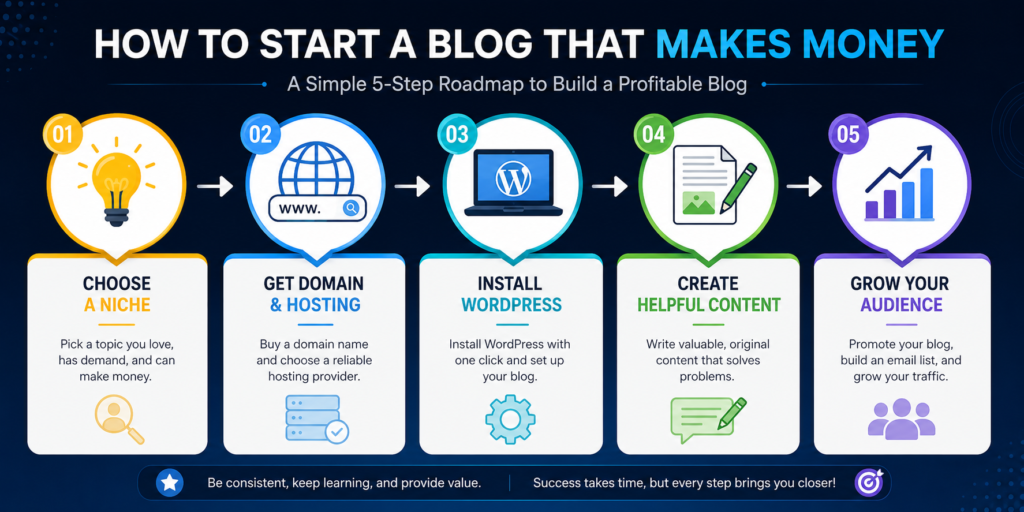
Once your blog begins attracting readers, there are several ways you can turn that traffic into income. You don’t need to use every monetization method at once. Start with one or two that fit your niche and expand as your audience grows. Blogging is only one possible digital business model. Explore our Best Online Business Ideas for Beginners to discover other ways to build income online. Once your blog has useful content and an audience, Google AdSense is one advertising option you can explore for monetizing your website.
1. Display Advertising
You can place advertisements on your blog and earn money when visitors view or interact with them. Advertising networks such as Google AdSense are commonly used by bloggers. Generally, more quality traffic creates greater earning potential.
2. Affiliate Marketing
Affiliate marketing involves recommending products or services and earning a commission when someone purchases through your unique affiliate link. For example, a technology blogger might recommend software, laptops, hosting services, or AI tools they genuinely find useful.
3. Sponsored Content
As your blog grows, companies may pay you to publish sponsored articles or discuss their products. Always clearly disclose sponsored relationships and maintain trust with your readers.
4. Sell Digital Products
You can create and sell digital products such as e-books, templates, guides, checklists, or downloadable resources. Digital products can be attractive because they don’t require physical inventory or shipping.
5. Create Online Courses
If you develop expertise in your niche, you can create courses that teach readers a particular skill. For example, a web development blogger could create a beginner course on building websites.
6. Offer Services
Your blog can also help you find clients. Depending on your skills, you could offer services such as web development, graphic design, writing, consulting, coaching, or digital marketing.
The key is to build trust and useful content before focusing heavily on monetization. A blog with a loyal audience and consistent traffic usually has more opportunities to generate sustainable income than one created only to make quick money.

Practical Example: How a Beginner Blog Can Make Money
Let’s look at a simple example of how someone could start a blog and gradually turn it into an income-generating online business.
Example: Daniel Starts a Technology Blog
Daniel is interested in technology and decides to start a beginner-friendly blog about AI tools, laptops, software, and digital skills.
He buys a domain name and affordable web hosting, installs WordPress, and creates a simple website. Instead of immediately focusing on making money, Daniel begins publishing useful articles that answer questions people are searching for online.
For example, he writes articles such as:
- Best Free AI Tools for Students
- How to Choose a Laptop for School
- Best AI Tools for Content Creators
- How to Improve a Slow Laptop
Over time, some of his articles begin attracting visitors from Google and social media.
As his traffic grows, Daniel applies for an advertising program and adds relevant affiliate links to products and services mentioned in his articles. He later creates a simple digital guide that his readers can purchase.
His blogging journey can be summarized as:
Choose a Niche → Build a Blog → Publish Helpful Content → Attract Visitors → Build Trust → Monetize → Grow
Key Lesson
A blog usually doesn’t become profitable immediately. The priority should be creating genuinely useful content and building an audience. Once readers begin regularly visiting and trusting the blog, monetization opportunities such as advertising, affiliate marketing, digital products, and services can become more realistic.
Final Thoughts
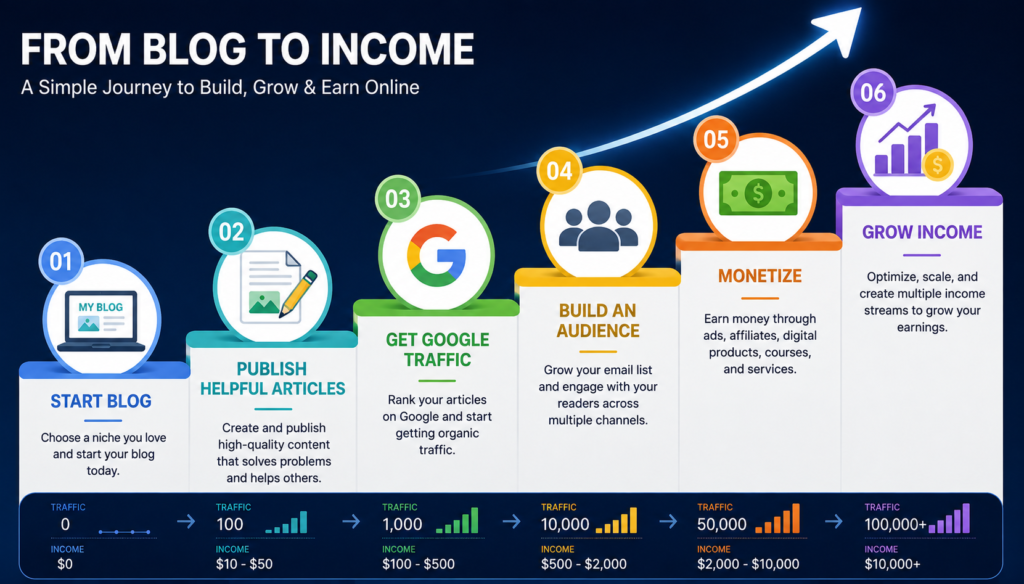
Starting a blog that makes money is possible, but it requires patience, consistency, and a focus on providing real value to readers. You do not need to have everything perfect before you begin. Start with a clear niche, create a simple website, and publish helpful content that answers the questions your audience is searching for.
As your blog grows, focus on building traffic and trust before expecting significant income. You can then experiment with monetization methods such as advertising, affiliate marketing, sponsored content, digital products, online courses, and services.
Remember, successful blogging is usually a long-term process rather than a quick way to make money. Keep learning, improve your content, understand your audience, and give your blog time to grow.
Ready to Start Your Blog?
Choose your niche, register your domain, create your website, and publish your first useful article. The most important thing is to start and stay consistent.
Continue exploring BuildSmartAfri for beginner-friendly guides on online business, online business ideas, AI tools, and how to start an online business that can help you build and grow your online presence.
Disclaimer
This article is for educational and informational purposes only. Blogging income is not guaranteed. Results vary depending on factors such as your niche, content quality, traffic, monetization methods, competition, and consistency. Research any products, services, or financial commitments before investing money in your blog.