Introduction
Choosing the right Forex trading platform is one of the most important decisions a beginner trader can make. A trading platform is the software that allows you to access the Forex market, analyze price movements, place trades, and manage your account. Even if you have selected a reliable broker and funded your trading account, you still need a trading platform to execute your trading decisions. Before choosing a trading platform, it is important to understand basic Forex concepts such as leverage, margin, and risk management.
Many new traders focus heavily on learning strategies, indicators, and market analysis while overlooking the importance of the trading platform itself. However, the platform you use can significantly affect your trading experience. A good platform makes it easier to analyze charts, execute trades quickly, manage risk effectively, and monitor your performance. A poor platform can create confusion, slow down execution, and make trading unnecessarily difficult.
Today, there are numerous Forex trading platforms available, each offering different features, tools, and advantages. Some platforms are designed specifically for beginners, while others cater to professional traders who require advanced functionality. Understanding the strengths and weaknesses of each platform can help you make an informed decision and avoid common beginner mistakes.
In this guide, we will explore the best Forex trading platforms for beginners, compare their features, discuss their advantages and disadvantages, and help you determine which platform best suits your trading goals.
What Is a Forex Trading Platform?
A Forex trading platform is a software application that allows traders to interact with the Forex market through their broker. It serves as the primary tool for analyzing currency pairs, placing orders, monitoring trades, and managing trading accounts.
Think of a trading platform as the command center for your Forex trading activities. Through the platform, you can view live market prices, access technical indicators, draw chart patterns, set stop-loss and take-profit orders, and execute trades in real time. Before using a trading platform, traders must first open a Forex trading account with a broker.
Most modern trading platforms are available on desktop computers, smartphones, tablets, and web browsers, allowing traders to access the market from virtually anywhere with an internet connection.
A Forex trading platform typically provides:
- Real-time price quotes
- Interactive price charts
- Technical analysis tools
- Trading indicators
- Market news and updates
- Risk management features
- Order execution capabilities
- Account management functions
Without a trading platform, traders would not be able to analyze markets effectively or place trades efficiently. This makes the platform one of the most essential tools in every trader’s journey.
Why Choosing the Right Trading Platform Matters
The trading platform you choose can directly impact your trading performance and overall experience. While no platform can guarantee profits, a good platform can make it easier to execute your trading plan accurately and efficiently.
For beginners, ease of use is especially important. A complicated platform with too many advanced features can feel overwhelming and may increase the likelihood of mistakes. A beginner-friendly platform should provide a clean interface, simple navigation, and helpful educational resources.
Execution speed is another important factor. In the Forex market, prices can change rapidly. A reliable platform ensures that your orders are executed quickly and accurately, reducing the risk of slippage and missed opportunities.
The right platform also helps traders manage risk more effectively. Features such as stop-loss orders, take-profit orders, and position monitoring tools allow traders to protect their capital and maintain discipline.
Additionally, many platforms provide educational resources, economic calendars, market analysis tools, and demo accounts that help beginners develop their skills before risking real money.
Ultimately, selecting the right trading platform can improve confidence, simplify the learning process, and create a smoother trading experience.
Features Beginners Should Look for in a Forex Trading Platform
Before choosing a trading platform, beginners should understand the key features that contribute to a positive trading experience.
User-Friendly Interface
A beginner-friendly platform should be easy to navigate and understand. Traders should be able to locate charts, indicators, order buttons, and account information without confusion.
Charting and Analysis Tools
Charts are the foundation of technical analysis. A good platform should provide multiple chart types, timeframes, drawing tools, and technical indicators to help traders analyze market movements effectively.
Fast Order Execution
Reliable execution ensures that trades are entered and exited at the intended prices. Slow execution can lead to missed opportunities and increased trading costs.
Risk Management Features
Features such as stop-loss orders, take-profit orders, and position sizing tools are essential for protecting trading capital and managing risk.
Mobile Trading Support
Many traders monitor the market while away from their computers. Mobile applications allow traders to manage positions, analyze charts, and receive notifications from anywhere.
Demo Account Availability
A demo account allows beginners to practice trading with virtual funds. This helps traders learn platform functionality and test strategies without risking real money.
1. MetaTrader 4 (MT4)
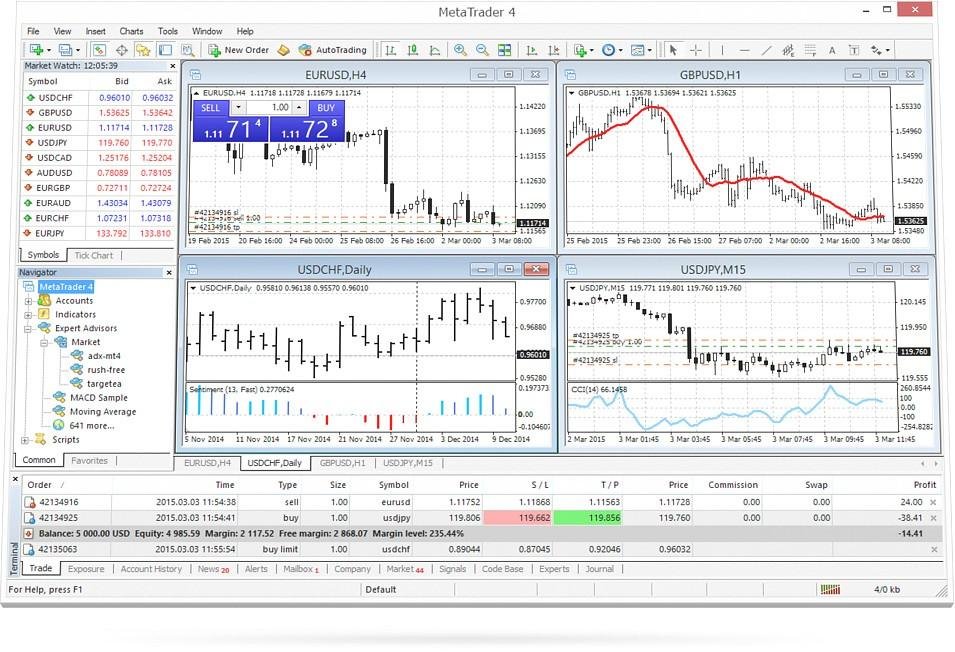
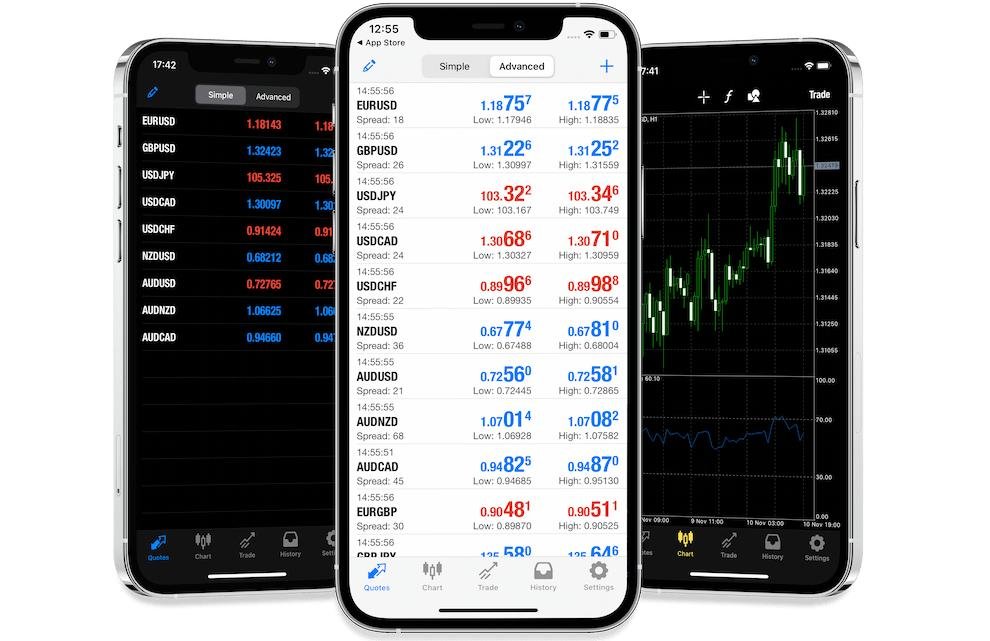
MetaTrader 4, commonly known as MT4, is one of the most popular Forex trading platforms in the world. Introduced in 2005, it remains a favorite among beginner and experienced traders due to its simplicity, reliability, and extensive trading tools. MT4 allows traders to place important orders such as stop loss and take profit levels to manage risk effectively.
MT4 offers advanced charting capabilities, technical indicators, automated trading through Expert Advisors (EAs), and fast trade execution. Despite being over a decade old, it continues to dominate the Forex industry because of its stability and user-friendly design. MetaTrader 4 official website
Advantages of MT4
- Easy for beginners to learn
- Widely supported by Forex brokers
- Large community and educational resources
- Supports automated trading
- Fast and reliable performance
Disadvantages of MT4
- Older interface compared to newer platforms
- Limited asset classes compared to MT5
- Fewer built-in indicators than newer platforms
For most beginners, MT4 remains one of the safest and easiest platforms to start with.
2. MetaTrader 5 (MT5)
MetaTrader 5, commonly known as MT5, is the successor to MetaTrader 4 and has become increasingly popular among Forex traders worldwide. While MT4 remains widely used, MT5 offers additional features, improved performance, and access to a wider range of financial markets. MT5 provides tools that help traders calculate lot sizes and monitor margin requirements more efficiently.
MT5 provides more technical indicators, additional timeframes, an integrated economic calendar, and enhanced charting capabilities. It was designed to support not only Forex trading but also stocks, commodities, indices, and other financial instruments. MetaTrader 5 official website
For beginners, MT5 offers a modern trading environment that combines ease of use with advanced functionality. Although it may initially appear more complex than MT4, many traders appreciate its flexibility and powerful analysis tools.
Advantages of MT5
- More technical indicators and analytical tools
- Additional chart timeframes
- Built-in economic calendar
- Faster trade execution
- Supports multiple asset classes
- Improved strategy testing capabilities
Disadvantages of MT5
- Slightly steeper learning curve for beginners
- Some older MT4 indicators and Expert Advisors may not be compatible
- Not supported by every broker
For traders who want access to modern trading tools and plan to expand beyond Forex trading in the future, MT5 is often an excellent choice.
3. cTrader
cTrader is another highly respected trading platform known for its clean interface, fast execution speeds, and professional trading environment. It is particularly popular among traders who prioritize transparency and advanced order execution.
One of cTrader’s biggest strengths is its intuitive design. The platform offers a modern user interface that many traders find easier to navigate than traditional trading platforms. It also provides advanced charting capabilities, detailed market depth information, and sophisticated order management tools.
For beginners, cTrader can provide a smoother user experience while still offering the advanced features needed for long-term growth.
Advantages of cTrader
- Modern and user-friendly interface
- Excellent charting tools
- Fast execution speeds
- Advanced order management
- Detailed market depth information
Disadvantages of cTrader
- Not as widely supported as MT4 or MT5
- Smaller online community
- Fewer educational resources compared to MetaTrader platforms
Overall, cTrader is an excellent option for traders seeking a balance between simplicity and advanced functionality.
4. TradingView
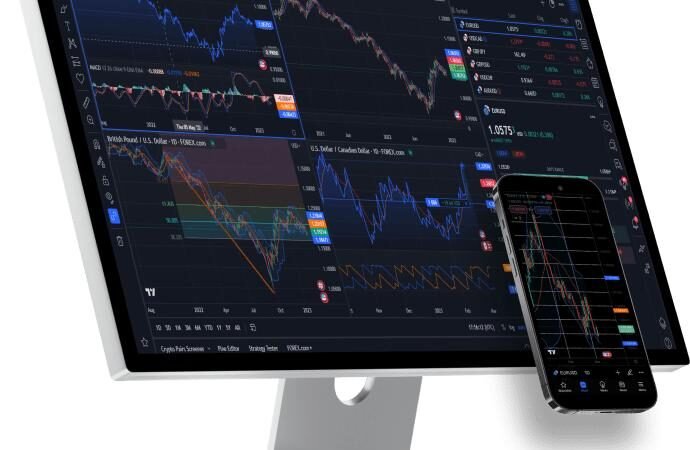
TradingView has become one of the most popular charting and market analysis platforms in the world. While it began primarily as a charting platform, many brokers now allow traders to execute trades directly through TradingView.
One of TradingView’s greatest strengths is its powerful charting capabilities. Traders can access hundreds of technical indicators, drawing tools, and customizable chart layouts. The platform also includes a large social trading community where users share trading ideas and market analysis. TradingView charting platform
For beginners, TradingView offers an excellent learning environment because it combines market analysis, educational content, and charting tools in a single platform.
Advantages of TradingView
- Exceptional charting capabilities
- Large community of traders
- Cloud-based access from any device
- Extensive indicator library
- Easy-to-use interface
Disadvantages of TradingView
- Some advanced features require paid subscriptions
- Trading execution depends on broker integration
- Less focused on direct trade management than MT4 or MT5
Many traders use Trading View alongside platforms like MT4 or MT5 for market analysis and trade planning.
5. NinjaTrader
NinjaTrader is a professional-grade trading platform that provides advanced charting, strategy development, and market analysis tools. Although it is more commonly associated with futures trading, some Forex traders also use it due to its sophisticated analytical capabilities.
The platform is particularly attractive to traders interested in automated trading systems and advanced technical analysis. It offers extensive customization options and supports complex trading strategies.
For complete beginners, NinjaTrader may feel overwhelming initially. However, traders who enjoy deep market analysis may find it valuable as they gain experience.
Advantages of NinjaTrader
- Powerful charting tools
- Advanced market analysis
- Supports automated trading
- Highly customizable
- Excellent strategy testing features
Disadvantages of NinjaTrader
- Steeper learning curve
- More complex than beginner-focused platforms
- Some features may require additional costs
Ninja Trader is often best suited for traders who already have some market experience and want access to advanced trading technology.
6. WebTrader Platforms
Many brokers provide browser-based trading platforms commonly known as WebTrader platforms. These platforms allow traders to access the market directly through a web browser without downloading software.
WebTrader platforms are convenient because they eliminate installation requirements and allow traders to access their accounts from virtually any device with internet access.
For beginners, WebTrader platforms often provide a simple introduction to Forex trading while maintaining access to essential tools and features.
Advantages of WebTrader
- No software installation required
- Accessible from any internet-connected device
- User-friendly interface
- Quick account access
Disadvantages of WebTrader
- Fewer advanced features
- Limited customization options
- May not support complex trading strategies
WebTrader platforms are ideal for traders who value convenience and simplicity.
7. Proprietary Broker Platforms
Some Forex brokers develop their own custom trading platforms rather than relying on third-party solutions like MT4 or MT5. These are known as proprietary trading platforms.
Broker-developed platforms often include unique features, educational resources, integrated market research, and user-friendly interfaces designed specifically for their clients.
Many beginner traders find proprietary platforms appealing because they are often designed to simplify the trading process and reduce complexity.
Advantages of Proprietary Platforms
- Designed specifically for the broker’s services
- Easy-to-use interfaces
- Integrated educational resources
- Seamless account management
Disadvantages of Proprietary Platforms
- Features vary significantly between brokers
- Less transferable knowledge if changing brokers
- Smaller user communities
Before choosing a proprietary platform, traders should carefully evaluate its features and determine whether it meets their long-term trading needs.
MT4 vs MT5: Which Platform Is Better for Beginners?
One of the most common questions among beginner traders is whether they should use MT4 or MT5. The answer depends on individual trading goals and preferences.
MT4 remains popular because of its simplicity, stability, and extensive support from brokers and educational resources. Many beginners appreciate its straightforward interface and large community of users.
MT5 offers more advanced features, additional technical indicators, more timeframes, and broader market access. Traders who want access to modern tools and multiple asset classes may prefer MT5.
For absolute beginners, MT4 may provide a slightly easier learning experience. However, traders who want a future-proof platform with enhanced functionality may find MT5 more attractive.
Both platforms are excellent choices and can support successful Forex trading when combined with proper risk management and trading discipline.
How to Choose the Right Forex Trading Platform
With so many trading platforms available, choosing the right one can feel overwhelming, especially for beginners. While there is no single platform that is perfect for everyone, understanding your trading goals and personal preferences can help you make the best decision.
Start by considering your level of experience. If you are completely new to Forex trading, you may benefit from a platform that offers a simple interface, educational resources, and easy navigation. Platforms such as MT4, MT5, and many proprietary broker platforms are designed to help beginners learn the market without becoming overwhelmed by advanced features.
Next, evaluate the platform’s charting and analysis tools. Technical analysis plays a major role in Forex trading, so having access to quality charts, indicators, and drawing tools is important. If chart analysis is a priority, platforms like TradingView provide some of the most advanced charting capabilities available.
You should also consider platform compatibility. Some traders prefer desktop trading, while others rely heavily on mobile devices. Ensure that your chosen platform provides a smooth experience across all devices you plan to use.
Another important factor is broker support. Not every broker supports every trading platform. Before selecting a platform, verify that your broker offers access to it and that the platform supports your preferred trading instruments.
Finally, take advantage of demo accounts whenever possible. Testing a platform before committing real money allows you to explore its features, evaluate its performance, and determine whether it suits your trading style.
Common Mistakes Beginners Make When Choosing a Trading Platform
Many beginners focus on the wrong factors when selecting a trading platform. Avoiding these common mistakes can save time, frustration, and potentially money.
Choosing a Platform Based Solely on Popularity
A platform may be popular, but that does not automatically mean it is the best choice for your needs. Every trader has different goals, preferences, and experience levels.
Ignoring Educational Resources
Many beginners underestimate the value of educational content. Platforms that provide tutorials, webinars, market analysis, and demo accounts can significantly accelerate the learning process.
Overlooking Mobile Functionality
Modern traders often need access to the market while away from their computers. Choosing a platform with a strong mobile application can improve flexibility and convenience.
Focusing Only on Advanced Features
Some beginners are attracted to platforms with numerous advanced tools and complex features. While these tools may be useful later, they can initially create confusion and slow down the learning process.
Not Testing the Platform First
One of the biggest mistakes is funding a live account without first testing the platform through a demo account. Demo trading allows you to learn platform functionality and build confidence without risking real money.
Frequently Asked Questions
What is the best Forex trading platform for beginners?
Many traders consider MetaTrader 4 (MT4) one of the best Forex trading platforms for beginners because of its simple interface, reliability, and extensive educational resources. However, MT5, TradingView, and certain proprietary broker platforms are also excellent options depending on individual preferences.
Is MT4 better than MT5?
Neither platform is universally better. MT4 is known for its simplicity and widespread support, while MT5 offers more advanced features, additional indicators, more timeframes, and broader market access. The best choice depends on your trading goals and experience level.
Can I trade Forex on my phone?
Yes. Most modern trading platforms provide mobile applications that allow traders to analyze charts, place trades, monitor positions, and manage accounts directly from smartphones and tablets.
Is TradingView a Forex trading platform?
TradingView is primarily a charting and market analysis platform, but many brokers now allow direct trade execution through TradingView integration. It is particularly popular among traders who prioritize technical analysis.
Do I need a trading platform to trade Forex?
Yes. A trading platform provides access to the Forex market and allows traders to analyze price movements, execute trades, and manage their accounts. Without a trading platform, participating in Forex trading would not be possible.
Are Forex trading platforms free?
Most Forex trading platforms are available free of charge through brokers. However, some platforms may offer premium features, advanced tools, or subscription plans that require payment.
Which platform offers the best charting tools?
TradingView is widely regarded as one of the best charting platforms available. Its advanced charting capabilities, extensive indicator library, and active trading community make it a favorite among technical analysts.
Should beginners start with a demo account?
Yes. A demo account allows beginners to practice trading with virtual funds while learning how the platform works. It provides valuable experience without exposing traders to financial risk.
Final Thoughts
Choosing the right Forex trading platform is a critical step in every trader’s journey. While strategies, indicators, and market knowledge are important, the platform serves as the foundation that supports all trading activities. A reliable and user-friendly platform can improve efficiency, simplify analysis, and help traders execute their plans with greater confidence.
For beginners, platforms such as MetaTrader 4, MetaTrader 5, and TradingView provide excellent starting points due to their strong features, educational resources, and widespread adoption throughout the trading community. Each platform offers unique advantages, and the best choice ultimately depends on your trading goals, preferred learning style, and long-term objectives.
Remember that no trading platform can guarantee success. Successful trading comes from education, discipline, risk management, and continuous improvement. The platform is simply a tool, and like any tool, its effectiveness depends on how well it is used.
Before committing to a live account, spend time exploring different platforms through demo accounts. Learn their features, understand their strengths and weaknesses, and determine which environment makes you feel most comfortable. Taking this extra time can help establish a strong foundation for your Forex trading journey and increase your confidence as you enter the market.
Disclaimer
The information provided in this article is for educational and informational purposes only and should not be considered financial, investment, or trading advice. Forex trading involves substantial risk and may not be suitable for all investors. Past performance does not guarantee future results. Always conduct your own research, carefully evaluate your financial situation, and practice proper risk management before making trading decisions. The trading platforms discussed in this article are presented for educational purposes only and do not constitute endorsements or recommendations.