

Introduction
What is a take profit in Forex? A take profit is an order that automatically closes a trade when the market reaches a predetermined profit target. Traders use emotional decision-making and maintain discipline in their trading strategies.
Many beginner traders focus heavily on entering trades but pay very little attention to how they will exit them. They spend hours analyzing charts, identifying support and resistance levels, and searching for the perfect entry point. However, successful Forex trading is not only about entering the market correctly; it is also about knowing when to exit. what is a stop loss in forex
A take profit order helps traders define their profit objective before entering a trade. Instead of watching the market continuously and wondering whether they should close a position, traders can allow the take profit order to automatically secure gains once the target price is reached.
The Forex market can be unpredictable. Prices often move quickly due to economic news, central bank decisions, geopolitical events, and changes in market sentiment. Without a take profit order, traders may become influenced by greed and hold profitable positions for too long. In many cases, profits that could have been secured eventually disappear when the market reverses. what is a pip in forex
Understanding what a take profit in Forex is; is essential because it helps traders develop a structured trading plan. It encourages discipline, improves consistency, and helps remove emotional reactions from trading decisions.
In this guide, you will learn how take profit orders work, why they are important, how they differ from stop losses, common mistakes traders make, and how professional traders use them to improve long-term performance. learn Forex trading basics
What Is a Take Profit in Forex?
A take profit order is an instruction given to a broker to automatically close a trade when a specified profit target is reached.
The primary purpose of a take profit order is to secure profits before the market has an opportunity to reverse.
For example, imagine a trader buys EUR/USD at 1.1000. Based on technical analysis, the trader expects the price to rise to 1.1100. To ensure profits are captured automatically, the trader places a take profit order at 1.1100.
If the market reaches 1.1100, the trade closes automatically and the profit is secured.
This process eliminates uncertainty and helps traders stick to their original trading plan.
A take profit order answers an important question before a trade begins:
“At what price should I exit if the market moves in my favor?”
Professional traders know the answer to this question before entering every trade.
Why Take Profit Orders Are Important
Many traders assume that making money in Forex is simply about predicting the market correctly. While market analysis is important, successful trading also requires a disciplined exit strategy.
A take profit order provides structure and prevents traders from making impulsive decisions.
One of the biggest challenges in trading is greed. When a trade becomes profitable, traders often begin imagining even larger profits. Instead of closing the trade according to their plan, they continue holding the position.
Unfortunately, markets do not move in one direction forever. A profitable trade can quickly become less profitable or even turn into a loss if the market reverses unexpectedly.
A take profit order helps prevent this problem by locking in gains automatically.
Benefits include:
- Protecting profits
- Reducing emotional trading
- Improving discipline
- Supporting risk management
- Creating consistency
Without a take-profit order, traders may struggle to determine the best time to exit a trade. This uncertainty often leads to poor decision-making and inconsistent results.
How a Take Profit Order Works
A take profit order functions similarly to a stop loss order, except its purpose is to secure profits rather than limit losses.
Consider the following example:
- Entry Price: 1.2000
- Take Profit: 1.2100
- Stop Loss: 1.1950
The trader enters a buy position at 1.2000.
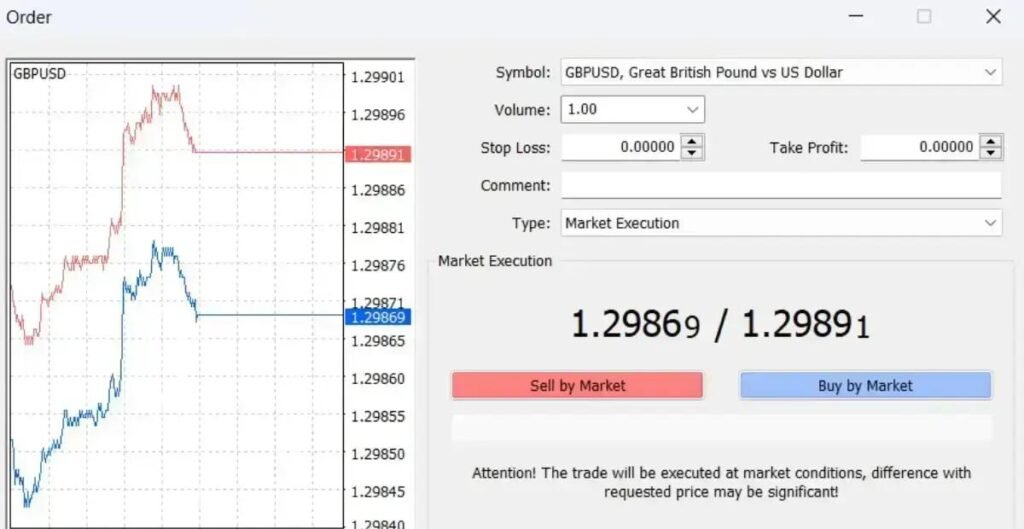
If the market rises to 1.2100, the take profit order automatically closes the trade and secures the gain.
If the market falls to 1.1950, the stop loss order automatically closes the trade and limits the loss.
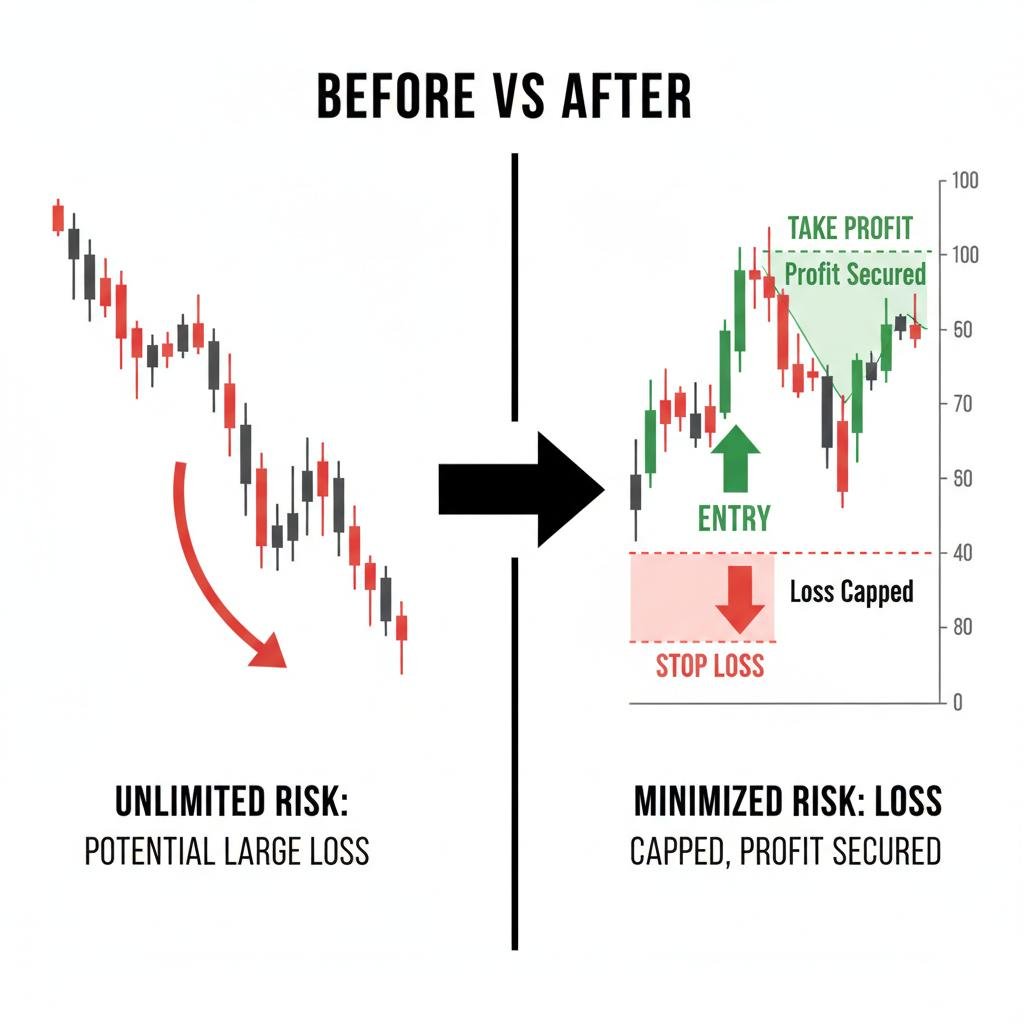
Together, the stop loss and take profit create a complete trading plan. The trader knows both the maximum acceptable loss and the desired profit target before entering the market.
This structured approach removes much of the uncertainty associated with trading and encourages disciplined decision-making.
Take Profit vs Stop Loss
Many beginner traders confuse take profit orders and stop loss orders because both automatically close trades.
However, they serve different purposes.
A stop loss is designed to protect the trader from excessive losses. what is a stop loss in forex
A take profit is designed to secure profits when a target has been reached.
Think of them as two sides of the same risk management system.
A stop loss protects the downside.
A take profit manages the upside.
Successful traders often use both orders together because they help maintain balance between risk and reward.
Without a stop loss, losses can become too large.
Without a take profit, profits can disappear due to market reversals.
The most effective trading plans usually include both.
Types of Take Profit Strategies
There is no single method for setting take profit levels. Different traders use different approaches depending on their trading style and market conditions.
Fixed Pip Targets
Some traders set a fixed profit target measured in pips.
For example:
- 30 pips
- 50 pips
- 100 pips
This approach is simple and easy to implement.
However, it may not always reflect actual market conditions.
Support and Resistance Levels
Many traders place take profit orders near major support and resistance levels.
These areas often act as natural turning points in the market.
Because price frequently reacts around these zones, they can provide logical locations for profit targets.
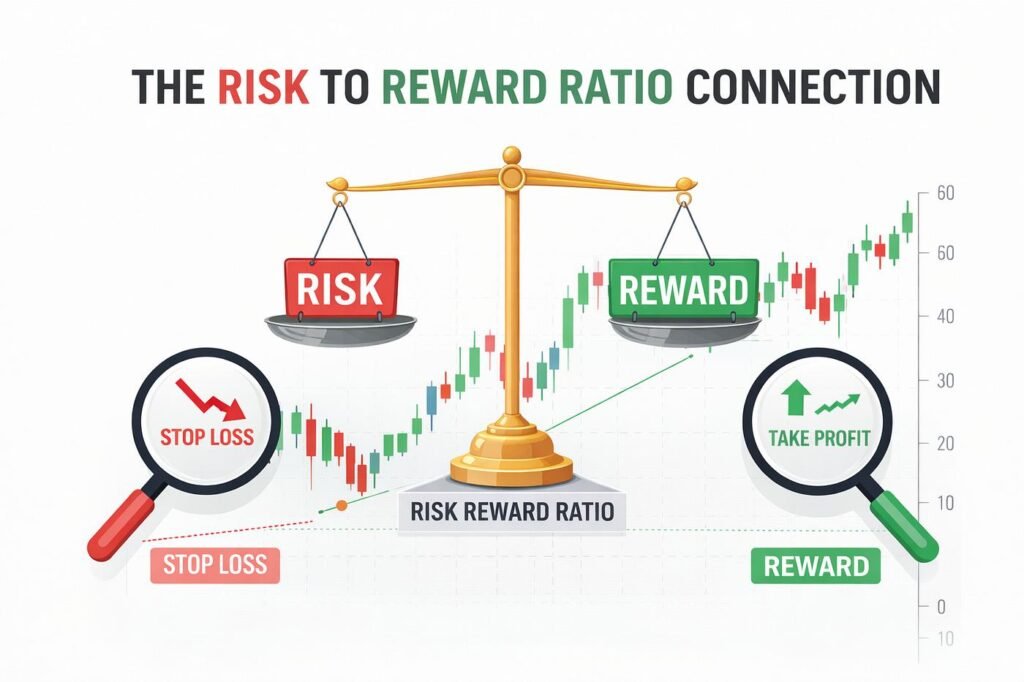
Risk-to-Reward Ratios
Professional traders commonly use risk-to-reward ratios when determining take profit levels.
For example:
- Risk: 50 pips
- Reward: 100 pips
This creates a 1:2 risk-to-reward ratio.
Even if only half of the trades are successful, traders may still remain profitable over time.
This is one of the most widely used methods among experienced traders.
Common Take Profit Mistakes
Although take profit orders are valuable tools, many traders use them incorrectly. These mistakes can reduce profitability and prevent traders from achieving consistent results.
Setting Unrealistic Profit Targets
One of the most common mistakes is setting profit targets that are too ambitious. Traders often expect the market to move much further than is realistically likely. As a result, the price may come close to the target before reversing and leaving the trader with little or no profit.
A take profit level should be based on market analysis rather than wishful thinking. Support and resistance levels, trend strength, volatility, and market structure should all be considered before selecting a target.
Closing Trades Too Early
Some traders place take profit orders far away but manually close trades long before the target is reached. This often happens because of fear.
When traders see profits accumulating, they worry that the market might reverse. Instead of following their plan, they exit prematurely. While securing profits is not necessarily a bad thing, consistently closing trades too early can negatively affect long-term profitability.
Ignoring Market Conditions
Different market environments require different profit-taking approaches.
A strong trending market may support larger take profit targets, while a ranging market may require smaller targets. Traders who ignore market conditions often place targets that do not match the current environment.
Failing to Use Risk-to-Reward Ratios
Many beginners focus only on potential profits without considering the amount they are risking.
For example, risking 100 pips to make 20 pips is generally not sustainable over the long term. Successful traders often seek favorable risk-to-reward ratios that allow profits to outweigh losses over multiple trades.
Real-Life Example of a Take Profit Order
Imagine a trader has a $3,000 trading account and identifies a buying opportunity on the EUR/USD currency pair.
After conducting technical analysis, the trader decides to enter the market at 1.1000. The trader places a stop loss at 1.0950 and a take profit at 1.1100.
The setup looks like this:
- Entry Price: 1.1000
- Stop Loss: 1.0950
- Take Profit: 1.1100
In this example, the trader risks 50 pips to potentially gain 100 pips. This creates a risk-to-reward ratio of 1:2.
If the market rises to 1.1100, the take profit order automatically closes the trade and secures the gain.
If the market falls to 1.0950, the stop loss order closes the trade and limits the loss.
Notice that the trader already knows both possible outcomes before entering the trade. This removes uncertainty and emotional decision-making.
Now imagine that the trader follows this approach consistently over 100 trades. Even if only half of the trades reach their profit targets, the trader may still achieve positive overall results because the winning trades are larger than the losing trades.
This example demonstrates why take profit orders are not just convenience tools. They are an important component of a structured trading plan.
Advanced Take Profit Techniques
As traders gain experience, they often move beyond basic fixed profit targets and begin using more advanced profit-taking methods.
Scaling Out of Positions
Scaling out involves closing portions of a trade at different profit levels.
For example:
- Close 50% of the position at the first target
- Close 25% at the second target
- Allow the remaining 25% to continue running
This approach allows traders to secure profits while still benefiting from larger market moves.
Trailing Profit Targets
Some traders combine take profit strategies with trailing stops.
Rather than using a fixed target, they allow profitable trades to continue moving while adjusting their stop loss to protect gains.
This technique can be particularly effective during strong trends where the market moves much further than originally expected.
Using Technical Analysis
Experienced traders frequently use technical indicators to determine take profit levels.
Examples include:
- Support and resistance zones
- Fibonacci retracement levels
- Trend channels
- Moving averages
- Pivot points
These tools help traders place profit targets in areas where price reactions are likely to occur.
Benefits of Using Take Profit Orders
Take profit orders provide several important advantages that contribute to trading success.
Locks In Profits Automatically
One of the greatest benefits of a take profit order is automation.
The trade closes automatically when the target is reached, even if the trader is away from the computer.
Reduces Emotional Trading
Emotions often cause traders to make poor decisions.
A take profit order helps eliminate uncertainty by defining the exit point before the trade begins.
Encourages Discipline
Traders who consistently use take profit orders are more likely to follow their trading plans.
Discipline is one of the most important qualities in Forex trading.
Supports Risk Management
Take profit orders work alongside stop losses to create balanced risk management strategies. what is leverage in forex
Together, they help traders define both risk and reward before entering the market. what is margin in forex
Improves Consistency
Consistent execution often matters more than finding the perfect strategy.
Take profit orders encourage traders to follow a repeatable process, which can lead to more predictable results over time. what is lot size in forex
Frequently Asked Questions
Is a take profit order mandatory?
No. Traders can manually close trades whenever they choose. However, using take profit orders can improve discipline and reduce emotional decision-making.
Can a take profit guarantee profits?
No. A take profit order only closes a trade if the market reaches the specified target. There is no guarantee that price will reach that level.
Should every trade have a take profit?
Many professional traders use take profit orders on most trades because they provide structure and clarity. However, some advanced traders prefer flexible exits depending on market conditions.
What is the difference between a stop loss and a take profit?
A stop loss limits potential losses, while a take profit secures gains. Together they form a complete trade management system.
What is a good risk-to-reward ratio?
Many professional traders aim for at least a 1:2 risk-to-reward ratio, meaning they seek to make twice as much as they risk on each trade.
Final Thoughts
Understanding what is a take profit in Forex is essential for developing a complete trading strategy. While many traders focus on finding profitable entries, successful trading also requires knowing when and how to exit positions.
A take profit order helps traders secure gains automatically, maintain discipline, and reduce emotional decision-making. By defining profit targets before entering the market, traders create structure and consistency in their trading process.
Remember that the goal of trading is not to capture every possible pip from the market. The goal is to execute a well-planned strategy consistently over time. Take profit orders help traders achieve this by locking in gains and preventing profitable trades from turning into missed opportunities. Forex risk management
When combined with proper stop loss placement, risk management, and position sizing, take profit orders become powerful tools for long-term trading success. Forex trading basics
Disclaimer
The information provided in this article is for educational and informational purposes only and should not be considered financial, investment, or trading advice. Forex trading involves significant risk and may not be suitable for all investors. Past performance does not guarantee future results, and no trading strategy can eliminate risk completely.
Before making any trading decisions, conduct your own research, assess your financial situation, and consider seeking advice from a qualified financial professional. Always use appropriate risk management techniques and trade responsibly.