

Have you ever wanted to start an online business without buying physical inventory, renting a shop, or worrying about shipping products to customers? Creating and selling digital products online could be an opportunity worth exploring.
Digital products are items that customers can purchase and access electronically. They include e-books, online courses, templates, digital planners, stock photographs, website themes, music, and downloadable guides. Unlike physical products, digital products can often be sold repeatedly without manufacturing or shipping a new item for every order. How to start a blog and make money in 2026
In 2026, creators, freelancers, educators, entrepreneurs, and small business owners can use digital products to share their knowledge, solve problems, and develop additional income streams. Artificial intelligence tools have also made it easier to brainstorm product ideas, organize information, create design drafts, and prepare marketing materials.
However, creating a digital product does not automatically guarantee sales. You need to understand your target audience, develop something useful, choose a suitable selling platform, and learn how to reach potential customers.
In this guide, you will discover how to create and sell digital products online, choose the right product idea, set your prices, promote your products, and build a business that can grow over time.
Whether you are a beginner, blogger, student, freelancer, or entrepreneur, this article will help you understand the process step by step.
What Are Digital Products?

Digital products are goods or resources delivered electronically rather than as physical items. Customers typically access them through downloads, online accounts, email links, or digital platforms.
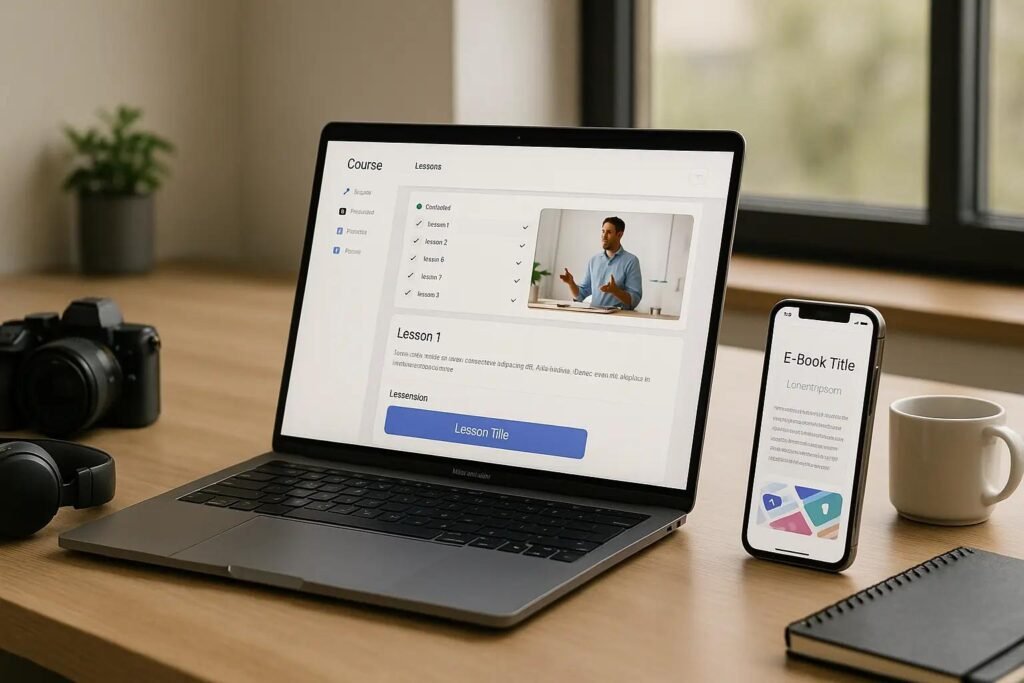
For example, a customer can purchase an e-book and download it as a PDF, buy a design template and edit it online, or pay for an online course and watch the lessons through a learning platform.
Common examples of digital products include:
- E-books and downloadable guides.
- Online courses and recorded lessons.
- Printable planners and worksheets.
- Business templates and spreadsheets.
- Website themes and digital design assets.
- Stock photography and illustrations.
- Music, sound effects, and audio recordings.
- Software, plugins, and mobile applications.
- Digital invitations and event templates.
- Educational resources and study materials.
The main attraction is that a digital product can often be created once and sold multiple times. However, it may still require customer support, updates, marketing, payment processing, and maintenance.
Why Should You Create and Sell Digital Products Online?
Selling digital products can be an appealing business model for several reasons.
1. You Can Start with a Relatively Small Budget
You do not necessarily need a warehouse, physical inventory, or shipping materials. Depending on your product, you may be able to begin with free or affordable tools.
For example, you could create a simple study guide using a document editor or develop a printable planner using a design application.
You may still incur costs for software, internet access, website hosting, platform fees, marketing, or professional assistance.
2. You Can Sell to Customers Beyond Your Local Area
An online store can make your products available to customers in different locations, subject to the selling platform’s eligibility, payment, and legal requirements.
For example, a creator in Ghana could develop educational resources for students and market them to suitable audiences in Ghana and other countries.
Before choosing a selling platform, check whether it supports sellers in your country and offers a workable method for receiving payments.
3. You Can Sell the Same Product Repeatedly
A downloadable guide does not need to be manufactured again every time someone buys it. Once your product and delivery system are ready, multiple customers may be able to purchase it without requiring a new copy to be produced manually.
This can make digital products more scalable than some service-based businesses, although sales are never guaranteed.
4. You Can Turn Your Knowledge into a Product
If you have knowledge or experience that helps people solve a problem, you may be able to package it into a digital product.
For example, a teacher could create revision worksheets, a graphic designer could sell editable templates, and a blogger could develop a practical e-book.
You do not need to know everything about a subject. You need to understand a particular audience and provide something genuinely useful within your area of competence.
Step 1: Choose a Digital Product Idea

The first step is deciding what you want to create and sell.
Rather than starting with a product you personally like, begin by considering what your potential customers need. A useful product solves a problem, saves time, teaches a skill, or helps someone complete a task. How to make money with artificial intelligence
Popular digital products to sell in 2026
E-books and guides: Create educational resources about a topic you understand, such as blogging, productivity, cooking, or beginner technology.
Templates: Sell editable documents for business planning, social media content, presentations, résumés, or project management.
Online courses: Teach a skill through organized lessons, demonstrations, exercises, and downloadable resources.
Printable products: Develop planners, calendars, checklists, worksheets, and activity sheets.
Digital artwork: Sell original illustrations, graphics, icons, patterns, or design resources.
Spreadsheets: Create budgeting sheets, inventory trackers, expense calculators, and project-planning tools.
Software and plugins: If you have suitable technical skills, develop tools that solve specific problems for users.
Audio products: Create original music, sound effects, guided learning recordings, or other audio resources.
How to identify a product people may want
Ask yourself these questions:
- What problems do people frequently experience in this niche?
- What information or resource would help them solve those problems?
- Are people already purchasing similar products?
- Can I create a useful product that offers a clear benefit?
- Can I reach the people who are most likely to buy it?
For example, imagine that you run a blog about artificial intelligence. Your readers may want to learn how to use AI for content creation.
You could create a downloadable beginner’s guide containing practical examples, reusable prompts, exercises, and instructions for evaluating AI-generated content.
The product would be valuable because it helps readers apply what they learn rather than simply reading general information.
Step 2: Research Your Target Audience
Before investing too much time in creating a product, investigate whether your idea addresses a real need.
This process is often called market research. It helps you understand your potential customers, competing products, common questions, and opportunities to improve existing solutions.
Practical ways to research a digital product idea
Search Google: Look for questions people ask about your topic and examine the types of resources already available.
Explore online communities: Read relevant discussions on forums and social media to identify common problems and unanswered questions.
Study competing products: Review product descriptions, customer feedback, features, and pricing. Look for gaps you could address without copying another creator’s work.
Ask potential customers: Conduct a short survey or speak with people who fit your target audience.
Test a small idea: Offer a sample, preview, or simple version of your product and ask for feedback.
For example, if you want to sell a budgeting spreadsheet, ask potential buyers what they find difficult about managing their expenses. Their answers may reveal that they need a simple monthly budget, an automatic expense summary, or a way to track savings goals.
Use those insights to design a product that is practical and easy to understand.
Step 3: Create Your Digital Product

Once you have a promising idea and understand your audience, begin developing the product.
Your creation process will depend on the type of product you want to sell. AI tools for creating digital products
Creating an e-book
You can use a word processor to write your content, organize it into chapters, add examples, and export it as a PDF.
A useful e-book should have a clear purpose, logical structure, accurate information, and practical guidance.
For example, an e-book about starting a blog might include niche selection, website setup, content planning, SEO basics, and monetization options.
Creating templates and printables
Design tools can help you create planners, worksheets, presentations, and social media templates.
Keep your designs readable and easy to use. If you sell an editable template, explain which software or account the buyer needs to use it.
Creating an online course
Divide your subject into manageable lessons. Include demonstrations, exercises, examples, and supplementary resources.
Record lessons using suitable equipment and test the course before selling access.
Creating spreadsheets
Spreadsheet products should have clear labels, understandable instructions, and correctly functioning formulas.
Test the calculations using different example inputs. Explain any limitations and avoid presenting a general-purpose spreadsheet as a substitute for professional advice where that would be inappropriate.
Use AI tools to work more efficiently
AI can help you brainstorm ideas, outline an e-book, improve draft text, generate design concepts, and develop product descriptions.
However, AI-generated material should not be published or sold without review. Check facts, correct errors, add original value, and ensure that you have the rights needed to use any included material.
You should also review the terms of your AI tools and any third-party assets you use. Do not assume that every generated image, font, template, or piece of text is automatically suitable for commercial use.
Step 4: Make Sure Your Product Is Useful and High Quality
A product that looks attractive but does not deliver what it promises can lead to refunds, complaints, and loss of customer trust.
Before launching, check that the product is complete, accurate, and suitable for its intended audience.
Use this quality checklist
- The product solves the problem described in its sales page.
- The content is accurate and easy to understand.
- The design is readable and consistent.
- All files open correctly.
- Links, formulas, and interactive elements work.
- Instructions explain how to use the product.
- The file format is appropriate for the target customer.
- You have the necessary rights to use all included materials.
- The product has been tested before release.
If possible, ask a few people from your target audience to test the product before launch.
Their feedback may reveal confusing instructions, missing features, or other improvements you can make.
Step 5: Choose a Platform to Sell Your Digital Products
After creating your product, you need a way for customers to discover it, pay for it, and receive their files or access.
You can sell through a digital product marketplace, your own website, or a specialized selling platform.
Popular platforms to consider
Gumroad: A platform for selling digital products such as e-books, tutorials, courses, and memberships. Review its current transaction fees, payout options, and eligibility requirements before joining.
Official website: https://gumroad.com/
Etsy: A marketplace where eligible sellers can list digital downloads such as artwork, patterns, and templates. Etsy has rules about digital items and seller-created or seller-designed products, so review its current policies.
Official guide: https://www.etsy.com/seller-handbook/article/47330319230
Shopify: A platform for creating an online store. You can use its digital product features and suitable apps to deliver downloadable files to customers.
Official guide: https://help.shopify.com/en/manual/products/digital-service-product/digital-downloads
Payhip: A service worth investigating for selling downloads, courses, and other digital products. Review its current pricing, supported payment methods, and country availability.
Official website: https://payhip.com/
Your own website: You can sell products directly through a website using suitable e-commerce software and payment integrations. This offers greater control over your branding, but you are responsible for attracting customers and managing the store.
How do you choose the right platform?
Compare the following factors before deciding:
- Transaction fees and subscription costs.
- Availability in your country.
- Supported payment methods and payout schedules.
- Product types and file-size limits.
- Customer delivery options.
- Store customization and branding.
- Refund and dispute policies.
- Tax handling and seller responsibilities.
For example, a beginner selling a small collection of PDF guides may prefer a simple digital storefront. Someone planning to build a larger branded business may prefer a dedicated website.
Platform fees, policies, and country eligibility can change. Check the official website before making your decision.
Step 6: Set the Right Price for Your Product
Pricing influences how customers perceive your product and whether your business can cover its costs.
There is no universal price that works for every digital product. A short checklist, a detailed professional template, and a comprehensive course offer different levels of value.
Factors to consider when pricing
Value to the customer: What problem does the product solve, and how useful is the solution?
Product quality: Consider the depth, usability, design, and completeness of your work.
Production costs: Account for software, research, editing, contractors, and other expenses.
Platform fees: Selling platforms and payment processors may deduct fees from each transaction.
Market alternatives: Research comparable products and consider how yours differs.
Target audience: Consider what your intended customers can reasonably afford and whether the price matches their expectations.
Example of digital product pricing
Suppose you create a digital planner and decide to sell it for $10.
If you sell 30 copies, your gross sales revenue would be:
30 × $10 = $300.
That $300 is not your profit. You may need to deduct platform fees, payment-processing costs, refunds, advertising expenses, taxes, and other business costs.
This example illustrates how sales volume affects revenue; it is not a prediction that you will sell 30 copies.
Should you offer free products?
A free sample or introductory product can help potential customers understand your work before purchasing a more comprehensive resource.
For example, you could offer a free one-page weekly planner and sell a more detailed planner containing monthly layouts, goal trackers, and budgeting pages.
Make sure the free resource is useful on its own and clearly explains the benefits of the paid product.
Step 7: Create a Professional Product Listing

Your product listing is often the first thing a potential customer sees before deciding whether to buy.
A good listing explains what the product does, who it is for, what is included, and how it will be delivered.
Essential elements of a product listing
Product title: Use a clear title that tells customers what they are purchasing.
Product description: Explain the problem the product solves and the benefits it offers.
Preview images: Show the product’s layout, features, or example pages.
What’s included: List the files, formats, templates, lessons, or other resources the buyer receives.
Instructions: Explain how to download, open, edit, or use the product.
Compatibility: Identify relevant software requirements or supported devices.
Price: Display the cost clearly and state any important purchase conditions.
License and usage terms: Explain whether the buyer can use the product personally, commercially, or under other permitted conditions.
Refund policy: Clearly communicate your policy and comply with applicable consumer protection requirements and platform rules.
Example product listing
Imagine you are selling a digital product called The Beginner Blogger’s Content Planner.
Your description might explain that the planner helps new bloggers organize article ideas, track publication dates, record keywords, and plan future content.
You would then show preview images, list the included files, explain how to use the planner, and state the price and license terms.
Be specific about what customers receive. For example, make it clear whether the purchase includes an editable template, a PDF download, or both.
Step 8: Promote Your Digital Products Online
Creating a product is only part of the process. Potential customers need to discover it.
Your promotional strategy should focus on the places where your target audience looks for information and solutions.
1. Use Your Blog
A blog can attract readers who are already interested in the problem your product solves.
For example, if you sell an e-book about starting a blog, publish helpful articles about choosing a niche, planning content, and learning SEO. Relevant articles can introduce readers to your product naturally.
2. Use Social Media
Share demonstrations, short tutorials, product previews, and examples of how your product works.
For example, a creator selling digital planners could publish a short video demonstrating how to organize a weekly schedule using the planner.
Choose platforms that suit your audience and product rather than trying to maintain a presence everywhere.
3. Build an Email List
An email newsletter allows interested subscribers to receive useful information, product announcements, and relevant offers.
You might provide a free checklist in exchange for a voluntary newsletter subscription, then send helpful emails that introduce your paid product when appropriate.
Obtain consent and follow applicable privacy and email marketing rules.
4. Use Search Engine Optimization
SEO can help potential customers discover your website through search engines.
Research relevant search terms and use them naturally in product pages, blog posts, and category descriptions.
For example, someone selling printable planners might create useful content about weekly planning, productivity, or organizing household tasks.
Avoid keyword stuffing and focus on content that answers readers’ questions.
5. Collaborate with Relevant Creators
Consider partnerships with bloggers, educators, content creators, or professionals who serve a similar audience.
You might arrange a product demonstration, a genuine review, or an affiliate partnership. Any paid relationship or material connection should be disclosed clearly.
6. Offer a Free Sample
A sample can help potential customers understand the quality and usefulness of your work.
For example, you could offer a free chapter of an e-book or a sample spreadsheet before inviting readers to purchase the complete product.
The free sample should represent the product accurately and make it easy for interested customers to learn more.
Step 9: Use AI to Help Market Your Products

Artificial intelligence can support several parts of your digital product business.
You can use tools such as ChatGPT to brainstorm content ideas, draft product descriptions, plan promotional campaigns, or develop outlines for educational resources.
Design tools such as Canva can help you prepare product mockups, promotional graphics, and social media visuals.
AI may also assist with analyzing customer feedback, grouping frequently asked questions, and identifying areas where your product could be improved.
However, AI should support your judgment rather than replace it. Verify claims, review generated material, and make sure your marketing accurately describes what customers will receive.
Avoid fake testimonials, fabricated sales figures, misleading product demonstrations, and exaggerated income claims.
Step 10: Deliver Products and Support Your Customers
A good buying experience does not end when a customer pays.
Customers should receive the product they purchased, understand how to access it, and know where to ask for help if something goes wrong.
Improve the customer experience
- Test the checkout and download process.
- Send clear purchase confirmation messages.
- Provide instructions for opening or editing files.
- Include contact information for support.
- Explain how updates will be delivered if applicable.
- Respond professionally to genuine customer concerns.
- Maintain secure handling of customer information.
If you sell through a platform with automatic delivery, test the delivery process before promoting your product.
For made-to-order products, clearly state the expected delivery time and communicate with customers if a delay occurs.
A reliable customer experience can help build trust and encourage repeat purchases.
Step 11: Protect Your Work and Follow the Rules
Digital products are easy to distribute, which makes it important to understand intellectual property rights and the conditions under which your work can be used.
Protect your intellectual property
Create original material or obtain the appropriate permission or license for any third-party content you include.
Check the licensing terms for fonts, photographs, illustrations, software, music, and AI-generated assets.
Do not assume that finding a file online means you are allowed to resell it.
Define how customers can use your product
For example, your license may allow a customer to use a template for personal purposes but prohibit reselling the original file.
Explain these terms clearly before purchase.
Consider privacy, consumer protection, and tax requirements
Depending on your location and the countries where you sell, you may have obligations relating to customer data, refunds, consumer rights, intellectual property, and taxes.
Payment platforms may handle certain tax collection or reporting responsibilities, but you should verify exactly what they cover and what remains your responsibility.
If you operate from Ghana, check the rules and payment arrangements relevant to your business and the countries you intend to serve.
Step 12: Track Sales and Improve Your Products
Once your product is available, use customer feedback and sales data to understand what is working.
Useful metrics may include:
- Product page visits.
- Number of purchases.
- Conversion rate.
- Average order value.
- Refund rate.
- Customer acquisition costs.
- Revenue after fees and expenses.
- Repeat purchases.
For example, suppose 500 people visit your product page and 10 purchase the product. The conversion rate is:
10 ÷ 500 × 100 = 2%.
This calculation helps you measure the percentage of visitors who bought the product during the period measured. It does not, by itself, tell you why the remaining visitors did not purchase.
If visitors are interested but few buy, you might improve the product description, add clearer preview images, review your pricing, or investigate whether checkout is working correctly.
Make changes based on evidence rather than assuming that every problem requires a new product.
A Simple 30-Day Plan to Launch Your First Digital Product
If you are a beginner, a focused 30-day plan can help you move from an idea to a product launch.
Week 1: Research and Planning
- Choose a target audience.
- Identify one specific problem to solve.
- Research similar products.
- Decide what your product will include.
- Select a realistic price range.
Week 2: Create Your Product
- Draft the content or develop the design.
- Use suitable tools to create the files.
- Review the content for accuracy.
- Test the product with a few potential users.
- Make improvements based on their feedback.
Week 3: Set Up Your Store
- Choose a suitable selling platform.
- Create your product listing.
- Prepare preview images.
- Write clear purchase and usage instructions.
- Test payment and delivery arrangements where possible.
Week 4: Launch and Promote
- Publish the product.
- Share it with relevant audiences.
- Create helpful blog posts or social media content.
- Invite feedback from early customers.
- Review visits, purchases, and customer questions.
This plan is a starting framework, not a promise that you will make sales within 30 days. Some products require more research, development, or testing before launch.
Frequently Asked Questions About Selling Digital Products Online
1. Can I sell digital products without a website?
Yes. Some marketplaces and digital selling platforms allow you to list products and process orders without building a separate website. Review their fees, eligibility requirements, and rules before choosing one.
2. What is the easiest digital product to create?
The easiest product depends on your skills and experience. A checklist, simple planner, short guide, or basic template may be a manageable starting point if it solves a clear problem for your target audience.
3. Do I need money to start selling digital products?
You may be able to start with free tools and a low-cost or no-monthly-fee selling platform. However, some expenses may arise from payment processing, software, marketing, hosting, and other services.
4. Can I use AI to create digital products?
Yes. AI can help with brainstorming, drafting, editing, design concepts, and other production tasks. You should review the results, add original value, and check the applicable rights and licensing terms before selling the product.
5. How much money can I make selling digital products?
Income varies widely. It depends on your product’s usefulness, price, audience, marketing, competition, expenses, and ability to convert visitors into buyers. There is no guaranteed income level.
6. Can I sell digital products from Ghana?
Potentially, yes. Your options depend on the selling platform’s country eligibility, supported payment methods, identity verification, and payout arrangements. Confirm these details before creating your store or investing in a product.
7. Do I need to offer refunds for digital products?
Your obligations depend on the applicable law, the platform’s rules, and the circumstances of the purchase. Clearly explain your refund policy and ensure that it complies with relevant consumer protection requirements. Do not assume that all digital sales can legally be made non-refundable.
Disclaimer
This article is provided for informational and educational purposes only. It does not guarantee sales, profits, or any particular financial outcome from creating or selling digital products. Results depend on factors such as product quality, market demand, pricing, competition, marketing, platform fees, and individual effort.
Platform features, pricing, eligibility rules, and payment arrangements may change. Verify the latest information directly with the relevant service before making business decisions. You should also review applicable intellectual property, privacy, consumer protection, and tax requirements.
The publisher is not responsible for business losses or decisions made based on the information in this article.
Final Thoughts
Creating a digital product can be a practical way to share what you know, help others, and explore an online business opportunity.
You do not need to launch a large collection of products immediately. Start with one specific audience and one clear problem. Develop a product that provides a useful solution, test it with potential customers, and improve it before and after launch.
AI tools and online selling platforms can make parts of the process easier, but they cannot replace understanding your customers, delivering quality, and building trust.
Your first digital product does not have to be perfect or complicated. It needs to be useful, clearly presented, and created with the customer in mind.
Create Your First Digital Product Today!
Are you ready to turn your knowledge or creativity into a digital product?
Start by choosing one idea that solves a problem for a specific audience. Research what people need, create a simple first version, and choose a suitable platform to sell it.
If you found this guide helpful, share it with friends, students, entrepreneurs, and creators who want to explore selling products online.
Bookmark our website for more practical guides on artificial intelligence, blogging, SEO, digital marketing, and online business.
Now it is your turn: What type of digital product would you like to create first a PDF guide, an e-book, a template, an online course, or something else? Share your idea in the comments below!