

Introduction:
The Psychology of a Successful Trader: Mastering Your Mind for Long-Term Forex Success. Many people enter Forex trading believing that success depends entirely on finding the perfect strategy, indicator, or trading system. They spend countless hours learning technical analysis, studying chart patterns, and searching for profitable trading setups.
While these skills are important, they are only one part of the equation.
The reality is that trading success is heavily influenced by psychology. Two traders can use the exact same strategy and experience completely different results. One trader may consistently follow the rules and manage risk effectively, while the other allows emotions to dictate decisions and repeatedly loses money.
This difference often comes down to mindset.
Forex trading is not only a battle against the market; it is also a battle against yourself. Every day, traders face uncertainty, financial risk, and emotional challenges that can influence their decisions. Fear, greed, impatience, and overconfidence can cause even knowledgeable traders to make costly mistakes.
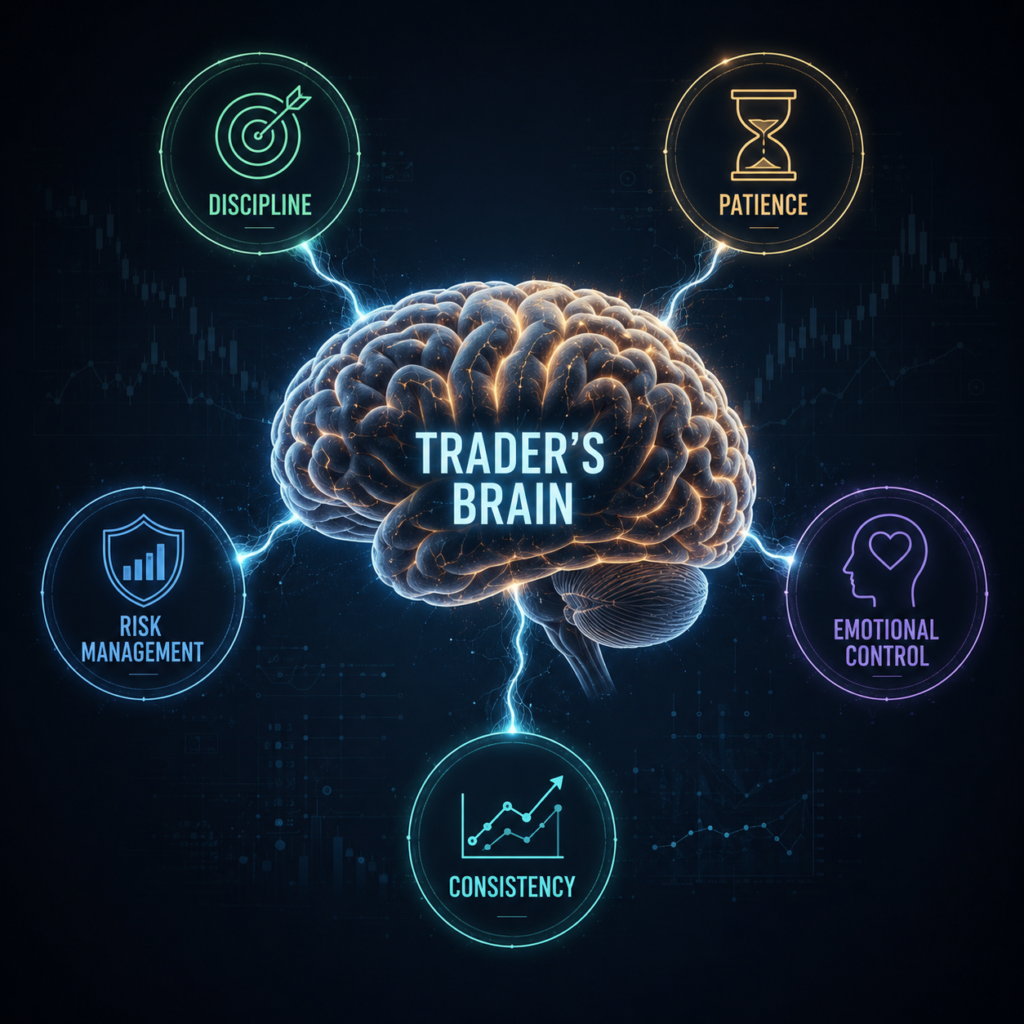
Successful traders understand that controlling their emotions is just as important as understanding market analysis. They develop discipline, patience, emotional resilience, and the ability to think objectively even during periods of losses or market volatility.
In many cases, trading psychology is what separates profitable traders from those who consistently struggle.
This guide explores the psychology of successful trading, the emotional challenges that traders face, and practical ways to develop the mindset needed for long-term success in Forex trading. Unexpected economic news can create volatility and emotional pressure. Traders can Track important economic events to stay informed and prepare for potential market movements.
What Is Trading Psychology?
Trading psychology refers to the emotions, mental attitudes, and behavioral patterns that influence trading decisions.
Every decision made in the market is affected by psychology in some way. Whether a trader chooses to enter a trade, exit a position, hold onto a losing trade, or avoid taking a setup entirely, emotions often play a significant role. Emotions and cognitive biases often influence financial decisions. Learning about Understanding investor psychology and emotional biases can help traders recognize common mental mistakes that affect performance.
Trading psychology includes:
- Fear
- Greed
- Confidence
- Discipline
- Patience
- Stress management
- Self-control
- Emotional resilience
Because Forex trading involves uncertainty and real money, emotional reactions are natural. Every trader experiences excitement after winning trades and disappointment after losses. However, successful traders learn how to prevent these emotions from controlling their actions.
For example, imagine two traders both lose three trades in a row.
The first trader becomes frustrated, increases position sizes, and starts taking random trades in an attempt to recover losses quickly. This behavior often leads to even larger losses.
The second trader remains calm, reviews the trades objectively, and continues following the trading plan. Although losses are frustrating, the trader understands that losing streaks are part of the trading process.
The difference between these two traders is not knowledge or strategy. It is psychology.
Many professional traders believe that trading success depends heavily on mindset. A profitable trading strategy can become ineffective when emotions repeatedly interfere with decision-making.
Learning to understand and control your emotions can therefore become one of the most valuable skills you develop as a Forex trader.
Why Psychology Matters in Forex Trading
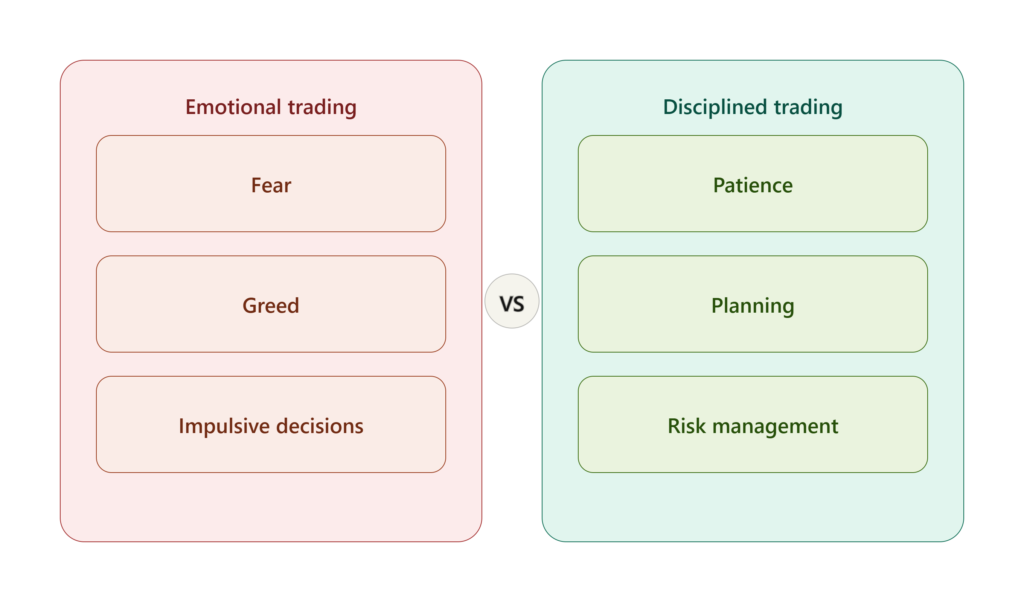
Many beginner traders believe that success in Forex trading comes solely from learning technical analysis, finding profitable indicators, or discovering a secret trading strategy. While these skills are important, they are not enough to guarantee consistent profitability. Emotional control becomes even more important when applying market analysis. Before making trading decisions, learn What Is Technical Analysis? A Beginner’s Guide to Reading Forex Charts.
The truth is that trading is largely a mental game.
The Forex market is unpredictable. Prices constantly move up and down due to economic news, market sentiment, political events, and the actions of millions of market participants around the world. No trader can control what the market will do next.
What traders can control is how they respond to the market.
This is where trading psychology becomes extremely important.
Every trading decision involves uncertainty. Before entering a trade, you can never know with complete certainty whether the market will move in your favor or against you. This uncertainty creates emotional pressure that can influence your judgment.
For example, imagine you have identified a valid trading setup according to your strategy. Just before placing the trade, fear begins to creep in.
You start asking yourself questions:
- What if I lose money?
- What if the market suddenly reverses?
- What if this is a bad trade?
As a result, you decide not to take the trade.
A few hours later, the market moves exactly as your analysis predicted and reaches your profit target.
Experiences like this are common in Forex trading and often lead to frustration and self-doubt.
The opposite can also happen.
Suppose you make several profitable trades in a row. Instead of remaining disciplined, you become overconfident. You begin increasing your position sizes and taking trades that do not meet your trading criteria.
Eventually, the market moves against you, and you lose a significant portion of your account.
In both situations, the problem was not market analysis. The problem was psychology.
Emotions Directly Affect Trading Performance
Forex trading can trigger powerful emotions because money is involved. Even small price movements can create excitement, fear, anxiety, or frustration.
Some of the most common emotions experienced by traders include:
Fear
Fear can prevent traders from taking valid setups, cause them to close trades too early, or lead them to avoid the market entirely after a series of losses.
Greed
Greed often encourages traders to risk too much money, hold profitable trades for too long, or chase unrealistic profits.
Impatience
Many beginners want immediate success. They become frustrated when the market moves slowly and begin forcing trades that do not meet their strategy.
Frustration
After losses, some traders feel the need to recover money quickly. This often leads to revenge trading and even larger losses.
Overconfidence
A series of winning trades can create the illusion that a trader cannot lose. Overconfidence frequently results in poor decision-making and excessive risk-taking.
Successful traders understand that these emotions are natural. The goal is not to eliminate emotions completely but to prevent them from controlling trading decisions.
Psychology Influences Discipline
Discipline is one of the most important qualities of successful traders.
A disciplined trader:
- Follows a trading plan
- Waits patiently for high-quality setups
- Uses proper risk management
- Accepts losses as part of trading
- Avoids emotional decision-making
Without discipline, even the best trading strategy can fail. Many trading mistakes stem from poor discipline and emotional decision-making. Discover 10 Forex Trading Mistakes Beginners Make and How to Avoid Them to avoid common psychological traps.
Many traders know exactly what they should do but struggle to do it consistently because emotions interfere with their decisions.
For example, a trader may know they should risk only 1% of their account on each trade. However, after several losses, emotions may convince them to increase their position size in an attempt to recover money quickly.
This behavior usually leads to larger losses.
The difference between successful and unsuccessful traders often lies not in knowledge but in the ability to remain disciplined under pressure.
Psychology Determines Long-Term Success
Forex trading is a marathon, not a sprint.
Professional traders do not judge their performance based on one trade or even one week of trading. Instead, they focus on maintaining consistency over months and years.
A strong trading mindset allows traders to:
- Stay calm during market volatility
- Handle losing streaks professionally
- Avoid emotional reactions
- Remain patient during slow market periods
- Continue following their trading plan
- Think objectively and make rational decisions
Many traders fail not because they lack intelligence or analytical skills but because they never develop the mental habits necessary for long-term success.
Technical knowledge may help you identify opportunities, but psychology determines whether you can consistently execute your strategy.
For this reason, many experienced traders believe that mastering your mind is just as important as mastering charts and indicators.
In the long run, your mindset often becomes your greatest trading advantage or your biggest obstacle.
The Role of Fear in Trading and How Successful Traders Manage It
Fear is one of the most powerful emotions in Forex trading. Every trader experiences fear at some point, regardless of their level of experience. Trading involves uncertainty and financial risk, so feeling nervous or anxious before making decisions is completely normal.
However, when fear begins to control your actions, it can seriously damage your trading performance.
Fear causes traders to doubt themselves, hesitate when opportunities arise, and make irrational decisions. Instead of following their trading plans, fearful traders often react emotionally to market movements.
Why Traders Experience Fear
Several factors can trigger fear in Forex trading:
- Fear of losing money
- Fear of making mistakes
- Fear of missing out on opportunities
- Fear of being wrong
- Fear after experiencing previous losses
- Fear caused by trading with too much money
Because Forex prices move constantly, traders are often exposed to emotional pressure. Even a small market movement can trigger anxiety, especially when real money is involved.
Fear of Losing Money
The most common fear among beginner traders is the fear of losing money.
No one likes losing money, and losses can feel emotionally painful. As a result, many traders become overly cautious and begin second-guessing every decision. Many beginners experience fear because they start with unrealistic expectations. Understanding How Much Money Do You Need to Start Forex Trading? can help you set realistic goals and manage risk responsibly.
For example, a trader identifies a valid buy setup on EUR/USD according to their strategy. Everything meets their trading rules, but fear starts taking over.
They begin asking themselves:
- What if the market reverses?
- What if I lose this trade?
- What if my analysis is wrong?
Eventually, they decide not to take the trade.
Hours later, the market moves exactly as expected and reaches the profit target.
Situations like this can be frustrating because the trader’s fear prevented them from executing their plan.
Successful traders understand that losses are simply part of the trading business. They know that no strategy can guarantee winning every trade.
Instead of focusing on avoiding losses entirely, they focus on managing losses properly.
Fear of Being Wrong
Many beginners see every losing trade as proof that they are bad traders.
This mindset creates unnecessary emotional pressure.
Professional traders think differently.
They understand that a losing trade does not automatically mean their analysis was wrong or their strategy has failed.
Even the best trading strategies experience losing trades.
A setup with a 60% win rate will still produce losses approximately 40% of the time.
Successful traders accept this reality. They understand that trading is based on probabilities rather than certainty.
Their goal is not to be right on every trade.
Their goal is to consistently execute their strategy and manage risk effectively over many trades.
Fear of Pulling the Trigger
Some traders spend hours analyzing charts but become afraid when it is time to place the trade.
This problem is known as analysis paralysis.
The trader keeps searching for additional confirmation:
- One more indicator
- One more news article
- One more chart pattern
- One more opinion from another trader
The result is hesitation and missed opportunities.
Successful traders avoid this problem by creating clear trading rules.
When all their conditions are met, they execute the trade without unnecessary delays.
They trust their process rather than seeking perfect certainty.
Fear After Losing Trades
Experiencing several losses in a row can significantly affect confidence.
Some traders become afraid to enter any new trades because they expect another loss.
This creates a cycle of hesitation and self-doubt.
Professional traders understand that losing streaks are a normal part of trading.
Even highly profitable traders experience periods of consecutive losses. Fear often decreases when traders have a solid risk management plan. Learn What Is Risk Management in Forex? to better protect your trading capital.
Instead of becoming emotional, they:
- Review their trades objectively
- Ensure they followed their strategy
- Maintain proper risk management
- Continue executing their trading plan
They understand that one losing streak does not determine their long-term success.
How Successful Traders Manage Fear
Successful traders do not eliminate fear completely.
Instead, they learn how to control it.
1. They Risk Only What They Can Afford to Lose
Fear becomes much stronger when traders risk too much money.
Professional traders keep risk at manageable levels so that individual losses do not create emotional panic.
2. They Accept That Losses Are Part of Trading
Every business experiences expenses.
In Forex trading, losses are simply part of the cost of doing business.
Successful traders understand that losses are unavoidable and focus on managing them properly.
3. They Follow a Trading Plan
A trading plan provides structure and reduces emotional decision-making.
When clear rules exist, traders rely on their system instead of their feelings.
4. They Focus on the Process Rather Than Individual Trades
Professional traders know that one trade means very little.
Their focus is on consistently following their strategy over dozens or hundreds of trades.
5. They Build Confidence Through Practice
Confidence reduces fear.
The more traders study the market, practice on demo accounts, and gain experience, the more comfortable they become with uncertainty.
The Key Lesson About Fear
Fear itself is not the enemy.
Fear becomes dangerous only when it controls your decisions.
Successful Forex traders feel fear just like everyone else, but they do not allow fear to stop them from following their trading plans.
They understand that uncertainty will always exist in the market. Instead of seeking perfect certainty, they focus on preparation, discipline, and proper risk management.
In the long run, learning to manage fear can dramatically improve your decision-making and become one of the most important skills in your trading journey.
How Greed Destroys Trading Accounts and How to Control It
While fear often prevents traders from taking opportunities, greed pushes traders to take unnecessary risks.
Greed is the desire for more profits, bigger trades, and faster results. In Forex trading, greed can be extremely dangerous because it encourages traders to abandon discipline and make emotional decisions.
Many beginners enter the Forex market with unrealistic expectations. They see stories of people supposedly turning small accounts into fortunes overnight and begin believing that trading is a quick path to wealth. Greed frequently leads traders to misuse leverage and take unnecessary risks. Beginners should fully understand What Is Leverage in Forex? before trading with borrowed capital.
As a result, they become obsessed with making money as quickly as possible.
This mindset creates greed.
Instead of focusing on learning and consistency, greedy traders focus only on profits. They start chasing money rather than following their trading plans.
Ironically, this usually leads to losses.
How Greed Shows Up in Forex Trading
Greed can appear in many different ways.
Overtrading
One of the most common signs of greed is overtrading.
Overtrading occurs when traders take too many positions without proper analysis.
For example, a trader may have already reached their daily profit target but continues looking for more trades because they want to make even more money.
Instead of stopping, they keep trading.
Eventually, they enter low-quality setups and give back their profits.
Successful traders understand that not every market movement needs to be traded.
Sometimes the best trade is no trade at all.
Professional traders prioritize quality over quantity.
Using Excessive Leverage
Leverage allows traders to control larger positions with relatively small amounts of capital.
Although leverage can increase profits, it can also magnify losses.
Greedy traders often misuse leverage because they want to make large amounts of money quickly.
For example, a trader with a $100 account may use extremely high leverage to control positions that are far too large for their account size.
A small market movement against them can result in significant losses or even wipe out the entire account.
Successful traders understand that leverage is a tool, not a shortcut to wealth.
They use leverage responsibly and focus on preserving capital.
Risking Too Much Money
Greed often encourages traders to risk more than they should.
Instead of risking a small percentage of their account, they begin placing oversized trades because they want faster profits.
At first, they may experience a few winning trades.
This creates a dangerous sense of confidence.
However, eventually, a losing trade occurs.
Because the position size was too large, one loss can erase weeks or even months of progress.
Professional traders know that long-term success depends on protecting capital.
They understand that preserving their trading account is more important than chasing quick profits.
Holding Winning Trades for Too Long
Greedy traders often struggle to take profits.
Suppose a trader planned to close a trade after making $100.
The market reaches the target.
Instead of following the plan, greed takes over.
The trader starts thinking:
- What if it goes higher?
- What if I can make $200?
- Maybe I can make $500.
They ignore their trading plan and remain in the trade.
Suddenly, the market reverses.
The profit decreases.
Eventually, the trade closes with a small gain or even a loss.
This situation is extremely common.
Greed convinces traders that more profit is always possible.
Successful traders understand that consistent profits are more valuable than trying to capture every market movement.
Chasing the Market
Greed can also cause traders to chase trades.
Imagine watching a currency pair move strongly upward.
You missed the original entry.
Suddenly, you begin worrying that you are missing a huge opportunity.
Without proper analysis, you enter the trade late.
Moments later, the market pulls back and hits your stop loss.
This behavior is often driven by greed and the fear of missing out.
Professional traders understand that opportunities are endless.
The Forex market opens every week and creates new setups every day.
They know there is no need to force trades or chase price movements.
Why Greed Is So Dangerous
Greed can be more dangerous than fear because it often disguises itself as ambition.
The trader believes they are simply being motivated or aggressive.
In reality, greed is slowly causing them to abandon discipline.
Greed often leads to:
- Overtrading
- Excessive risk-taking
- Ignoring trading rules
- Using too much leverage
- Emotional decision-making
- Inconsistent results
- Large losses
Many trading accounts are not destroyed by bad strategies.
They are destroyed by good strategies being executed with poor emotional control.
How Successful Traders Control Greed
They Set Realistic Expectations
Professional traders understand that trading is a long-term process.
They do not expect to become wealthy overnight.
Their goal is steady improvement and consistent execution.
They Focus on the Process
Successful traders concentrate on:
- Following their trading plan
- Managing risk
- Executing quality setups
- Reviewing their performance
Profits become a by-product of good habits.
They Respect Risk Management
Professional traders understand that protecting capital comes first.
They know there will always be another opportunity tomorrow.
As a result, they avoid risking large portions of their account on individual trades.
They Take Planned Profits
Successful traders define their exit strategy before entering trades.
When the market reaches their targets, they follow their plan instead of becoming greedy.
They Understand That Consistency Builds Wealth
Forex trading is not about making one huge trade.
It is about making hundreds of disciplined decisions over time.
Small, consistent gains often produce better long-term results than chasing unrealistic profits.
The Key Lesson About Greed
Greed promises quick rewards but often produces long-term losses.
The market will always offer opportunities. There is no need to rush, force trades, or risk more than your account can handle.
Successful traders understand that patience and discipline are more valuable than excitement.
They do not try to get rich quickly.
They focus on protecting their capital, following their plan, and allowing consistent habits to produce results over time.
In Forex trading, mastering greed is not about wanting less success. It is about understanding that long-term success comes from discipline, patience, and controlled decision-making rather than emotional impulses and unrealistic expectations.
Final Thoughts
The psychology of a successful trader goes far beyond charts, indicators, and trading strategies. While technical knowledge is important, your mindset often determines whether you apply that knowledge effectively and consistently.
Every trader experiences emotions such as fear, greed, excitement, frustration, and self-doubt. These emotions are completely normal because trading involves uncertainty and financial risk. The difference between successful traders and struggling traders is not the absence of emotions but the ability to manage them.
Successful traders understand that losses are part of the trading journey. They do not allow a losing trade to destroy their confidence, nor do they allow winning streaks to make them overconfident. Instead, they remain disciplined, patient, and focused on following their trading plans.
They understand that Forex trading is not a get-rich-quick opportunity. It is a skill that requires continuous learning, emotional control, and consistent execution over time. They prioritize protecting their capital, managing risk effectively, and making rational decisions based on evidence rather than emotions.
Building the right trading mindset does not happen overnight. It develops through education, practice, self-reflection, and experience. Every trade, whether profitable or unprofitable, offers valuable lessons that can help you become a better trader.
Remember that long-term success in Forex trading is not determined by a single trade or even a single month of results. It is determined by your ability to remain disciplined, adapt to changing market conditions, and continuously improve your decision-making process.
The market will always provide new opportunities. Your greatest challenge is not predicting every price movement but developing the mindset that allows you to approach the market with patience, discipline, confidence, and emotional control.
Master your emotions, trust your process, and focus on continuous improvement. In the long run, your psychology may become your most powerful trading advantage.
Disclaimer
The information provided in this article is for educational and informational purposes only and should not be considered financial, investment, or trading advice. Successful traders understand that every trade involves uncertainty. Understanding the risks of Forex trading is an important step toward developing realistic expectations and managing emotions effectively.
Forex trading involves significant risk and may not be suitable for all investors. Currency prices can move rapidly, and traders may lose some or all of their invested capital. Past performance does not guarantee future results.
The psychological concepts discussed in this guide are intended to help traders understand the emotional challenges associated with trading and develop healthier decision-making habits. However, no strategy, mindset, or trading method can guarantee profits or eliminate risk.
Before trading with real money, beginners should invest time in learning the fundamentals of Forex trading, practicing on demo accounts, and understanding proper risk management techniques. Never trade with money you cannot afford to lose, and always make financial decisions based on your own research, circumstances, and risk tolerance.
BuildSmartAfri is committed to providing educational content that promotes responsible trading, continuous learning, and realistic expectations rather than promises of quick or guaranteed profits.