
Introduction:

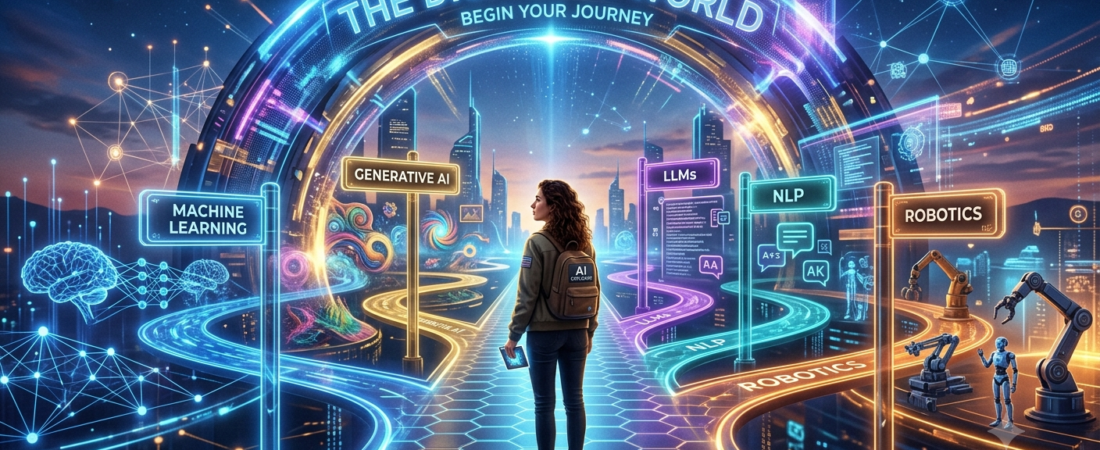
Artificial Intelligence (AI) is transforming the way we work, learn, communicate, and solve problems. From AI chatbots and virtual assistants to image generators and self-driving cars, AI technologies are becoming an essential part of everyday life. As more people begin exploring Artificial Intelligence, one challenge quickly becomes apparent: understanding the technical language used in the AI industry. If you’re completely new to AI, the IBM AI Learning Center provides an excellent introduction to Artificial Intelligence and its real-world applications.
You may have come across words like Machine Learning, Large Language Model (LLM), Prompt Engineering, Neural Network, or Generative AI and wondered what they actually mean. While these concepts can seem overwhelming at first, learning the most common AI terms is one of the best ways to build a strong foundation in Artificial Intelligence.
Just as learning basic vocabulary is essential when studying a new language, understanding AI terminology makes it easier to follow tutorials, read technology news, compare AI tools, and communicate confidently with others interested in Artificial Intelligence. Whether you’re a student, business owner, content creator, developer, or simply curious about AI, knowing these terms will help you better understand how modern AI systems work and how they are changing the world.
In this comprehensive glossary, you’ll discover the top 50 AI terms every beginner should know, explained in clear, simple language with practical examples. By the end of this guide, you’ll be able to recognize common AI concepts, understand conversations about Artificial Intelligence, and continue your learning journey with greater confidence.
If you’re completely new to AI, we recommend reading our guide on What Is Artificial Intelligence (AI)? A Beginner’s Guide before diving into this glossary. It provides a solid introduction to AI concepts and will make many of the terms in this article even easier to understand.
Let’s begin by exploring why learning AI vocabulary is an important step for every beginner.
Why Learning AI Terms Matters
Artificial Intelligence is one of the fastest-growing fields in technology, and new concepts, tools, and innovations are introduced almost every day. Whether you’re reading an article, watching a YouTube tutorial, taking an online course, or experimenting with AI tools like ChatGPT, you’ll frequently encounter technical words that may seem unfamiliar.
Learning the most common AI terms helps you understand these concepts more easily and gives you the confidence to explore Artificial Intelligence without feeling overwhelmed. Instead of memorizing complicated definitions, you’ll begin to recognize how these terms connect and how they are applied in real-world situations.
For example, if you understand the difference between Machine Learning, Deep Learning, and Generative AI, you’ll find it much easier to choose the right AI tools, follow industry discussions, and understand how different AI systems work. Similarly, knowing terms like Prompt Engineering, Large Language Model (LLM), and Neural Network will help you get more value from modern AI applications.
Learning AI vocabulary offers several important benefits:
1. Makes Learning AI Easier
Understanding basic terminology gives you a solid foundation for learning more advanced AI concepts. Instead of stopping to look up unfamiliar words, you can focus on understanding the bigger picture.
2. Helps You Use AI Tools More Effectively
Many popular AI platforms use technical terms in their documentation and features. Knowing what these words mean makes it easier to use tools such as ChatGPT, Google Gemini, Microsoft Copilot, and other AI-powered applications with confidence.
3. Improves Communication
Whether you’re discussing AI with classmates, colleagues, clients, or online communities, understanding common AI terms allows you to communicate more clearly and participate in conversations with confidence.
4. Supports Better Career Opportunities
Artificial Intelligence skills are becoming increasingly valuable across industries, including healthcare, finance, education, marketing, software development, cybersecurity, and customer service. Understanding AI terminology is often the first step toward developing practical AI skills that employers value.
5. Helps You Stay Informed
Technology evolves quickly, and AI is no exception. Knowing common AI terms makes it easier to understand technology news, research breakthroughs, product announcements, and emerging trends without feeling lost.
6. Builds Confidence for Future Learning
Every new concept in Artificial Intelligence builds on earlier knowledge. By mastering the vocabulary first, you’ll find it much easier to explore advanced topics such as machine learning, deep learning, computer vision, natural language processing, and prompt engineering.
Think of this glossary as your personal AI dictionary. You don’t need to memorize all 50 terms at once. Instead, return to this guide whenever you encounter an unfamiliar word. Over time, these definitions will become second nature, making your AI learning journey smoother and more enjoyable.
Before we dive into the glossary, let’s look at how to use this AI glossary effectively so you can get the most value from it.
How to Use This AI Glossary
This glossary is designed to make learning Artificial Intelligence simple, practical, and beginner-friendly. Whether you’re completely new to AI or already exploring AI tools and technologies, you can use this guide as a quick reference whenever you encounter unfamiliar terminology.
Each term is explained in clear, everyday language without unnecessary technical jargon. Wherever possible, practical examples are included to help you understand how the concept is used in real-world AI applications.
To get the most value from this glossary:
Read from Start to Finish
If you’re just beginning your AI journey, reading the glossary from beginning to end will help you build a strong understanding of the most important AI concepts. Since many terms are connected, learning them in sequence makes it easier to understand how Artificial Intelligence works as a whole.
Use It as a Reference Guide
You don’t need to memorize every definition. Instead, bookmark this page and return to it whenever you come across an unfamiliar AI term in an article, video, online course, or AI tool.
Follow the Internal Links
Some terms in this glossary are broad topics that deserve a more detailed explanation. Throughout the article, you’ll find links to other beginner-friendly guides on BuildSmartAfri where you can explore subjects like Machine Learning, Generative AI, Prompt Engineering, and ChatGPT in greater depth.
Practice with Real AI Tools
The best way to remember AI terminology is to apply it. As you use tools like ChatGPT, Google Gemini, Microsoft Copilot, or Canva AI, try identifying the AI concepts you’ve learned in this glossary. Connecting definitions to real-world experiences makes learning much easier.
Keep Learning
Artificial Intelligence is evolving rapidly, and new technologies and terminology continue to emerge. While this glossary covers the top 50 AI terms every beginner should know, it’s a starting point rather than a complete dictionary. Continue exploring trusted resources, experimenting with AI tools, and reading new articles to expand your knowledge over time.
Now that you know how to use this glossary, let’s dive into the Top 50 AI Terms Every Beginner Should Know, starting with the letter A.
Top 24 AI Terms Every Beginner Should Know
A
1. Algorithm
An algorithm is a set of step-by-step instructions that tells a computer how to solve a problem or complete a task. In Artificial Intelligence, algorithms are the foundation of every AI system because they determine how the system processes data, identifies patterns, and makes decisions. Google Research explains how algorithms and machine learning power many of today’s AI technologies.
Think of an algorithm like a recipe for cooking a meal. Just as a recipe provides instructions for preparing food, an algorithm provides instructions that guide a computer toward producing the correct output.
For example, when you search for something on Google, the search engine uses complex algorithms to decide which web pages are most relevant to your search query. Similarly, streaming platforms like Netflix and Spotify use algorithms to recommend movies and songs based on your interests.
In Artificial Intelligence, algorithms become even more powerful because they can learn from data instead of following only fixed instructions. Machine learning algorithms, for instance, improve their predictions as they are exposed to more information.
Example:
A spam email filter uses an algorithm to examine incoming emails. It looks for patterns such as suspicious links, unusual wording, and known spam characteristics before deciding whether an email belongs in your inbox or spam folder.
Key Takeaway:
An algorithm is the set of instructions that enables computers and AI systems to process information, solve problems, and make decisions.
2. Artificial Intelligence (AI)

Artificial Intelligence (AI) refers to the ability of computers and machines to perform tasks that normally require human intelligence. These tasks include learning, reasoning, problem-solving, understanding language, recognizing images, and making decisions. OpenAI showcases how modern AI systems are used for writing, coding, learning, and problem-solving.
Rather than simply following fixed instructions, many modern AI systems analyze data, identify patterns, and improve their performance over time. This ability allows AI to automate complex tasks and assist people in many areas of daily life.
Today, Artificial Intelligence powers countless technologies, including:
- ChatGPT
- Google Gemini
- Microsoft Copilot
- Siri
- Google Maps
- Netflix recommendations
- Face recognition systems
- Self-driving vehicle technology
AI is transforming industries such as healthcare, finance, education, agriculture, manufacturing, and customer service by improving efficiency and helping people make better decisions.
If you’re new to this topic, read our complete guide on What Is Artificial Intelligence (AI)? A Beginner’s Guide to understand how AI works, its different types, benefits, and real-world applications.
Example:
When Netflix recommends a movie based on your viewing history, it is using Artificial Intelligence to predict what you are likely to enjoy.
Key Takeaway:
Artificial Intelligence enables machines to perform tasks that typically require human intelligence, making technology smarter and more useful.
3. AI Agent
An AI Agent is an Artificial Intelligence system that can perceive information, make decisions, and take actions to achieve a specific goal with minimal human intervention.
Unlike traditional software that simply follows fixed commands, an AI agent can evaluate its environment, respond to changing situations, and complete tasks on behalf of a user.
Examples of AI agents include:
- AI customer service assistants
- Smart virtual assistants
- Autonomous robots
- AI scheduling assistants
- Self-driving vehicles
For instance, an AI travel assistant can search for flights, compare hotel prices, recommend destinations, and help you plan an entire trip based on your preferences.
As AI technology advances, AI agents are becoming more capable of handling complex workflows and assisting individuals and businesses with everyday tasks.
Example:
An AI customer support agent can answer common questions, track orders, and resolve simple issues without requiring a human representative.
Key Takeaway:
An AI agent is an intelligent system that observes, decides, and acts to accomplish specific tasks on behalf of a user.
4. AI Model
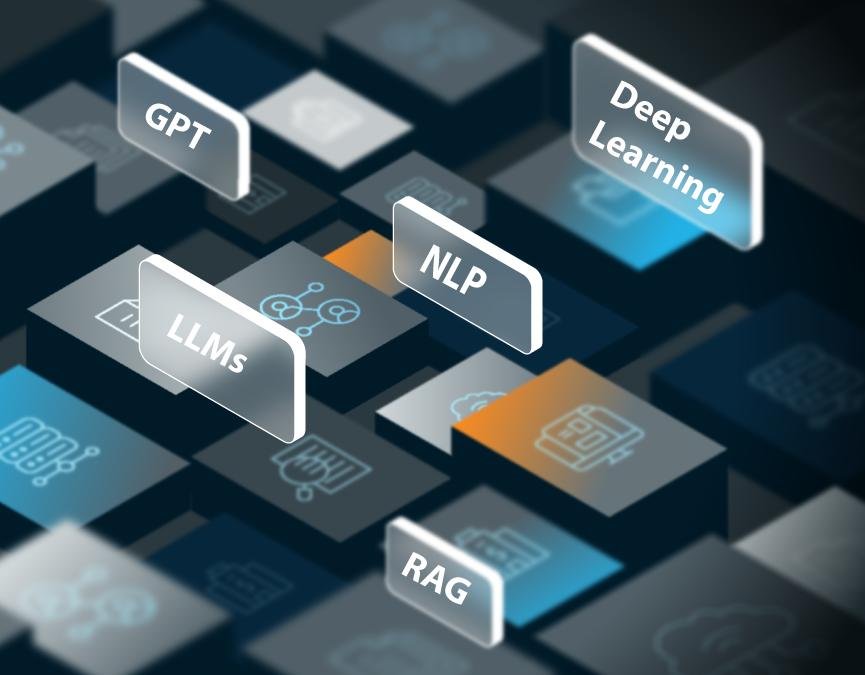
An AI Model is a trained computer program that has learned patterns from data and can make predictions, generate content, or perform specific tasks.
Before an AI model becomes useful, it must be trained using large datasets. During training, the model learns relationships within the data so it can recognize patterns and produce accurate results when given new information.
Different AI models are designed for different purposes. Some generate text, others recognize images, translate languages, detect fraud, or recommend products.
Examples include:
- Large Language Models (LLMs) like ChatGPT
- Image generation models
- Speech recognition models
- Recommendation models
- Fraud detection models
For example, ChatGPT is powered by a large AI model that has been trained on vast amounts of text, allowing it to answer questions, write articles, summarize information, and assist with many language-related tasks.
Example:
When you ask ChatGPT to explain a concept or write an email, the AI model analyzes your prompt and generates a response based on patterns it learned during training.
Key Takeaway:
An AI model is the trained “brain” of an AI system that enables it to recognize patterns, make predictions, and generate useful outputs.
B
5. Bias
In Artificial Intelligence, bias refers to systematic errors or unfair outcomes that occur when an AI system produces results that favor or disadvantage certain individuals or groups. Bias usually happens because the data used to train the AI is incomplete, unbalanced, or reflects existing human prejudices.
Since AI learns from historical data, it can unintentionally inherit the patterns and biases found in that data. If these issues are not addressed, the AI may produce unfair recommendations, predictions, or decisions.
For example, if an AI hiring system is trained primarily on resumes from one demographic group, it may unintentionally favor similar applicants while overlooking equally qualified candidates from other backgrounds. This is why developers carefully test AI systems to identify and reduce bias before deployment.
Reducing bias is an important part of building ethical and trustworthy Artificial Intelligence. Developers use diverse datasets, regular testing, and human oversight to improve fairness and accuracy.
Example:
A facial recognition system trained mostly on images of adults may perform poorly when identifying children because its training data lacks sufficient diversity.
Key Takeaway:
Bias occurs when an AI system produces unfair or inaccurate results due to problems with its training data or design. Building fair AI requires high-quality, diverse data and continuous evaluation.
6. Big Data
Big Data refers to extremely large and complex collections of information that are too massive to be processed efficiently using traditional data-processing methods. Artificial Intelligence relies on Big Data to learn patterns, improve accuracy, and make better predictions.
Every day, enormous amounts of data are generated from sources such as:
- Social media platforms
- Online shopping websites
- Smartphones
- Search engines
- Financial transactions
- Medical records
- GPS devices
- Internet of Things (IoT) sensors
AI systems analyze this information to discover trends, predict future outcomes, and automate decision-making.
For example, streaming services like Netflix analyze millions of viewing habits to recommend movies and TV shows that match each user’s interests. Similarly, banks analyze billions of financial transactions to detect suspicious activity and prevent fraud.
Big Data is often described using the Five Vs:
- Volume – The massive amount of data being generated.
- Velocity – The speed at which new data is created and processed.
- Variety – Different types of data, including text, images, videos, audio, and sensor data.
- Veracity – The quality, reliability, and accuracy of the data.
- Value – The useful insights and benefits that organizations gain from analyzing the data.
Without Big Data, modern AI systems would have far less information from which to learn, making them less accurate and less effective.
Example:
Google Maps processes vast amounts of traffic and location data from millions of users to estimate travel times, suggest faster routes, and help drivers avoid congestion.
Key Takeaway:
Big Data is the large volume of information that powers Artificial Intelligence by enabling AI systems to learn, recognize patterns, and make smarter decisions.
C
7. Chatbot
A chatbot is an AI-powered software application that can simulate conversations with people through text or voice. Chatbots are designed to answer questions, provide information, assist users with tasks, and solve common problems without requiring human intervention.
Modern AI chatbots use Natural Language Processing (NLP) and Machine Learning to understand what users are asking and generate relevant responses. Unlike traditional rule-based chatbots that follow predefined scripts, today’s AI chatbots can understand context, answer follow-up questions, and produce more natural conversations.
You can find AI chatbots in many industries, including:
- Customer service
- Banking
- Healthcare
- Education
- E-commerce
- Travel
- Technical support
Some of the most popular AI chatbots include:
- ChatGPT
- Google Gemini
- Microsoft Copilot
- Claude
- Meta AI
Businesses use chatbots to answer frequently asked questions, assist customers with purchases, track orders, schedule appointments, and provide technical support. This improves customer satisfaction while reducing response times.
Example:
If you visit an online shopping website and a virtual assistant helps you find products, answer delivery questions, or process returns, you’re interacting with an AI chatbot.
Key Takeaway:
A chatbot is an AI application that communicates with users through text or voice to answer questions, provide assistance, and automate conversations.
8. Computer Vision
Computer Vision is a branch of Artificial Intelligence that enables computers to interpret, analyze, and understand images and videos in a way that is similar to human vision.
Instead of simply storing pictures, Computer Vision allows AI systems to identify objects, recognize faces, detect movement, read text from images, and understand visual information.
Computer Vision combines AI, Machine Learning, and Deep Learning to recognize patterns within visual data and make accurate decisions based on what it “sees.”
Today, Computer Vision is used in many real-world applications, including:
- Facial recognition systems
- Self-driving cars
- Medical image analysis
- Security and surveillance
- Quality inspection in manufacturing
- Barcode and QR code scanning
- Image search
- Augmented reality (AR)
For example, a self-driving car uses cameras and Computer Vision to detect road signs, traffic lights, pedestrians, other vehicles, and lane markings. The AI processes this visual information in real time to help the vehicle navigate safely.
Similarly, hospitals use Computer Vision to analyze X-rays, CT scans, and MRI images, helping doctors identify diseases more quickly and accurately.
Example:
When you unlock your smartphone using facial recognition, Computer Vision analyzes your facial features and compares them with stored data to verify your identity.
Key Takeaway:
Computer Vision enables AI systems to understand and analyze images and videos, making technologies such as facial recognition, medical imaging, and autonomous vehicles possible.
D
9. Data
Data is the raw information that Artificial Intelligence systems use to learn, make decisions, and perform tasks. Without data, AI cannot recognize patterns, improve its performance, or generate useful results.
Data can come in many different forms, including:
- Text documents
- Images
- Videos
- Audio recordings
- Numbers and statistics
- Sensor readings
- GPS locations
- Customer transactions
- Social media posts
Every time you search the internet, stream a movie, make an online purchase, or use a navigation app, new data is created. AI systems analyze this information to identify patterns and make predictions.
For example, a music streaming service collects data about the songs you listen to, how often you skip tracks, and the playlists you create. It then uses this information to recommend songs you are likely to enjoy.
The quality of an AI system depends heavily on the quality of its data. Accurate, diverse, and well-organized data helps AI produce better results, while poor-quality data can lead to incorrect predictions and unreliable decisions.
Example:
A weather forecasting AI uses temperature readings, humidity levels, wind speeds, and satellite images as data to predict future weather conditions.
Key Takeaway:
Data is the foundation of Artificial Intelligence. The more relevant and accurate the data, the better an AI system can learn and perform.
10. Dataset
A dataset is an organized collection of related data used to train, test, or evaluate an AI model. While data refers to individual pieces of information, a dataset is a structured group of that information prepared for analysis.
Datasets are one of the most important components of Machine Learning because they provide the examples an AI system needs to learn patterns and make predictions.
A dataset may contain:
- Customer information
- Product images
- Medical records
- Financial transactions
- News articles
- Speech recordings
- Emails
- Sensor readings
For instance, if developers want to build an AI model that identifies cats and dogs in photos, they need a dataset containing thousands or even millions of labeled images of cats and dogs. By studying these examples, the AI learns to recognize the visual differences between the two animals.
Datasets are commonly divided into three parts:
- Training Dataset – Used to teach the AI model.
- Validation Dataset – Used to fine-tune the model during development.
- Testing Dataset – Used to measure how well the model performs on new, unseen data.
Using separate datasets helps ensure the AI can generalize well instead of simply memorizing the training examples.
Example:
An AI system designed to recognize handwritten numbers may be trained using a dataset containing tens of thousands of handwritten digit images.
Key Takeaway:
A dataset is a structured collection of data that AI systems use to learn, improve, and evaluate their performance.
11. Deep Learning
Deep Learning is a specialized branch of Machine Learning that uses artificial neural networks with many layers to learn complex patterns from large amounts of data. It is called “deep” because these neural networks contain multiple layers that process information step by step. NVIDIA explains how GPUs accelerate deep learning and other AI workloads
Deep Learning has made many modern AI breakthroughs possible because it can automatically discover important features within data without requiring programmers to manually define every rule.
Deep Learning is widely used in applications such as:
- Image recognition
- Speech recognition
- Language translation
- AI chatbots
- Self-driving cars
- Medical diagnosis
- Fraud detection
- Content recommendation
Unlike traditional Machine Learning, which often relies on carefully selected features, Deep Learning can learn directly from raw data such as images, audio, and text.
For example, when training an AI to recognize cats in photos, a traditional Machine Learning system might require engineers to specify features like ears, whiskers, and tails. A Deep Learning model, however, can automatically learn these features by analyzing thousands of labeled images.
Deep Learning models require:
- Large datasets
- Powerful computer hardware (especially GPUs)
- Significant computing power
- Longer training times
Although training these models can be resource-intensive, they often achieve exceptional accuracy on complex tasks.
Example:
When you upload a photo to your smartphone and it automatically recognizes faces, objects, or scenery, Deep Learning is working behind the scenes to analyze the image.
Key Takeaway:
Deep Learning is an advanced type of Machine Learning that uses multi-layered neural networks to solve complex problems involving images, speech, text, and other forms of data.
E
12. Ethics in AI
Ethics in AI refers to the principles and guidelines that ensure Artificial Intelligence is developed and used in ways that are fair, transparent, safe, and beneficial to society. As AI becomes more powerful and widely used, ethical considerations help prevent harm while encouraging responsible innovation.
AI systems increasingly influence important decisions in areas such as healthcare, education, finance, hiring, law enforcement, and transportation. Because these decisions can directly affect people’s lives, developers, businesses, and governments must ensure AI is used responsibly.
Some of the most important ethical issues in AI include:
Fairness
AI systems should treat all individuals fairly and avoid discrimination based on factors such as race, gender, age, disability, or other personal characteristics.
For example, an AI hiring system should evaluate candidates based on their qualifications and experience rather than unfairly favoring or excluding certain groups.
Transparency
People should understand how AI systems make decisions whenever possible. Transparent AI helps users trust the technology and allows developers to identify and correct errors.
For instance, if an AI system declines a loan application, the organization should be able to explain the key factors behind that decision instead of providing no explanation.
Privacy
Many AI systems rely on large amounts of personal information. Organizations must collect, store, and process this data responsibly while respecting users’ privacy and complying with applicable data protection laws.
Examples of personal data include:
- Names
- Email addresses
- Medical records
- Financial information
- Location data
- Browsing history
Protecting this information helps reduce the risk of data breaches and identity theft.
Accountability
Even when AI assists with decision-making, humans remain responsible for how AI systems are developed, deployed, and monitored.
Organizations should regularly test AI systems, correct mistakes, and ensure that qualified people review important decisions when necessary.
Safety and Security
AI systems should be designed to operate safely and resist misuse. Developers work to reduce risks such as cyberattacks, misinformation, deepfakes, and other harmful applications of AI.
Regular updates, security testing, and responsible oversight help improve the reliability of AI systems.
Why Ethics in AI Matters
As Artificial Intelligence continues to evolve, ethical principles become increasingly important. Responsible AI development helps build public trust, protects individual rights, and encourages technologies that benefit society.
Governments, researchers, technology companies, and international organizations are working together to establish standards and best practices that promote ethical AI.
For everyday users, understanding AI ethics also encourages responsible use. It reminds us to verify AI-generated information, protect personal data, and recognize that AI should support human decision-making rather than replace human judgment in critical situations.
Example:
A hospital uses AI to help detect diseases from medical images. Instead of allowing the AI to make the final diagnosis on its own, doctors review the AI’s recommendations before deciding on the best treatment. This combination of AI assistance and human expertise helps improve accuracy while ensuring patient safety.
Key Takeaway:
Ethics in AI focuses on developing and using Artificial Intelligence responsibly by promoting fairness, transparency, privacy, accountability, and safety. Responsible AI benefits both individuals and society while reducing potential risks.
F
13. Fine-Tuning
Fine-tuning is the process of taking a pre-trained AI model and training it further on a smaller, specialized dataset so it performs better on a specific task or within a particular industry.
Instead of building an AI model from scratch, which can require enormous amounts of data, computing power, and time—developers start with an existing model that already understands general concepts. They then “fine-tune” it using new data that is closely related to the task they want the AI to perform.
Think of fine-tuning like hiring an experienced employee. Rather than teaching them everything from the beginning, you provide additional training so they become an expert in your company’s products, services, or processes.
Fine-tuning is commonly used to customize AI models for industries such as:
- Healthcare
- Finance
- Education
- Law
- Customer service
- Marketing
- Software development
For example, a hospital might fine-tune a general AI model using thousands of medical research papers and clinical documents. This helps the AI better understand medical terminology and provide more accurate assistance to healthcare professionals.
Similarly, a business could fine-tune an AI model using its product manuals, FAQs, and customer support conversations to improve the quality of responses provided by its AI chatbot.
Benefits of Fine-Tuning
- Improves accuracy for specialized tasks.
- Adapts AI to a specific industry or business.
- Produces more relevant responses.
- Saves time compared to training a model from scratch.
- Reduces development costs.
It’s important to note that fine-tuning is different from simply giving an AI a prompt. Fine-tuning changes how the model has learned from data, while prompting only changes the instructions you provide during a conversation.
Example:
A company fine-tunes a language model using its internal documentation so employees can ask company-specific questions and receive accurate answers.
Key Takeaway:
Fine-tuning is the process of further training a pre-trained AI model with specialized data to improve its performance for specific tasks or industries.
14. Foundation Model
A Foundation Model is a large AI model that has been trained on enormous amounts of diverse data and can perform many different tasks without being built for just one purpose.
Unlike traditional AI models that are designed for a single task, foundation models serve as a general base that developers can adapt for a wide variety of applications through prompting or fine-tuning.
Foundation models can perform tasks such as:
- Writing articles
- Answering questions
- Translating languages
- Summarizing documents
- Generating computer code
- Creating images
- Analyzing data
- Assisting with research
Many of today’s most advanced AI systems are built on foundation models.
Examples include:
- OpenAI’s GPT models
- Google’s Gemini models
- Meta’s Llama models
- Anthropic’s Claude models
These models are trained using massive datasets that include books, websites, articles, code, and other publicly available information. Because they have learned from such a broad range of content, they can understand and generate responses across many topics.
Developers often build specialized AI applications on top of foundation models instead of creating entirely new models. This significantly reduces development time and makes advanced AI more accessible to businesses and developers.
For instance, an education company can use a foundation model to create an AI tutor, while a law firm can adapt the same model to assist with legal document analysis.
Benefits of Foundation Models
- Can perform multiple tasks.
- Adaptable to different industries.
- Save development time.
- Support fine-tuning and customization.
- Power many modern AI applications.
Example:
ChatGPT is powered by a foundation model that can write essays, answer questions, summarize documents, generate code, and assist with many other language-related tasks without requiring a separate AI model for each task.
Key Takeaway:
A foundation model is a large, pre-trained AI model that provides the foundation for building many different AI applications across industries.
G
15. Generative AI
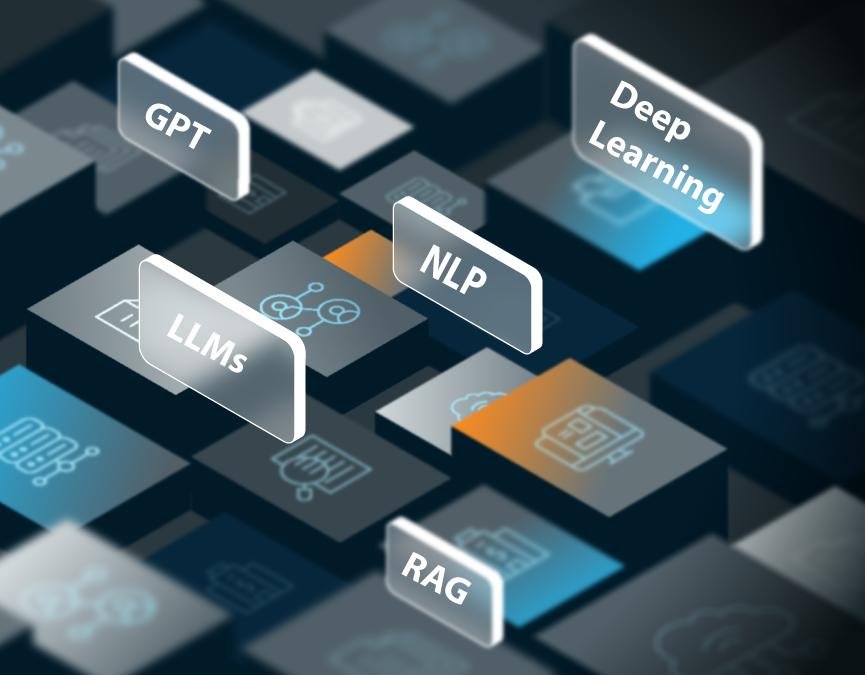
Generative AI is a type of Artificial Intelligence that can create new content based on the instructions, or prompts, provided by a user. Instead of simply analyzing existing information, Generative AI produces original text, images, videos, music, computer code, and other forms of digital content. Microsoft Learn offers beginner-friendly resources explaining how Generative AI works and where it is used.
Generative AI learns patterns from massive datasets during training. When you give it a prompt, it uses what it has learned to generate a response that is relevant to your request.
Today, Generative AI is transforming the way people work, learn, and create. It is widely used by:
- Students
- Teachers
- Writers
- Software developers
- Graphic designers
- Digital marketers
- Business owners
- Researchers
Some of the most popular Generative AI tools include:
- ChatGPT
- Google Gemini
- Microsoft Copilot
- Claude
- Midjourney
- DALL·E
- Adobe Firefly
These tools can perform tasks such as:
- Writing articles and emails
- Creating social media posts
- Generating computer code
- Designing images
- Summarizing long documents
- Translating languages
- Brainstorming ideas
- Answering questions
Although Generative AI is incredibly powerful, it is not always correct. It can occasionally produce inaccurate or misleading information, so users should verify important facts using reliable sources.
If you’d like to learn more about this technology, read our guide on What Is Generative AI? A Beginner’s Guide.
Example:
A content creator asks ChatGPT to write a blog post outline, then uses an AI image generator to create a featured image. Both tasks are examples of Generative AI producing original content from user prompts.
Key Takeaway:
Generative AI creates new content including text, images, audio, video, and code, based on user instructions, making it one of the most exciting areas of modern Artificial Intelligence.
16. GPU (Graphics Processing Unit)
A GPU (Graphics Processing Unit) is a specialized computer processor designed to perform many calculations simultaneously. Although GPUs were originally developed to render graphics and video games, they have become essential for training and running modern Artificial Intelligence models.
AI tasks, especially those involving Deep Learning, require processing enormous amounts of data. A standard computer processor, known as a CPU (Central Processing Unit), can handle these tasks, but a GPU can perform thousands of calculations in parallel, making AI training much faster and more efficient.
GPUs are commonly used for:
- Training AI models
- Deep Learning
- Computer Vision
- Image generation
- Video processing
- Scientific research
- Data analysis
For example, training a large language model on a CPU could take weeks or even months. Using multiple high-performance GPUs can significantly reduce the training time.
Major companies that manufacture AI GPUs include:
- NVIDIA
- AMD
- Intel
NVIDIA’s GPUs are widely used in AI research, cloud computing, and machine learning because they are optimized for handling complex mathematical operations required by AI models.
As AI continues to grow, GPUs play a critical role in powering technologies such as ChatGPT, image generators, autonomous vehicles, medical imaging, and robotics.
Example:
When researchers train an AI model to recognize millions of images, they often use powerful GPUs to process the large dataset much faster than a CPU could.
Key Takeaway:
A GPU is a powerful processor that accelerates Artificial Intelligence by handling large-scale calculations efficiently, making it essential for training and running modern AI models.
H
17. Hallucination
In Artificial Intelligence, a hallucination occurs when an AI model generates information that sounds convincing but is incorrect, misleading, or completely made up. Unlike humans, AI does not intentionally lie. Instead, it predicts the most likely response based on patterns it learned during training, which can sometimes result in inaccurate or fabricated content.
Hallucinations are most commonly associated with Generative AI and Large Language Models (LLMs) because these systems generate new text rather than simply retrieving verified facts from a database.
AI hallucinations can include:
- Inventing facts
- Creating fake statistics
- Misquoting people
- Citing sources that do not exist
- Providing outdated information as current
- Giving incorrect explanations with confidence
Because of this, it is important to verify AI-generated information before using it in academic work, business reports, medical advice, legal documents, or financial decisions.
Several factors can contribute to AI hallucinations, including:
- Limited or incomplete training data
- Ambiguous or unclear prompts
- Requests for information beyond the model’s knowledge
- Complex reasoning tasks
- Lack of access to current or verified information
Developers continue to reduce hallucinations by improving training methods, using higher-quality datasets, connecting AI models to reliable knowledge sources, and encouraging users to provide clear prompts.
How to Reduce AI Hallucinations
Although hallucinations cannot always be eliminated, users can reduce them by following good practices:
- Ask clear and specific questions.
- Request reliable sources or references when appropriate.
- Verify important information using trusted websites.
- Break complex questions into smaller parts.
- Avoid relying on AI as the sole source for critical decisions.
Remember that AI is designed to assist people, not replace careful research or professional expertise.
Example:
A student asks an AI chatbot to provide references for a research paper. The chatbot generates several book titles and author names that appear legitimate, but some of them do not actually exist. Before submitting the assignment, the student checks each reference and removes the incorrect ones.
Key Takeaway:
An AI hallucination occurs when an AI system generates false or misleading information that appears believable. Always verify important AI-generated content using trusted sources.
I
18. Inference
Inference is the process where a trained AI model uses what it has learned to make predictions, generate responses, or complete tasks using new information. In simple terms, inference is the stage where the AI applies its knowledge instead of learning new patterns.
Artificial Intelligence generally works in two main phases:
- Training – The AI learns from large amounts of data.
- Inference – The trained AI uses that knowledge to answer questions, recognize images, translate languages, or make predictions.
During inference, the AI model is no longer learning. Instead, it analyzes the input it receives and produces the most appropriate output based on what it learned during training.
Inference is used every time you interact with an AI application.
Examples include:
- ChatGPT answering your questions.
- Google Translate converting one language into another.
- Netflix recommending movies.
- Gmail detecting spam emails.
- Face recognition unlocking your smartphone.
- Voice assistants responding to spoken commands.
For example, when you upload a photo to an AI image recognition app, the AI compares the image with patterns it learned during training and predicts what objects appear in the picture. This prediction process is called inference.
Why Inference Is Important
Inference is what makes AI useful in everyday life. Without it, an AI model would simply store information without being able to apply what it has learned.
Fast and accurate inference allows AI systems to:
- Respond instantly to user requests.
- Recognize images and speech.
- Detect fraud in real time.
- Recommend products and videos.
- Assist doctors with medical diagnoses.
- Support autonomous vehicles.
The speed of inference often depends on the hardware being used. Powerful processors such as GPUs and specialized AI chips can perform inference much faster than standard computer processors.
Training vs. Inference
| Training | Inference |
|---|---|
| AI learns from data. | AI applies what it has learned. |
| Requires large datasets. | Uses new input from users or systems. |
| Usually takes hours, days, or weeks. | Often takes only milliseconds or seconds. |
| Improves the AI model. | Produces predictions, answers, or decisions. |
Understanding the difference between training and inference is essential because every AI system goes through both stages before it can be used effectively.
Example:
A company trains an AI model using millions of customer support conversations. Later, when a customer asks a question through the company’s chatbot, the AI analyzes the request and generates a helpful response. That real-time response is an example of inference.
Key Takeaway:
Inference is the stage where a trained AI model uses its learned knowledge to make predictions, generate responses, or perform tasks based on new information.
L
19. Large Language Model (LLM)
A Large Language Model (LLM) is an advanced type of Artificial Intelligence that is trained on enormous amounts of text data to understand, generate, summarize, translate, and respond to human language.
LLMs are the technology behind many of today’s most popular AI tools, including ChatGPT, Google Gemini, Microsoft Copilot, Claude, and Meta AI. These models are called “large” because they are trained using billions—or even trillions—of words from books, articles, websites, research papers, code, and other text sources.
Instead of memorizing exact answers, an LLM learns patterns, grammar, context, and relationships between words. This allows it to predict the most appropriate response based on the prompt it receives.
Large Language Models can perform many language-related tasks, including:
- Answering questions
- Writing articles and blog posts
- Summarizing documents
- Translating languages
- Generating computer code
- Writing emails
- Brainstorming ideas
- Correcting grammar
- Creating marketing content
- Explaining complex topics
One of the biggest advantages of LLMs is their versatility. The same model can assist a student with homework, help a programmer write code, support a business with customer service, or generate creative writing—all without requiring separate AI systems for each task.
How Does a Large Language Model Work?
Although the technology behind LLMs is highly complex, the basic process is relatively simple:
- The model is trained using massive amounts of text.
- It learns patterns, sentence structures, and relationships between words.
- A user enters a prompt or question.
- The model predicts the most appropriate sequence of words to generate a useful response.
Because LLMs predict text based on probabilities rather than true understanding, they can occasionally produce incorrect or fabricated information. This is why it’s important to verify important facts using trusted sources.
Popular Examples of Large Language Models
Some well-known LLMs include:
- GPT (OpenAI)
- Gemini (Google)
- Claude (Anthropic)
- Llama (Meta)
- Mistral
- DeepSeek
Each model has its own strengths, capabilities, and areas of specialization, but they all share the common goal of understanding and generating human language.
Real-World Applications of LLMs
Large Language Models are widely used across industries, including:
- Customer support
- Education
- Healthcare
- Marketing
- Software development
- Research
- Content creation
- Business productivity
For example, businesses use LLM-powered chatbots to answer customer questions instantly, while students use them to simplify difficult topics and summarize study materials.
LLM vs Traditional Search Engine
Many beginners confuse Large Language Models with search engines, but they work differently.
| Large Language Model (LLM) | Search Engine |
|---|---|
| Generates original responses. | Finds and lists existing web pages. |
| Understands context and natural language. | Matches keywords with indexed websites. |
| Can summarize and explain information. | Directs users to external sources. |
| Helps with writing, coding, and brainstorming. | Primarily helps users find information online. |
Understanding this distinction helps users choose the right tool for different tasks.
Example:
When you ask ChatGPT, “Explain Machine Learning like I’m 12 years old,” the Large Language Model analyzes your prompt and generates a simple, easy-to-understand explanation in real time.
Key Takeaway:
A Large Language Model (LLM) is a powerful AI system trained on massive amounts of text that can understand and generate human language, enabling applications such as chatbots, writing assistants, translators, and coding tools.
M
20. Machine Learning (ML)
Machine Learning (ML) is a branch of Artificial Intelligence that enables computers to learn from data and improve their performance without being explicitly programmed for every task. Google’s Machine Learning Crash Course is one of the best free resources for beginners who want to understand how machine learning works.
In traditional computer programming, a developer writes detailed instructions that tell a computer exactly what to do in every situation. Machine Learning works differently. Instead of following fixed rules, the computer studies large amounts of data, identifies patterns, and uses those patterns to make predictions or decisions.
Machine Learning powers many of the AI applications we use every day.
Examples include:
- Netflix recommending movies.
- Spotify suggesting songs.
- Amazon recommending products.
- Gmail filtering spam emails.
- Banks detecting fraudulent transactions.
- Social media platforms recommending posts.
- Voice assistants understanding spoken commands.
For example, when Netflix recommends a movie, it analyzes your viewing history, compares it with the behavior of millions of other users, and predicts what you are most likely to enjoy next. This prediction is made using Machine Learning.
Types of Machine Learning
Machine Learning is generally divided into three main categories:
1. Supervised Learning
In Supervised Learning, the AI is trained using labeled data. This means the correct answers are already known, allowing the model to learn the relationship between inputs and outputs.
Examples include:
- Email spam detection
- House price prediction
- Credit risk assessment
- Medical diagnosis
2. Unsupervised Learning
In Unsupervised Learning, the AI works with unlabeled data and tries to discover hidden patterns or group similar data together.
Examples include:
- Customer segmentation
- Market research
- Recommendation systems
- Fraud detection
3. Reinforcement Learning
In Reinforcement Learning, an AI agent learns through trial and error by receiving rewards for good actions and penalties for poor decisions.
Examples include:
- Self-driving cars
- Robotics
- Video game AI
- Autonomous drones
Why Machine Learning Is Important
Machine Learning has become one of the most important technologies in modern AI because it allows systems to improve automatically as they process more data.
Its benefits include:
- Faster decision-making
- Improved prediction accuracy
- Automation of repetitive tasks
- Better personalization
- Continuous improvement over time
- Ability to analyze massive datasets
Today, Machine Learning is used in healthcare, finance, agriculture, transportation, education, manufacturing, cybersecurity, and many other industries.
Example:
An online shopping platform studies your previous purchases and browsing history. Using Machine Learning, it recommends products that match your interests, increasing the likelihood that you’ll find items you want to buy.
Key Takeaway:
Machine Learning is a branch of Artificial Intelligence that allows computers to learn from data, recognize patterns, and make predictions without being explicitly programmed for every situation.
21. Model
In Artificial Intelligence, a model is the trained system that has learned patterns from data and can use that knowledge to perform tasks such as making predictions, answering questions, recognizing images, or generating content.
Think of an AI model as the “brain” of an AI application. During training, the model studies large amounts of data and learns relationships, patterns, and rules. Once training is complete, the model can be used to solve real-world problems through inference.
Different AI models are designed for different purposes. Some specialize in understanding language, while others recognize images, generate music, detect fraud, or predict future trends.
Examples of AI models include:
- Large Language Models (LLMs)
- Image recognition models
- Speech recognition models
- Recommendation models
- Fraud detection models
- Medical diagnosis models
AI models are used in countless everyday applications, including:
- Virtual assistants
- Online shopping recommendations
- Navigation apps
- Facial recognition systems
- AI chatbots
- Translation tools
The quality of an AI model depends on several factors, including:
- The quality of the training data
- The amount of data available
- The training process
- The computing power used
- Ongoing testing and improvements
A well-trained model generally produces more accurate, reliable, and useful results than one trained on limited or poor-quality data.
Example:
A bank trains an AI model using millions of historical transactions. After deployment, the model analyzes new transactions and flags unusual activity that may indicate fraud.
Key Takeaway:
An AI model is a trained system that has learned from data and uses that knowledge to perform specific tasks such as prediction, recognition, or content generation.
22. Multimodal AI
Multimodal AI is a type of Artificial Intelligence that can understand, process, and generate information from multiple types of data known as modalities at the same time.
Instead of working with only one kind of input, such as text, Multimodal AI can combine different forms of information, including:
- Text
- Images
- Audio
- Video
- Documents
- Charts
- Speech
By combining these different data types, Multimodal AI can provide richer, more accurate, and more context-aware responses.
For example, you could upload a photo of a damaged product and ask an AI assistant to describe the damage, estimate possible causes, and draft an email requesting a replacement. The AI uses both the image and your text prompt to generate a helpful response.
Real-World Examples of Multimodal AI
Multimodal AI is already being used in many industries:
- Healthcare: Analyzing medical images alongside patient records.
- Education: Explaining diagrams and answering students’ questions.
- Customer support: Understanding uploaded photos and written complaints.
- E-commerce: Identifying products from images and answering questions.
- Accessibility: Describing images for people with visual impairments.
- Autonomous vehicles: Combining camera feeds, radar, sensors, and maps to understand the environment.
Benefits of Multimodal AI
- Better understanding of complex information.
- More natural interactions with AI systems.
- Improved accuracy by combining multiple data sources.
- Faster problem-solving.
- Enhanced accessibility for users with different needs.
As AI technology advances, Multimodal AI is expected to become increasingly common, enabling more intuitive and capable digital assistants, educational tools, healthcare systems, and business applications.
Example:
A student uploads a biology diagram and asks an AI assistant to explain it in simple language. The AI analyzes the image, understands the accompanying text question, and provides a detailed explanation. This interaction is an example of Multimodal AI.
Key Takeaway:
Multimodal AI is an AI system that can understand and work with multiple types of information, such as text, images, audio, and video to deliver more accurate and context-aware results.
N
23. Natural Language Processing (NLP)
Natural Language Processing (NLP) is a branch of Artificial Intelligence that enables computers to understand, interpret, generate, and respond to human language in a way that feels natural.
Human language is complex. People use different words, slang, abbreviations, accents, emotions, and sentence structures. NLP helps AI systems process this complexity so they can communicate effectively with people.
Without NLP, modern AI assistants and chatbots would not be able to understand what users are asking or provide meaningful responses.
NLP combines several fields, including:
- Artificial Intelligence
- Machine Learning
- Linguistics
- Computer Science
These technologies work together to help computers understand both written and spoken language.
Common Applications of NLP
Natural Language Processing is used in many everyday technologies, such as:
- AI chatbots
- Virtual assistants
- Machine translation
- Voice recognition
- Spam email detection
- Search engines
- Grammar checkers
- Text summarization
- Sentiment analysis
- Speech-to-text systems
For example, when you ask a virtual assistant, “What’s the weather like today?”, NLP helps the AI understand your question, identify the important keywords, and generate an appropriate response.
Key NLP Tasks
Natural Language Processing performs many different language-related tasks, including:
Text Classification
Organizing text into categories.
Example:
An email system automatically classifies incoming messages as:
- Spam
- Promotions
- Social
- Primary Inbox
Sentiment Analysis
Determining whether a piece of text expresses positive, negative, or neutral emotions.
Businesses use sentiment analysis to understand customer opinions from online reviews and social media posts.
Language Translation
Converting text from one language to another.
Examples include:
- Google Translate
- AI translation tools
Text Summarization
Reducing long documents into shorter summaries while keeping the most important information.
Students, researchers, and business professionals use AI summarization tools to save time.
Speech Recognition
Converting spoken language into written text.
Examples include:
- Voice typing
- Voice assistants
- Automatic meeting transcription
Benefits of NLP
Natural Language Processing offers many advantages:
- Improves communication between humans and computers.
- Saves time by automating language tasks.
- Makes customer service available 24/7.
- Supports multilingual communication.
- Increases productivity.
- Helps businesses analyze customer feedback.
As AI continues to evolve, NLP is becoming more accurate and capable of understanding context, tone, and even subtle differences in meaning.
Example:
A customer sends a message to an online store asking, “Where is my order?” An AI chatbot uses NLP to understand the request, retrieves the tracking information, and responds with the delivery status within seconds.
Key Takeaway:
Natural Language Processing (NLP) is the branch of AI that enables computers to understand, interpret, and generate human language, powering technologies such as chatbots, translation tools, voice assistants, and text analysis systems.
24. Neural Network
A Neural Network is a type of Artificial Intelligence model inspired by the structure and functioning of the human brain. It consists of interconnected nodes, often called artificial neurons, that work together to recognize patterns, learn from data, and make predictions.
Although a neural network is much simpler than the human brain, it is designed to process information in a similar way. Each artificial neuron receives information, performs calculations, and passes the result to other neurons until the AI reaches an output.
Neural networks are the foundation of many modern AI technologies, especially Deep Learning.
How Does a Neural Network Work?
A basic neural network has three main layers:
1. Input Layer
The input layer receives the raw data.
Examples include:
- Text
- Images
- Audio
- Numbers
- Sensor data
2. Hidden Layers
The hidden layers perform calculations and identify patterns within the data.
Large AI models often contain dozens—or even hundreds—of hidden layers, allowing them to solve highly complex problems.
3. Output Layer
The output layer produces the final prediction or result.
For example, it might identify whether an image contains:
- A cat
- A dog
- A car
- A tree
Why Neural Networks Are Important
Neural networks enable AI systems to perform tasks that would be difficult or impossible using traditional programming.
They are widely used in:
- Image recognition
- Speech recognition
- Language translation
- Medical diagnosis
- Fraud detection
- Recommendation systems
- Self-driving vehicles
- Robotics
Advantages of Neural Networks
Neural networks provide several important benefits:
- Learn complex patterns from data.
- Improve accuracy over time with training.
- Handle large amounts of information.
- Support advanced AI applications.
- Enable Deep Learning models.
However, neural networks also require:
- Large datasets
- Significant computing power
- High-performance GPUs
- Long training times for very large models
Despite these requirements, they remain one of the most powerful technologies in Artificial Intelligence.
Example:
A hospital trains a neural network using thousands of X-ray images. When a new patient uploads an X-ray, the AI analyzes the image and helps doctors identify potential signs of disease more quickly.
Key Takeaway:
A neural network is an AI model inspired by the human brain that learns patterns from data through interconnected artificial neurons, making it possible for AI to recognize images, understand language, and solve complex problems.
Final Thoughts
Artificial Intelligence is no longer a technology reserved for scientists and software engineers. It has become part of everyday life, powering the tools we use to communicate, learn, work, shop, travel, and create. As AI continues to evolve, understanding its language is becoming an essential digital skill for students, professionals, entrepreneurs, and anyone who wants to stay competitive in today’s technology-driven world.
By learning these 50 essential AI terms, you’ve taken an important first step toward building a strong foundation in Artificial Intelligence. Whether your goal is to use AI tools more effectively, start a career in technology, improve your business, or simply understand the conversations shaping the future, knowing these terms will make learning advanced AI concepts much easier.
Remember that AI is a rapidly changing field. New technologies, tools, and terminology emerge every year. Continue exploring, practice using AI responsibly, and stay curious. The more you learn, the more opportunities you’ll discover to use AI to solve problems, increase productivity, and unlock new possibilities.
If you’re just getting started, don’t stop here. Build your knowledge step by step by reading our beginner-friendly AI guides and experimenting with trusted AI tools. Every expert was once a beginner, and your AI learning journey starts with understanding the basics.
Continue Your AI Learning Journey
Enjoyed this AI glossary? Don’t stop here!
Expand your knowledge with our other beginner-friendly Artificial Intelligence guides:
If you found this article helpful, consider sharing it with friends, classmates, or colleagues who are starting their AI journey. You can also bookmark this page and return whenever you come across an unfamiliar AI term.
For more practical guides on Artificial Intelligence, technology, online business, and digital skills, explore more articles on BuildSmartAfri and keep learning something new every week.
Disclaimer
Disclaimer: This article is intended for educational and informational purposes only. While every effort has been made to ensure the accuracy of the information provided, Artificial Intelligence is a rapidly evolving field, and technologies, terminology, and best practices may change over time. This content should not be considered professional, legal, financial, or technical advice. Always verify important information through official documentation, reputable educational resources, and trusted industry sources before making decisions based on AI-related information. BuildSmartAfri is committed to providing practical educational content to help readers understand and responsibly use emerging technologies.