
Introduction:
How to Choose the Best Forex Broker for Beginners: A Complete Guide. One of the most important decisions every new Forex trader will make is choosing a broker. Finding the best Forex broker for beginners is one of the most important decisions every new trader will make.
A Forex broker acts as the bridge between you and the global currency market. Without a broker, you cannot buy or sell currency pairs, access trading platforms, or execute trades.
Unfortunately, many beginners rush into opening accounts with the first broker they find online. Some choose brokers because of flashy advertisements, promises of quick profits, or extremely high leverage.
This can be a costly mistake.
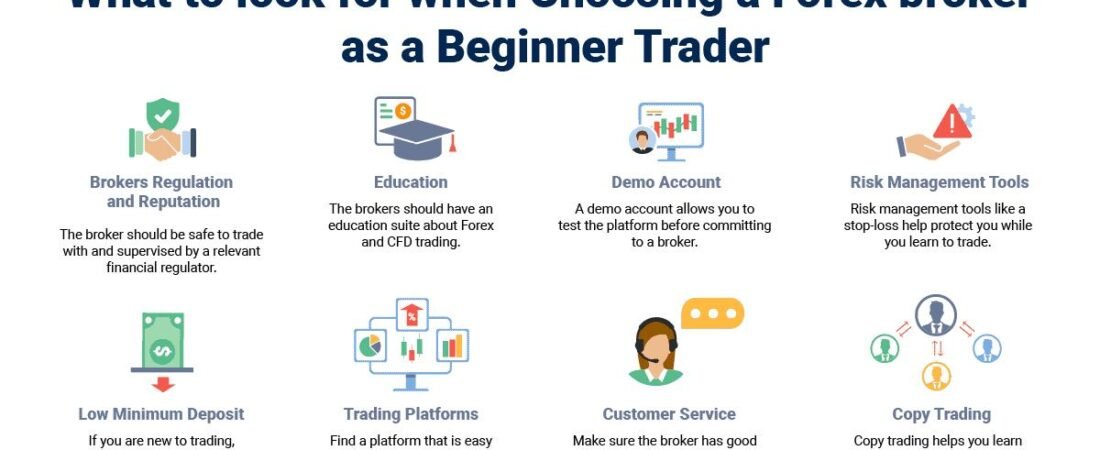
The broker you choose can significantly affect your trading experience. A good broker provides reliable trading platforms, fair trading conditions, educational resources, responsive customer support, and secure access to your funds.
On the other hand, choosing the wrong broker can expose you to unnecessary risks such as:
- Hidden fees and commissions
- Poor trade execution
- Platform crashes during important market events
- Withdrawal problems
- Unresponsive customer service
- Lack of regulatory protection
- Potential scams and fraudulent activities
Imagine two beginners starting their Forex journey.
The first trader opens an account with a well-regulated broker that offers educational materials, low trading costs, and excellent customer support.
The second trader chooses an unknown broker simply because it advertises massive bonuses and extremely high leverage.
After a few months, the first trader enjoys a smooth trading experience and continues learning.
The second trader encounters withdrawal delays, frequent platform issues, and poor customer service.
Even if both traders use the same strategy, their experiences can be completely different because of their broker choices.
This example highlights an important lesson:
Choosing the right broker is just as important as learning how to trade.
The good news is that finding a reliable Forex broker does not have to be complicated.
By understanding the factors that matter most, beginners can avoid common mistakes and select a broker that supports their learning journey and long-term success.
In this guide, you will learn exactly how to choose the best Forex broker for beginners, the features to look for, the warning signs to avoid, and practical steps for opening your first trading account.
What Is a Forex Broker?
A Forex broker is a financial services company that provides traders with access to the foreign exchange market.
The Forex market operates electronically and does not have a central exchange like stock markets. Instead, traders participate through brokerage firms that connect them to liquidity providers and facilitate the buying and selling of currencies. Before opening an account, beginners should understand what a Forex broker does and how brokers provide access to the global currency market.
Simply put, a Forex broker acts as the middleman between you and the currency market.
When you place a trade on EUR/USD, GBP/USD, or any other currency pair, your broker processes the order and provides the trading platform through which the transaction occurs.
A broker typically provides:
- Access to trading platforms
- Market data and price quotes
- Trade execution services
- Account management tools
- Educational materials
- Customer support
- Deposit and withdrawal services
- Risk management features
Without a broker, individual traders would not be able to access the global Forex market directly. Since the Forex market operates twenty-four hours a day across different financial centers, choosing a reliable broker is essential for accessing trading opportunities efficiently.
Why Choosing the Right Forex Broker Matters
Many beginners underestimate the importance of broker selection. Developing strong risk management principles is just as important as choosing a broker because protecting capital remains one of the foundations of successful trading.
However, the broker you choose can directly impact:
Your Trading Costs
Different brokers charge different spreads, commissions, and fees.
Higher costs can gradually reduce profitability.
Your Trading Experience
A reliable platform allows you to execute trades efficiently and monitor the markets with confidence.
Your Fund Security
Regulated brokers generally follow rules designed to protect client funds and maintain transparency.
Your Learning Experience
Many beginner-friendly brokers offer:
- Educational articles
- Video tutorials
- Webinars
- Demo accounts
- Market analysis
These resources can accelerate your learning process.
Your Emotional Confidence
Trading becomes less stressful when you trust the broker handling your account and funds.
For this reason, choosing a broker should never be based solely on marketing promises.
It should be based on careful research and informed decision-making.
Signs of a Beginner-Friendly Forex Broker
A good Forex broker should make the learning process easier rather than more complicated.
Some of the characteristics of beginner-friendly brokers include:
✔ Easy account setup
✔ User-friendly trading platforms
✔ Educational resources
✔ Responsive customer support
✔ Transparent pricing
✔ Reasonable minimum deposits
✔ Reliable deposit and withdrawal methods
✔ Demo accounts for practice
✔ Strong security measures
These features help beginners build confidence while reducing unnecessary risks during the learning process.
The Most Important Factors to Consider When Choosing a Forex Broker
Choosing a Forex broker is similar to choosing a bank or a business partner. You are trusting the broker with your money, your trading activities, and your personal information. Therefore, beginners should take time to evaluate several important factors before opening an account.
1. Regulation and Security
Regulation should be the first thing every beginner checks before choosing a Forex broker.
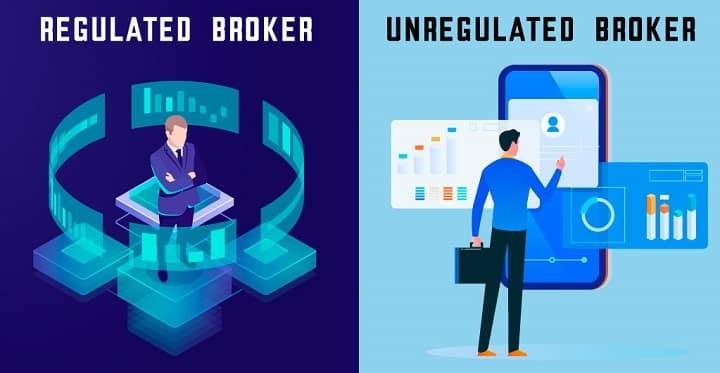
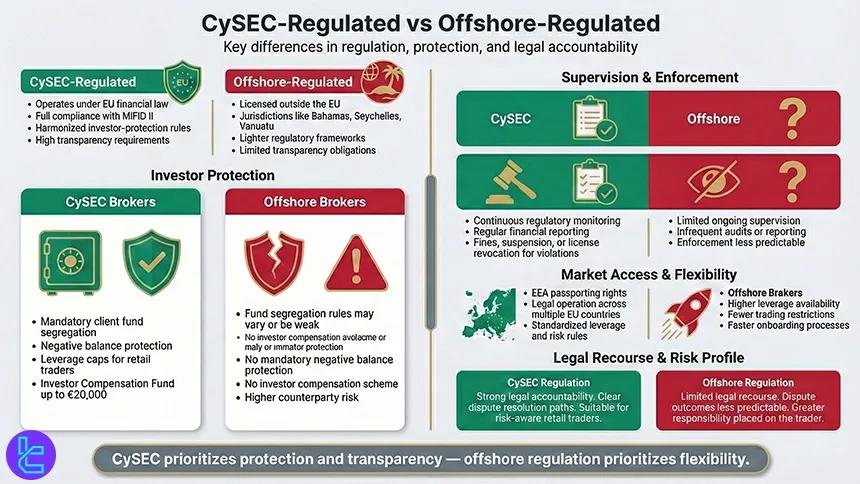
A regulated broker operates under the supervision of financial authorities that establish rules designed to protect traders and promote fair market practices. Regulation helps ensure that brokers maintain transparency and follow certain standards regarding the handling of client funds.
Trading with an unregulated broker can be risky because there may be little or no protection if problems arise.
Why Regulation Matters
A regulated broker generally:
- Keeps client funds separate from company funds
- Follows financial reporting requirements
- Maintains transparent business practices
- Provides dispute resolution procedures
- Is monitored by financial authorities
Although regulation does not eliminate all risks, it significantly reduces the chances of dealing with fraudulent brokers.
Practical Example
Imagine depositing $500 into two different brokers.
Broker A is regulated and follows strict financial rules.
Broker B is unregulated and provides little information about its operations.
If both companies experience financial difficulties, traders using Broker A are generally in a better position because the broker operates under regulatory requirements and oversight.
The trader using Broker B may have limited options for recovering funds.
Questions to Ask
Before opening an account, ask yourself:
- Is the broker regulated?
- Does the broker clearly display its regulatory information?
- Is there information about client fund protection?
- Can you verify the broker’s regulatory status?
Remember:
If you cannot easily verify a broker’s regulatory information, proceed with caution.
2. Trading Platform and Ease of Use
Your trading platform is your workplace.
It is where you will:
- Monitor price movements
- Analyze charts
- Place trades
- Manage risks
- Review your performance
A complicated or unreliable platform can make trading unnecessarily stressful.
What Beginners Should Look For
A beginner-friendly trading platform should offer:
- Easy navigation
- Fast execution
- Real-time charts
- Technical indicators
- Mobile compatibility
- Risk management tools
- Educational resources
Practical Example
Suppose the market moves quickly and you need to close a trade immediately.
A reliable platform allows you to execute your trade efficiently.
However, if the platform freezes or becomes difficult to navigate, your losses could become larger than expected.
For beginners, simplicity and reliability are often more important than advanced features.
3. Trading Costs: Spreads and Commissions
Forex trading is not completely free.
Most brokers earn money through spreads, commissions, or both.
Spread
The spread is the difference between the buying price and selling price of a currency pair.
Commission
Some brokers charge a fixed fee for each trade.
Why Costs Matter
Small trading costs can accumulate over time.
Even a slight difference in spreads may significantly affect long-term profitability.
Practical Example
Suppose you make 100 trades.
Broker A charges lower spreads.
Broker B charges higher spreads.
Over time, the trader using Broker B may pay substantially more in trading costs.
This means the trader needs to generate more profits simply to break even.
Questions to Ask
- Are spreads clearly displayed?
- Are there commissions?
- Are there inactivity fees?
- Are there hidden charges?
Always understand the broker’s fee structure before depositing money.
4. Minimum Deposit Requirements
Different brokers require different amounts of money to open an account.
Some brokers allow beginners to start with relatively small deposits, while others require larger amounts.
Why This Matters
As a beginner, your primary goal should be learning.
You do not need a large account balance to start developing skills.
Starting with a modest amount of capital can help reduce financial pressure while you gain experience.
Practical Example
Trader A deposits an amount they can comfortably afford.
Trader B deposits nearly all of their savings.
Because Trader B feels excessive pressure to make profits quickly, they begin making emotional decisions and taking unnecessary risks.
Starting with manageable capital often encourages better decision-making.
Good Beginner Approach
- Start small
- Focus on learning
- Protect your capital
- Increase account size gradually as experience improves
Remember:
Trading success comes from skill development, not from making large deposits immediately.
5. Deposit and Withdrawal Methods
Funding your account should be simple and convenient.
Likewise, withdrawing your money should be straightforward.
Things to Consider
- Available payment methods
- Processing times
- Withdrawal fees
- Minimum withdrawal requirements
- Transaction security
Practical Example
Imagine making profitable trades and deciding to withdraw some money.
If the broker creates unnecessary delays or imposes unexpected restrictions, the experience can become frustrating.
Reliable brokers generally provide clear information about deposits and withdrawals.
Questions to Ask
- How long do withdrawals take?
- Are there withdrawal fees?
- Are payment methods convenient?
- Does the broker provide clear instructions?
Your money should always remain accessible.
6. Customer Support
Problems occasionally occur in trading.
You may encounter:
- Login difficulties
- Payment issues
- Platform errors
- Verification questions
- Technical problems
Good customer support becomes extremely valuable during such situations.
Characteristics of Good Customer Support
- Quick responses
- Professional communication
- Multiple contact methods
- Helpful explanations
- Availability during market hours
Practical Example
Suppose you cannot access your trading account during a major market event.
Responsive support can help resolve the issue quickly.
Poor support may leave you waiting while the market continues moving.
For beginners, quality customer support can make the learning process far less stressful.
7. Educational Resources and Demo Accounts
The best Forex brokers understand that beginners need education.
Many brokers provide resources that help traders develop knowledge and confidence.
Educational Materials May Include
- Articles
- Video tutorials
- Webinars
- Market analysis
- Trading guides
- Economic calendars
Demo Accounts
A demo account allows traders to practice with virtual money.
Demo accounts help beginners:
- Understand trading platforms
- Test strategies
- Learn risk management
- Build confidence
- Practice without financial risk
Practical Example
Suppose two beginners start learning Forex.
One immediately opens a live account.
The other spends several weeks practicing on a demo account.
The second trader often develops greater familiarity with trading tools and risk management before risking real money.
This preparation can improve confidence and reduce costly mistakes.
Remember:
A broker that invests in education is often a better choice for beginners than one that focuses only on attracting deposits.
Warning Signs of Bad Forex Brokers
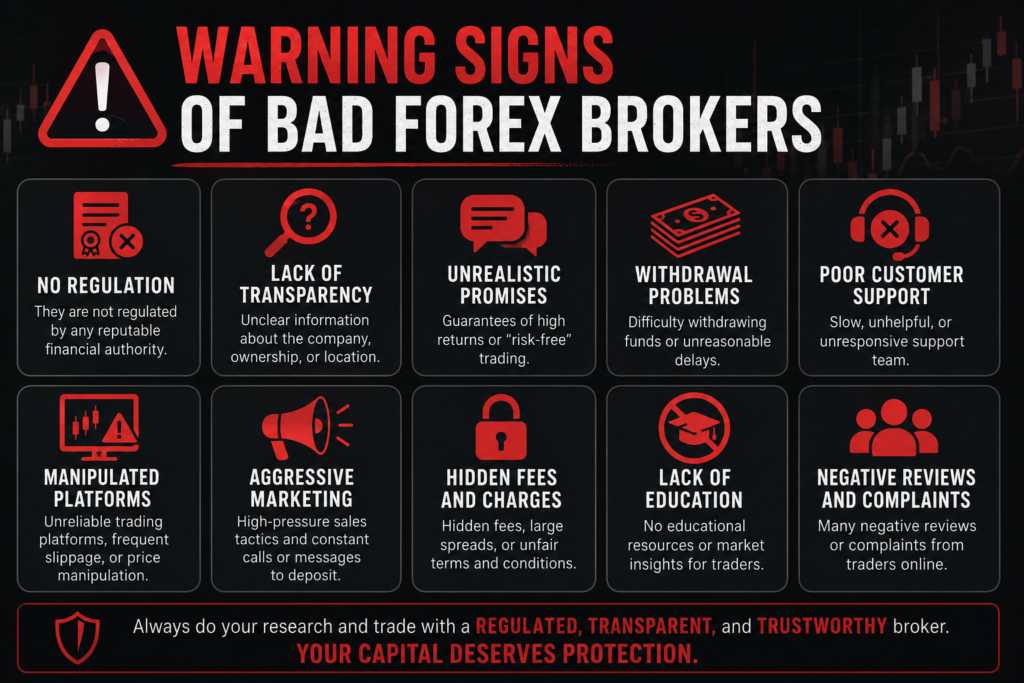
Not every Forex broker operates with integrity and professionalism.
While many brokers provide reliable services and help traders access the financial markets safely, others may engage in questionable practices that can negatively affect your trading experience.
For beginners, recognizing the warning signs of a bad broker is extremely important.
A poor broker can lead to unnecessary stress, unexpected losses, and even difficulties accessing your own money.
Learning to identify these red flags can help you avoid costly mistakes and choose a broker that supports your long-term growth as a trader.
1. Lack of Regulation
One of the biggest warning signs is a broker that provides little or no information about regulation.
Regulated brokers generally display their licensing information clearly because regulation helps build trust and credibility.
If you cannot easily verify a broker’s regulatory status, you should proceed with caution.
Why This Is Dangerous
Without regulatory oversight:
- Client funds may not be protected
- Financial practices may lack transparency
- Dispute resolution options may be limited
- The broker may operate without accountability
Practical Example
Suppose you deposit money with an unregulated broker.
A few weeks later, you experience withdrawal issues and customer support stops responding.
Because the broker is not regulated, resolving the issue becomes extremely difficult.
This situation highlights why regulation should always be your first consideration.
2. Promises of Guaranteed Profits
No broker can guarantee profits in Forex trading.
The Forex market is unpredictable, and every trade involves risk.
If a broker claims that you can:
- Never lose money
- Earn guaranteed profits
- Become rich quickly
- Achieve extremely high returns with little effort
you should consider these statements major warning signs.
Why This Is Dangerous
Forex prices constantly change due to economic events, political developments, market sentiment, and countless other factors.
Even highly experienced traders cannot guarantee profits.
Practical Example
A broker advertises:
“Deposit $500 today and earn $5,000 within one month.”
Such claims are unrealistic because no broker can control market movements or guarantee trading outcomes.
Remember:
In Forex trading, there are opportunities, but there are never guaranteed profits.
3. Withdrawal Problems
A reliable broker should make withdrawals relatively straightforward.
Withdrawal delays, unnecessary restrictions, or hidden conditions may indicate potential problems.
Warning Signs Include
- Excessive withdrawal processing times
- Unexpected fees
- Constant verification requests
- Withdrawal denials without explanation
- Customer support avoiding questions about withdrawals
Practical Example
Imagine you make profits and decide to withdraw part of your funds.
The broker suddenly requests additional documents, delays processing for several weeks, and provides vague explanations.
This can be extremely frustrating and may indicate serious operational issues.
Before opening an account, research how existing customers describe the broker’s withdrawal process.
4. Poor Customer Support
Customer support becomes particularly important when problems occur.
A broker that ignores customer concerns or responds slowly can create unnecessary difficulties.
Warning Signs Include
- Long response times
- Unhelpful responses
- Limited contact methods
- Inability to answer basic questions
- Lack of professionalism
Practical Example
Suppose you cannot log in to your account during a major market event.
Every minute matters.
If customer support takes several days to respond, the situation can become stressful and potentially costly.
Reliable brokers recognize that traders need timely assistance.
5. Platform Instability and Frequent Technical Problems
Technology plays a critical role in Forex trading.
Frequent platform crashes or execution delays may negatively affect trading performance.
Warning Signs Include
- Platform freezing
- Slow order execution
- Frequent disconnections
- Missing price data
- Delayed trade confirmations
Practical Example
You decide to close a losing trade immediately.
However, the platform freezes and fails to process your order.
By the time the platform begins functioning again, your losses have increased significantly.
This demonstrates why platform reliability should never be overlooked.
6. Lack of Transparency
Trustworthy brokers clearly explain their services and costs.
Bad brokers often provide limited information about:
- Trading fees
- Commissions
- Spreads
- Withdrawal procedures
- Terms and conditions
Why Transparency Matters
Unexpected costs can gradually reduce profitability and create confusion.
As a beginner, you should never deposit money into an account without fully understanding:
- How the broker earns money
- What fees apply
- How deposits and withdrawals work
- What conditions govern your account
Transparency builds trust.
Lack of transparency should raise concerns.
7. Excessive Marketing and Pressure to Deposit
Some brokers place excessive emphasis on attracting deposits rather than educating traders.
Warning Signs Include
- Constant pressure to deposit more money
- Aggressive sales tactics
- Unrealistic profit promises
- Pressure to upgrade accounts immediately
- Encouragement to use excessive leverage
Practical Example
Imagine opening an account with a broker and receiving repeated calls encouraging you to deposit more money.
Instead of helping you learn and understand the platform, the broker focuses entirely on obtaining larger deposits.
This approach should be treated carefully.
Reliable brokers prioritize education and informed decision-making.
Practical Broker Comparison Example
Broker A
✔ Regulated
✔ Transparent fees
✔ Reliable platform
✔ Educational resources
✔ Demo account
✔ Responsive customer support
✔ Clear withdrawal procedures
Broker B
❌ Regulation information unavailable
❌ Guaranteed profit claims
❌ Hidden fees
❌ Frequent platform problems
❌ Withdrawal complaints
❌ Aggressive deposit requests
❌ Poor customer support
Which broker appears more suitable for a beginner?
Most new traders would likely choose Broker A because it demonstrates transparency, reliability, and professionalism.
This example shows that choosing a broker involves much more than selecting the one with the biggest marketing promises.
The safest choice is usually the broker that prioritizes transparency, security, education, and customer support.
Beginner Checklist Before Choosing a Forex Broker
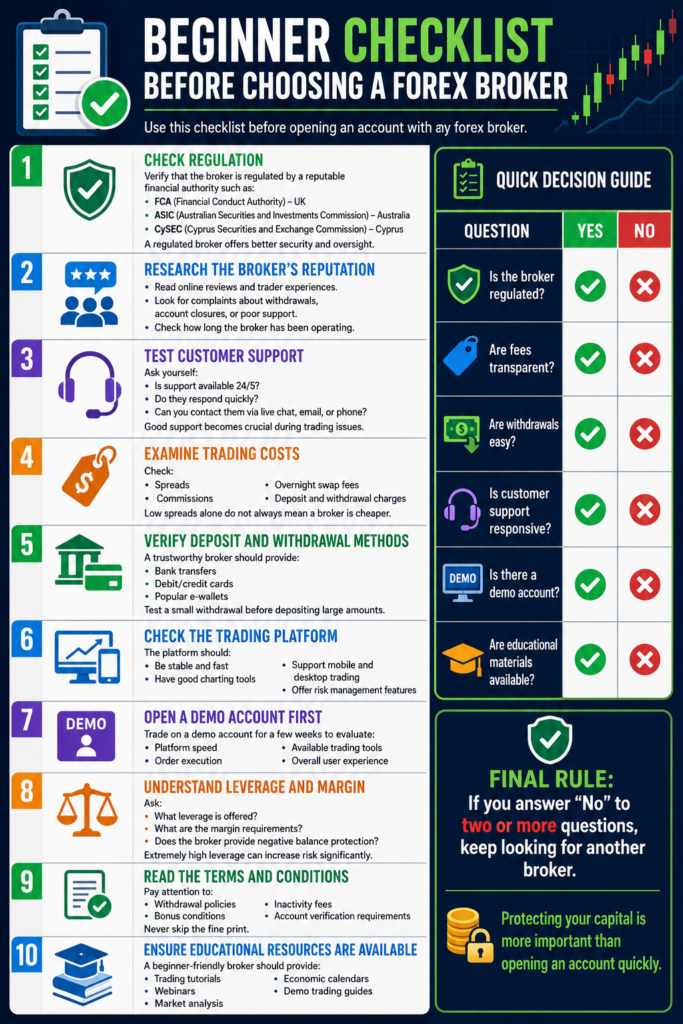
Before opening an account, ask yourself these questions:
✔ Is the broker regulated?
✔ Can I verify the broker’s information?
✔ Are the fees clearly explained?
✔ Does the broker offer a demo account?
✔ Is the trading platform easy to use?
✔ Are deposits and withdrawals straightforward?
✔ Does customer support respond quickly?
✔ Does the broker provide educational resources?
✔ Are there complaints regarding withdrawals?
✔ Does the broker make unrealistic promises?
If you answer “No” to several of these questions, continue researching before making a decision.
Remember:
The goal is not to find a perfect broker. The goal is to find a trustworthy broker that supports your learning journey and allows you to trade in a safe and transparent environment.
Practical Example: Comparing Two Forex Brokers
Imagine that two beginners, Sarah and Michael, want to start trading Forex.
Sarah’s Approach
Sarah spends several days researching brokers. She chooses a broker that offers:
✔ Regulation and transparency
✔ A beginner-friendly trading platform
✔ Educational resources and webinars
✔ A free demo account
✔ Responsive customer support
✔ Clear deposit and withdrawal procedures
Although this broker does not offer large bonuses, Sarah feels confident because she understands exactly how the broker operates.
Michael’s Approach
Michael chooses a broker after seeing an advertisement promising:
❌ Guaranteed profits
❌ Huge deposit bonuses
❌ Extremely high leverage
❌ Instant wealth opportunities
Without doing proper research, Michael deposits a large amount of money.
Several weeks later, he experiences:
- Difficulty withdrawing funds
- Poor customer support
- Frequent platform issues
- Unexpected fees
As a result, his trading experience becomes stressful and frustrating.
The Lesson
Both traders wanted to learn Forex.
However, their experiences were completely different because of the brokers they selected.
This example highlights an important principle:
The right broker can support your learning journey, while the wrong broker can create unnecessary risks and obstacles.
Frequently Asked Questions (FAQ)
Can I Trade Forex Without a Broker?
No.
Individual traders cannot directly access the Forex market. A Forex broker provides the trading platform and services needed to buy and sell currencies.
What Is the Best Forex Broker for Beginners?
There is no single broker that is perfect for everyone.
The best broker for beginners is one that provides:
- Regulation and security
- User-friendly platforms
- Educational resources
- Reasonable trading costs
- Responsive customer support
- Convenient deposit and withdrawal methods
Should Beginners Use Demo Accounts?
Yes.
Demo accounts allow beginners to:
- Practice trading
- Understand trading platforms
- Test strategies
- Learn risk management
- Build confidence
All without risking real money.
How Much Money Do I Need to Start Forex Trading?
Different brokers have different minimum deposit requirements.
However, beginners should focus on learning rather than depositing large amounts of money.
Starting with an amount you can comfortably afford to lose is usually the most sensible approach.
Is a Regulated Broker Completely Risk-Free?
No.
Regulation does not eliminate market risk or guarantee profits.
However, it generally provides greater transparency and protection than trading with an unregulated broker.
Can I Change Brokers Later?
Yes.
Many traders switch brokers as their needs evolve.
However, choosing a reliable broker from the beginning can save time and reduce unnecessary complications.
Final Thoughts
Choosing a Forex broker is one of the most important decisions every beginner trader will make. By understanding what makes the best Forex broker for beginners, new traders can make informed decisions and build a stronger foundation for long-term trading success.
A broker is much more than a company that processes trades. Your broker becomes your gateway to the Forex market and can significantly influence your learning experience, trading costs, and overall confidence as a trader.
While attractive bonuses and flashy advertisements may seem appealing, they should never replace careful research and informed decision-making.
Before opening an account, take time to evaluate:
✔ Regulation and security
✔ Trading platforms
✔ Spreads and commissions
✔ Educational resources
✔ Customer support
✔ Deposit and withdrawal procedures
✔ Overall reputation
Remember:
The goal is not simply to find a broker that allows you to trade. The goal is to find a broker that provides a secure, transparent, and beginner-friendly environment where you can learn and grow.
Successful traders understand that protecting capital begins long before placing the first trade.
It starts with choosing the right broker.
Taking time to make a thoughtful decision today can help you avoid unnecessary risks and create a stronger foundation for your Forex trading journey tomorrow.
Continue Your Forex Learning Journey
Choosing the right broker is only the beginning of becoming a successful Forex trader.
To continue building your knowledge, explore these beginner-friendly guides:
What Is Forex Trading? A Beginner’s Guide
Forex Trading Risks for Beginners
Risk Management in Forex Trading: The Beginner’s Guide
How Stop-Loss Orders Help Limit Investment Losses and Risk
The more you learn and practice, the better prepared you will be to make informed decisions and build long-term trading skills.
Keep learning, stay disciplined, and remember that choosing the right broker is one of the smartest investments you can make as a beginner trader.
Disclaimer
The information provided in this article is for educational and informational purposes only and should not be considered financial, investment, or trading advice.
Forex trading involves substantial risk and may not be suitable for every investor. Past performance does not guarantee future results, and there is always the possibility of losing part or all of your invested capital.
Before choosing a broker or making any trading decisions, conduct your own research, assess your financial situation and risk tolerance, and consider seeking advice from a qualified financial professional.
Always trade responsibly and never invest money that you cannot afford to lose.