
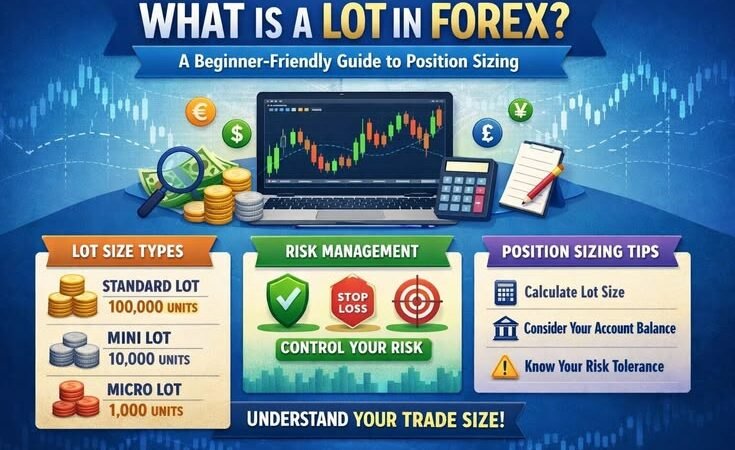
What is lot size in Forex? Lot size is the standardized unit used to measure the size of a transaction. When you place a trade, you are not simply choosing a currency pair and a direction you are also deciding how many units of that currency you want to buy or sell. That number is determined by your lot size.
Think of it this way: if forex trading were a supermarket, the currency pair would be the product you are buying, the price would be the exchange rate, and the lot size would be the quantity in your trolley. More units mean a bigger transaction and a bigger potential outcome, both positive and negative.
Lot size is not just a technical detail. It is the single most direct control you have over how much money you stand to gain or lose on any given trade. Two traders can enter the same position on the same currency pair at the same moment and walk away with entirely different results based solely on their lot size.
Lot size determines how much each pip of price movement is worth in real money. Without understanding lot size, you cannot properly manage risk.

What Is Lot Size in Forex and Its Main Types?
There are three main lot sizes used in forex trading. Each one represents a different number of currency units, and each carries a different level of financial exposure. Understanding the difference is essential before you place your first live trade.
Standard lot
Highest risk
100,000 units
Each pip is worth approximately $10. Best suited to experienced traders with larger account balances and a robust risk management plan.
Mini lot
Medium risk
10,000 units
Each pip is worth approximately $1. A sensible middle ground for traders who have some experience and want to grow their position size gradually.
Micro lot
Low risk
1,000 units
Each pip is worth approximately $0.10. Ideal for beginners learning to trade with real money while keeping potential losses to a minimum.
Some brokers also offer nano lots (100 units), which are particularly useful for traders who are testing a new strategy or practicing on a very small balance. Always check what lot sizes your broker supports before opening an account.
What does “units” actually mean?
When we say a standard lot is 100,000 units, we mean 100,000 units of the base currency in the pair you are trading. On EUR/USD, for example, one standard lot means you are buying or selling 100,000 euros. The dollar value of that position will depend on the current exchange rate, and any change in that rate is multiplied by your lot size to determine your profit or loss.
How lot size affects your pip value
A pip is the smallest standard unit of price movement in a currency pair. For most pairs, one pip is a movement of 0.0001 in the exchange rate. On its own, one pip tells you nothing about money it only becomes meaningful when you combine it with your lot size.
Here is how a 20-pip price move translates into real money across different lot sizes, using EUR/USD as an example:
Lot type Profit on 20 pips Loss on 20 pips
Micro (1,000 units) +$2.00-$2.00
Mini (10,000 units) +$20.00-$20.00
Standard (100,000 units) +$200.00-$200.00
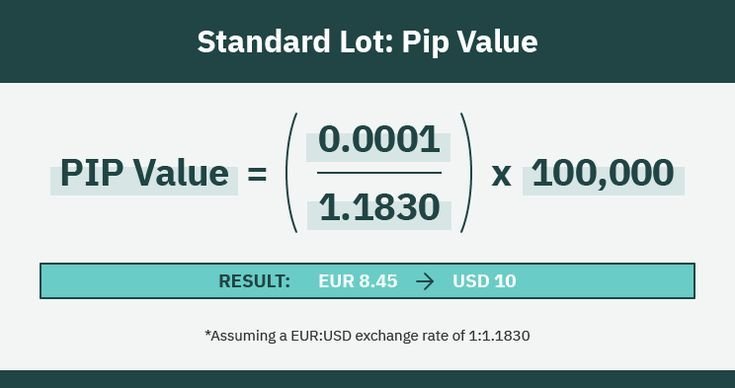
The math is straightforward: as your lot size increases by a factor of 10, so does your exposure per pip. A 20-pip move that earns a micro lot trader $2 simultaneously costs a standard lot trader $200. This is why sizing your position appropriately is not optional, it is the foundation of sustainable trading.
It is also worth noting that pip values change slightly depending on the currency pair and your account’s base currency. For pairs where the USD is not the quote currency, you will need to adjust your calculations accordingly or use your broker’s built-in pip calculator.
Lot size and risk management
The most important use of lot size is not to maximize profit it is to control risk. Professional traders do not ask “how much can I make?” when sizing a trade. They ask, “how much am I willing to lose if this trade goes against me?”
This distinction separates traders who last years in the market from those who blow up their accounts in weeks. Lot size is your primary lever for controlling downside exposure.
The 1–2% rule
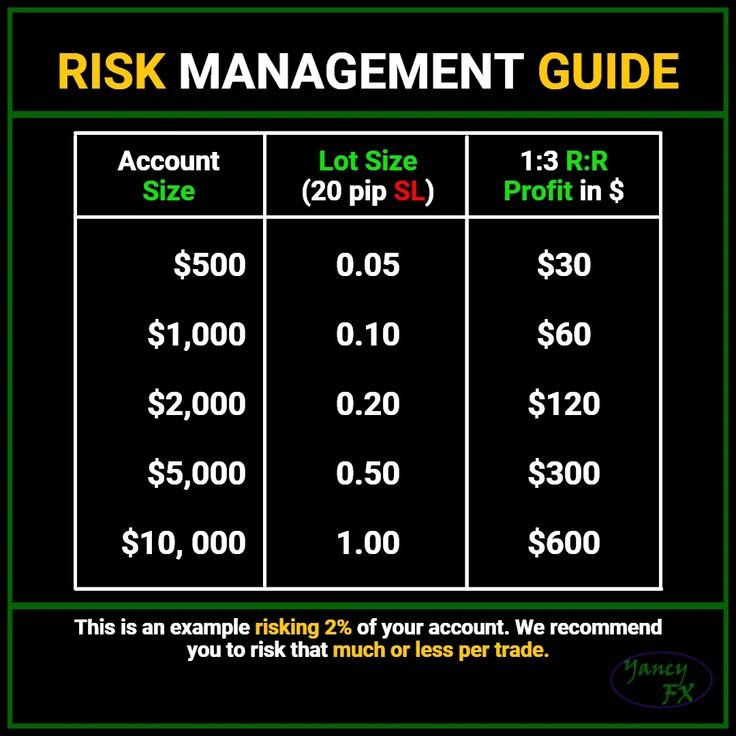
Most professional traders risk no more than 1–2% of their total account balance on any single trade. Your lot size should be calculated to honor this limit, not determined by gut feel.
Stop loss placement
Your stop loss distance (in pips) determines how much room the trade has to breathe. Together with your lot size, it defines your maximum loss in dollar terms on that trade.
Account balance
A larger account balance allows for larger lot sizes without violating risk rules. Never scale your lot size ahead of your account growth this is a common and costly mistake.
Consistency over time
Consistent use of appropriate lot sizes compounds into long-term profitability. Erratic sizing chasing losses with larger lots is one of the leading causes of account failure.
How to calculate the right lot size for your trade
Calculating your lot size should be a standard step in your pre-trade routine not an afterthought. The process involves three pieces of information: your account balance, your risk percentage, and your stop loss distance in pips.
1
Determine your risk amount
Multiply your account balance by your chosen risk percentage. Example: $2,000 account with 1% risk = $20 maximum loss per trade.
2
Set your stop loss in pips
Identify where your stop loss will be placed based on your technical or fundamental analysis. Example: 40 pips below your entry on EUR/USD.
3
Calculate your pip value per lot
On EUR/USD, one micro lot (1,000 units) is worth $0.10 per pip. One mini lot is $1 per pip. One standard lot is $10 per pip.
4
Divide your risk amount by stop loss pips
$20 ÷ 40 pips = $0.50 per pip. This tells you the maximum pip value you can afford. At $0.10 per pip per micro lot, you can trade 5 micro lots (0.05 standard lots).
Most modern trading platforms include a position size calculator that automates this process. Always verify your position size before executing a trade, especially when using leverage.
Common lot size mistakes beginners make
Understanding what lot size is matters less if you repeatedly fall into the same sizing traps. Here are the most common errors new traders make and how to avoid them.
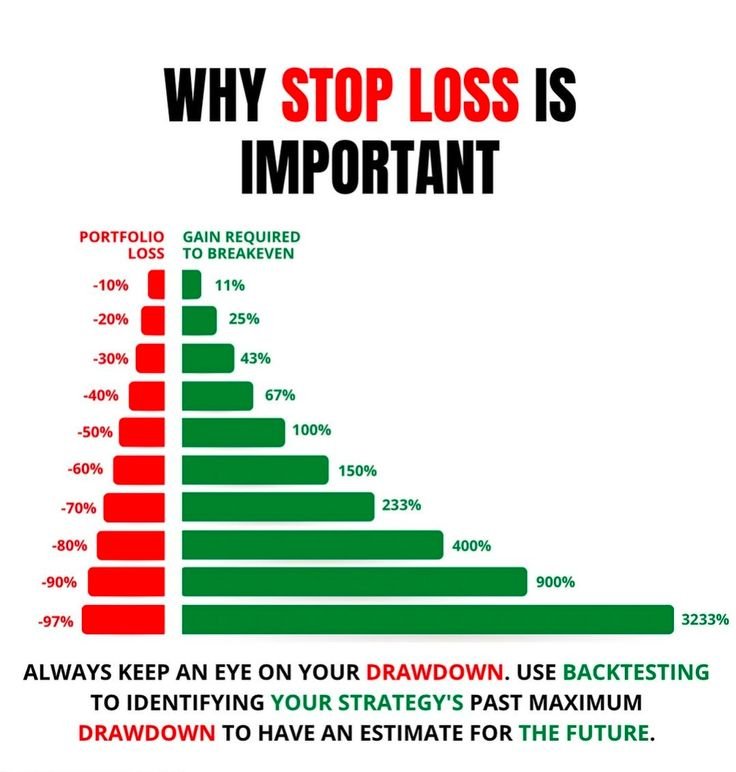
The first and most dangerous mistake is trading too large, too soon. Many beginners open a standard lot position before they have developed the consistency or emotional discipline to manage the drawdowns it produces. A $200 loss on a single bad trade can destabilize even an experienced trader who is not prepared for it.
The second mistake is failing to adjust lot size when account balance changes. After a series of losses, your remaining capital is smaller meaning the same lot size now represents a higher percentage of your account. Smart traders recalculate lot size before every trade, not just when they feel like it.
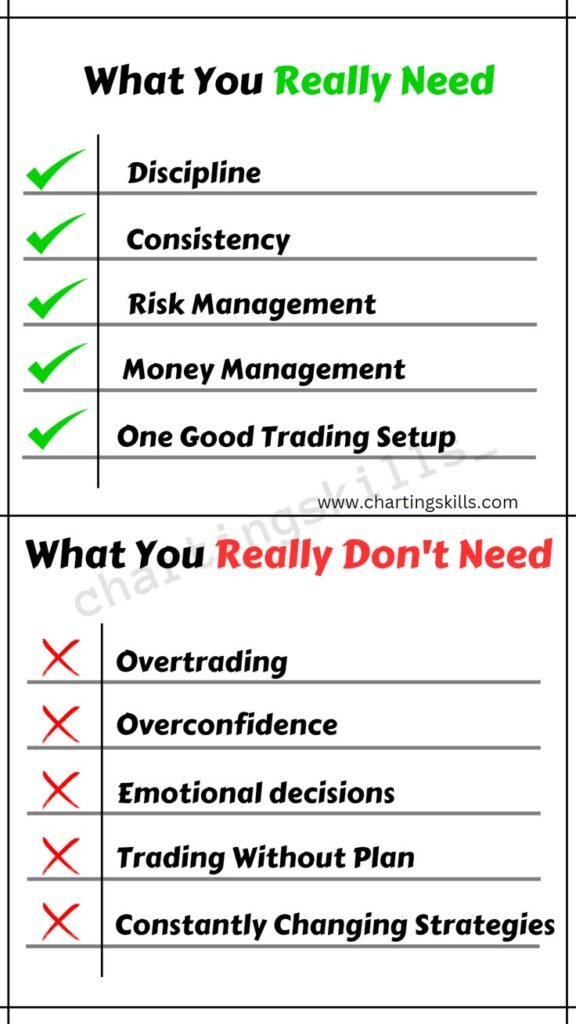
A third common error is treating lot size as a reward mechanism sizing up after a win because you feel confident. Confidence is not a risk management tool. Your lot size should always be based on your account balance and pre-defined risk parameters, not your emotional state.
Finally, many beginners confuse leverage with lot size. Leverage amplifies your exposure, but lot size determines the baseline of that exposure. Understanding both — and how they interact — is essential before trading any live account.
Frequently asked questions
What lot size should a beginner use in forex?
Beginners should start with micro lots (1,000 units). This keeps potential losses small while you develop your skills, refine your strategy, and build confidence in managing live positions. Never start with a standard lot if you are new to trading.
How much is 1 lot in forex in dollars?
One standard lot on EUR/USD is equivalent to 100,000 euros. At an exchange rate of 1.10, that is $110,000 in notional value. However, because of leverage, you typically only need a fraction of this as margin. The pip value for one standard lot on EUR/USD is approximately $10.
Can I trade 0.01 lots in forex?
Yes. A 0.01 lot is equivalent to one micro lot (1,000 units) and is the smallest position size most brokers allow. It is the recommended starting point for traders who are new to live trading or who are testing a new strategy.
Does lot size affect spread costs?
Yes. The cost of the spread the difference between the bid and ask price scales with your lot size. A 2-pip spread on a standard lot costs approximately $20. On a micro lot, the same spread costs $0.20. This is another reason why beginners benefit from starting small.
What is the relationship between lot size and leverage?
Leverage allows you to control a larger lot size with a smaller deposit (margin). For example, with 1:100 leverage, you can control a standard lot ($100,000) with just $1,000 in margin. However, leverage amplifies both gains and losses which is why correct lot sizing becomes even more critical when trading with high leverage.
How do I choose between a mini lot and a micro lot?
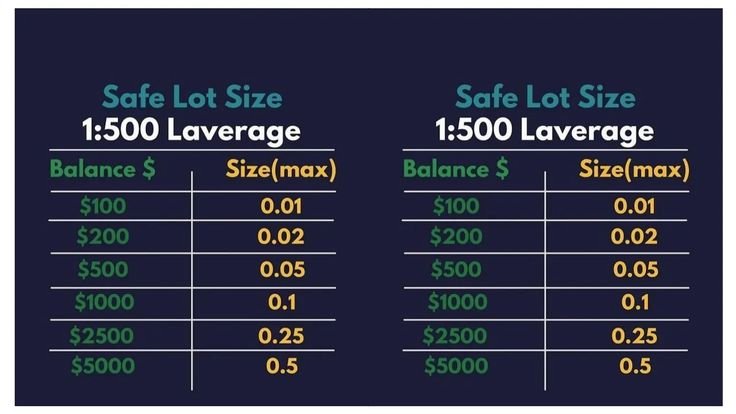
The choice depends on your account size and risk tolerance. As a general rule, use micro lots if your account is below $1,000, and consider mini lots once you have consistent profitability and a balance above $2,000–$5,000. Always calculate your risk per trade in percentage terms, not just dollar amounts.
Final thoughts
Lot size is the bridge between a good trade idea and real financial outcomes. Without mastering it, even the most accurate market analysis can lead to avoidable losses. Start small, calculate every position before you enter it, and let your lot size grow in proportion to your account — not your ambition. The traders who last in this market are not the ones who trade the biggest lots. They are the ones who trade the right lots, consistently, over time.
Disclaimer: This article is intended for educational and informational purposes only. It does not constitute financial advice, investment guidance, or a recommendation to trade any financial instrument. Forex trading involves significant risk of loss and is not suitable for all investors. Always consider your financial situation and risk tolerance before trading, and consult a qualified financial adviser if needed.